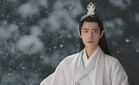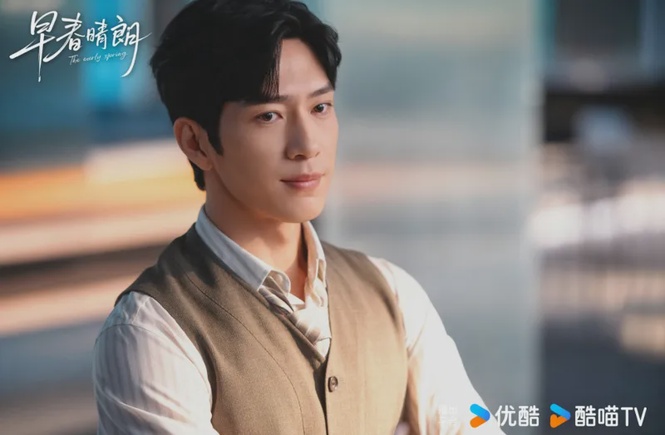
Zhang Ruoyun, best known as the quick-witted Fan Xian in Joy of Life, has been voted the best actor among Chinese drama leading men born in the late 1980s, beating Zhu Yilong and Wang Chuanjun to first place. Ren Jialun, also known as Allen Ren, finished fourth, while Jing Boran, back in the spotlight this year with The Early Spring, did not make the top 10 at all.
The list comes from an online vote held by mainland Chinese internet users, who were asked to pick the strongest performers of the "post-85" generation, a Chinese shorthand for people born between 1985 and 1989. Many of these men began as so-called traffic stars, idols whose value is measured in clicks and fan engagement, and have since tried to win respect through their work. The ranking was not based on popularity alone, which helps explain why several household names were left out.
The vote arrives as a younger wave takes over Chinese television. Post-1990 stars such as Xiao Zhan and Yang Yang, and post-1995 actors such as Wang Hedi, known in English as Dylan Wang, and Zhang Linghe, now command much of the attention once reserved for the post-85 group.
Zhang Ruoyun Wins On Range And Rhythm
Fan Xian is the role that sealed Zhang's first-place finish. The character is clever and funny on the surface but carries a complicated family background and heavy responsibilities, and Zhang's ability to move between comic timing and serious drama is a big part of why audiences took to him.
His résumé was already solid before Joy of Life. In Medical Examiner Dr. Qin he played a brilliant, calm and coolly rational forensic examiner, and in Wu Xin: The Monster Killer he layered scheming and devotion into one character, proof that he was never confined to a single type. He handles dialogue-heavy roles comfortably, yet he can also convey subtler feelings with a look or a change of expression.
Fans who backed him in the vote pointed to that versatility. "His acting is so transformative, it's like plastic surgery," one wrote. Others said "his acting never feels too awkward," "the roguish look in Joy of Life really suits him," and "Zhang Ruoyun's scenes have so much tension, Medical Examiner Dr. Qin is unbeatably good." One viewer called him "a face that disappears into every show," and another said: "After getting hooked on Joy of Life, I watched all of Zhang Ruoyun's other work, and after watching the second season of Joy of Life, I thought he was great too." A few simply praised his looks, calling him "so handsome, with a godlike face."
Zhu Yilong And Wang Chuanjun Shed Early Labels
The second and third places both went to actors who escaped the images that first made them famous. Zhu, runner-up, was once filed under idol actors. Guardian and The Story of Ming Lan brought him a huge following, but it was the film Lighting Up the Stars that made audiences look at him again. He played Mo Sanmei, a roguish funeral director with a prison record, a world away from the refined, gentle men of his earlier roles.
Zhu dropped almost all of his idol polish to make a flawed, slightly happy-go-lucky everyman feel lived in, and many viewers connected with the result. The role won him Best Actor at the Golden Rooster Awards, one of mainland China's most prestigious film honors. His next project is Empty Gun, a stylized Hong Kong crime film directed by Han Yan and co-starring Michelle Wai, Tony Leung Ka-fai, Tan Jianci, and Kara Wai, with a theatrical release scheduled for September 25, 2026.
Wang Chuanjun, third, is perhaps the most low-key name on the list. The public first knew him as Guangu Shenqi in the sitcom iPartment, but he gradually steered his career toward more demanding parts. His breakthrough came in the film Dying to Survive, where he played Lü Shouyi, a leukemia patient, in a performance that could hardly be further from his comic beginnings. It earned him Best Supporting Actor at the Hundred Flowers Awards, a mainland film prize decided by audience votes.
Wang has since appeared in Three-Body and I Am Nobody. Rather than chasing romantic leads in idol dramas, he tends to pick characters with a strong personal stamp, which makes him one of the clearest examples of a performance-first actor in his generation.
Costume Dramas Define Ren, Luo And Dou
Three of the 10 names owe much of their reputation to period dramas. Ren, fourth, has one of the strongest costume portfolios of the post-85 group. After The Glory of Tang Dynasty put him on the map, he followed up with Under the Power and One and Only and made historical drama his calling card. He also leads Perfect Match.
His signature is acting with his eyes and micro-expressions. While Under the Power was airing, his so-called eye acting became a constant talking point among viewers, as he shifted from domineering and icy to tender and doting without leaning entirely on his lines.
Luo Yunxi, known in English as Leo Luo, placed ninth and is one of the few post-85 actors who generates as much discussion for his acting as for his popularity. His Run Yu in the 2018 fantasy Ashes of Love drew attention as the character moved from gentle and restrained to something far more conflicted. In Till the End of the Moon he took on Tantai Jin, a role with complicated emotional layers that he expressed largely through his gaze and small facial shifts. A dance background also gives him an edge in costume roles, with clean, fluid results in fight scenes, wire work, and period bearing.
Dou Xiao, who rounds out the list at 10th, started at an unusually high level: his debut was Under the Hawthorn Tree, a film directed by Zhang Yimou, in which he entered the industry alongside Zhou Dongyu. Their careers later diverged, but Dou has built a steady list of notable work. His best-known role is Yan Xun in Princess Agents, a confident young heir who turns dark, and viewers praised how he handled the character's sharp turn. In Siege in Fog he then played a forceful man in the Republic of China era of the early 20th century, showing a different side of his acting.
Huang Xuan And Yin Zheng Break Typecasting
Huang Xuan, fifth, has never been the classic idol drama heartthrob, yet years of solid work have given him a secure place in the industry. He played Huang Xie in The Legend of Mi Yue, then led Les Interpreters and The Imperial Doctress opposite stars Yang Mi and Liu Shishi. Film directors have sought him out too, casting him in Feng Xiaogang's Youth and Chen Kaige's Legend of the Demon Cat. Crucially, he did not stay in scholarly, mild-mannered parts: in Luoyang he switched to a rougher, more rugged character.
Yin Zheng, eighth, is not an idol in the traditional sense, but his roles and performing style are instantly recognizable. He played Fu Ziyu in Love Me If You Dare and the ruthless Su Sansheng in Sparrow before Winter Begonia changed how many viewers saw him. As Shang Xirui, a celebrated Peking opera star, he had to capture a proud, willful, flamboyant, and childlike personality while performing a large amount of opera on screen. Not everyone expected him to pull it off, but his scenes with Huang Xiaoming became one of the show's highlights and put his acting at the center of conversation.
Jin Shijia And Bai Ke Grow Beyond Comedy
Sixth and seventh place went to two actors whose careers took off in comedy. Jin Shijia first drew notice in iPartment, the same sitcom that introduced Wang Chuanjun, before moving into crime and medical stories. Under the Skin, a crime thriller in which he partners Tan Jianci, is one of his signature works and shows him in a completely different register. Ask the Heart, Twenty Your Life On, and Tientsin Mystic 2 have added further range. His style leans natural and realistic, without idol baggage, and when a role matches his temperament, the character comes across as fully rounded.
Bai Ke took an even less conventional route. He did not rise through idol dramas but through the web comedy series Surprise, then gradually shifted toward films and television in a range of genres. Johnny Keep Walking! was well received, and he followed it with The Lychee Road. On television, Benevolence Club, opposite Xin Zhilei, also drew attention. His looks are not those of a typical idol, but that gives him more room as a character actor: he builds roles through an easy, everyday naturalism rather than his appearance, which gives him a strong presence in critically praised projects.
Jing Boran And William Chan Miss The Cut
Because the vote did not simply reward fame, several popular post-85 stars were shut out. The most conspicuous is Jing Boran, now 37, whose role as Luan Nian, a sharp-tongued and mature boss, in The Early Spring has stirred plenty of discussion about both his looks and his screen presence. Even so, he did not make the top 10.
William Chan, known in Chinese as Chen Weiting and recently seen in The Nine Gates, and Chen Xiao of A Dream of Splendor are also absent, despite each having signature works and loyal fans. The post-85 field is crowded, spanning everyone from former traffic idols to serious film and television actors, and no single online vote can capture every performer who has earned recognition.
The Full Post-85 Acting Top 10
- No. 1: Zhang Ruoyun (Joy of Life, Medical Examiner Dr. Qin, Wu Xin: The Monster Killer)
- No. 2: Zhu Yilong (Lighting Up the Stars, The Story of Ming Lan, Guardian)
- No. 3: Wang Chuanjun (Dying to Survive, Three-Body, iPartment)
- No. 4: Ren Jialun (Under the Power, One and Only, The Glory of Tang Dynasty)
- No. 5: Huang Xuan (Luoyang, Youth, The Legend of Mi Yue)
- No. 6: Jin Shijia (Under the Skin, Ask the Heart, Tientsin Mystic 2)
- No. 7: Bai Ke (Johnny Keep Walking!, The Lychee Road, Benevolence Club)
- No. 8: Yin Zheng (Winter Begonia, Sparrow, Love Me If You Dare)
- No. 9: Luo Yunxi (Ashes of Love, Till the End of the Moon)
- No. 10: Dou Xiao (Princess Agents, Under the Hawthorn Tree, Siege in Fog)
Taken together, the list rewards actors who have outgrown their first big break, whether that was an idol drama, a sitcom, or a web comedy, and who now let the role, not the image, do the talking.
Social Media Links & Editor Tag - Penny