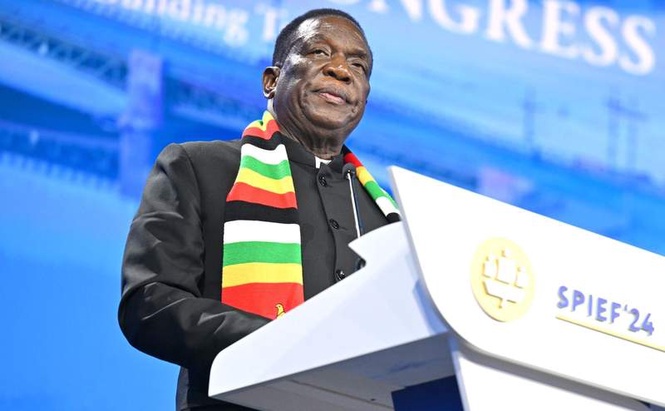
The Zimbabwean parliament on Thursday passed a law amending the constitution to extend the presidential term by two years and providing for the president to be elected by parliament rather than by popular vote.
The measure, which was backed by 216 of 258 members in the National Assembly, still has to be approved by the country's Senate before being signed into law by President Emmerson Mnangagwa.
Under its provisions, elections scheduled for 2028 will be postponed to 2030, with the presidential term extended to seven years from currently five.
The law has raised tensions in the country of some 16 million. The opposition insists that a referendum is needed for the change to go through. It has challenged the law before the Constitutional Court, which has yet to rule.
Mnangagwa, 83, was appointed president in 2017 after the country's military deposed Robert Mugabe. Mugabe had held power in the former British colony since independence in 1980, initially as prime minister and subsequently as president following a constitutional change.
Mnangagwa's ZANU-PF party holds a parliamentary majority.