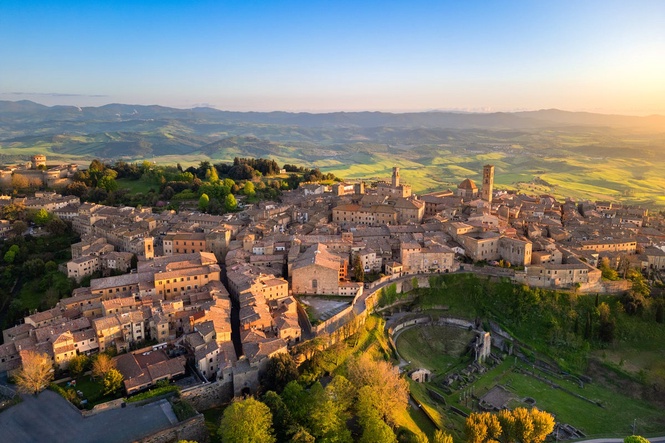
One thing most visitors to Italy can all agree on is that Tuscany, with its Renaissance architecture, towering hilltops and spread of vineyards, is one of the most bewitching areas to visit in Europe. What is harder to narrow down is which area of this almost 9,000 square mile region is the best to travel to.
You could easily spend your days exploring Florence and Pisa, or wandering through the narrow streets and central piazza of Siena. But perhaps the greatest experience in Tuscany is discovering the many medieval hilltop towns scattered through the countryside.
There are the most popular Tuscan towns, such as San Gimignano and its multiple ancient stone towers, or the wine-producing Montepulciano. Or, holidaymakers may choose somewhere a little more low-key like the coastal town of Pietrasanta. History buffs will have a field day at villages like Murlo and Volterra, while you’ll be sure to have a regional glass of wine waiting for you at any place you choose.
Here is our list of our favourite Tuscan towns and villages to discover in 2027.
Best towns and villages in Tuscany
1. San Gimignano
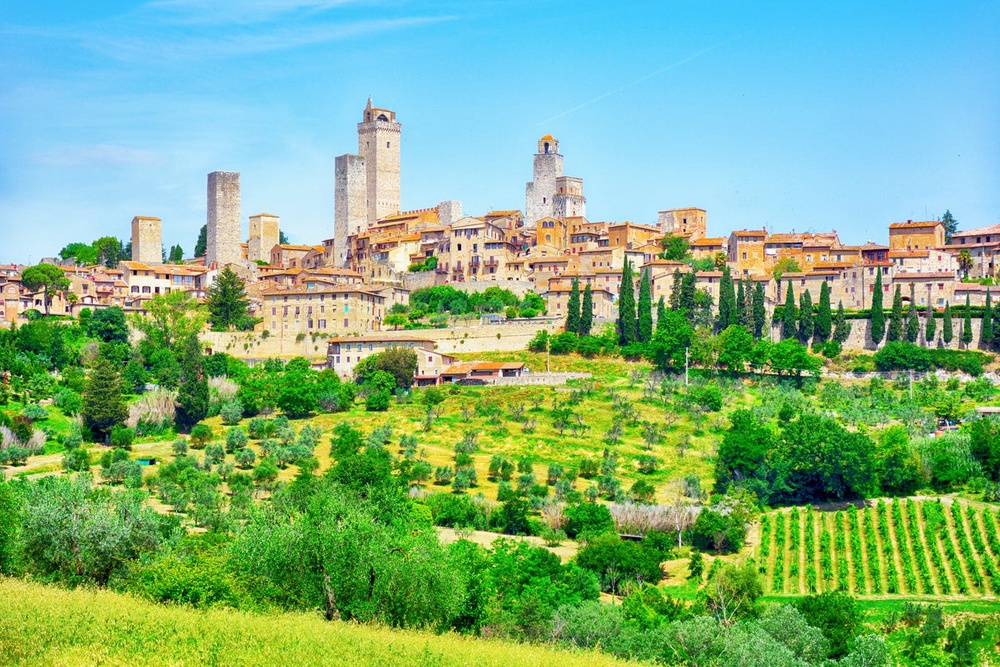
San Gimignano is one of the best-known small towns in Tuscany – and for good reason. With its hilltop location, charming local restaurants and picture-perfect setting, it’s a favourite among tourists. Visitors can stroll through the medieval streets, stop in at one of the many small shops, gaze at the town’s impressive cathedral and visit the civic museum at the Piazza del Duomo.
There’s a fun story behind San Gimignano’s famous towers. Between the 11th and the 13th centuries, the noble families who controlled the town believed their towers were a sign of wealth and power to their political and economic rivals, and so kept building more and more – it is believed that a total of 72 could be found in San Gimignano at its peak. Only 14 have survived, but they’re still rather impressive and give the town a palpable sense of history.
Where to stay
Vegan Agrivilla I Pini, a pilgrim shelter turned vegan eco farmhouse, is a hotel with rustic rooms and a plant-based farm kitchen. Surrounded by rolling vineyards and olive groves, the hotel’s 11 lodgings are elegantly minimal to help you find your inner sanctuary.
Read more: This boutique hotel in Umbria sits among 1,000 olive trees and hosts communal pasta evenings
2. Montalcino
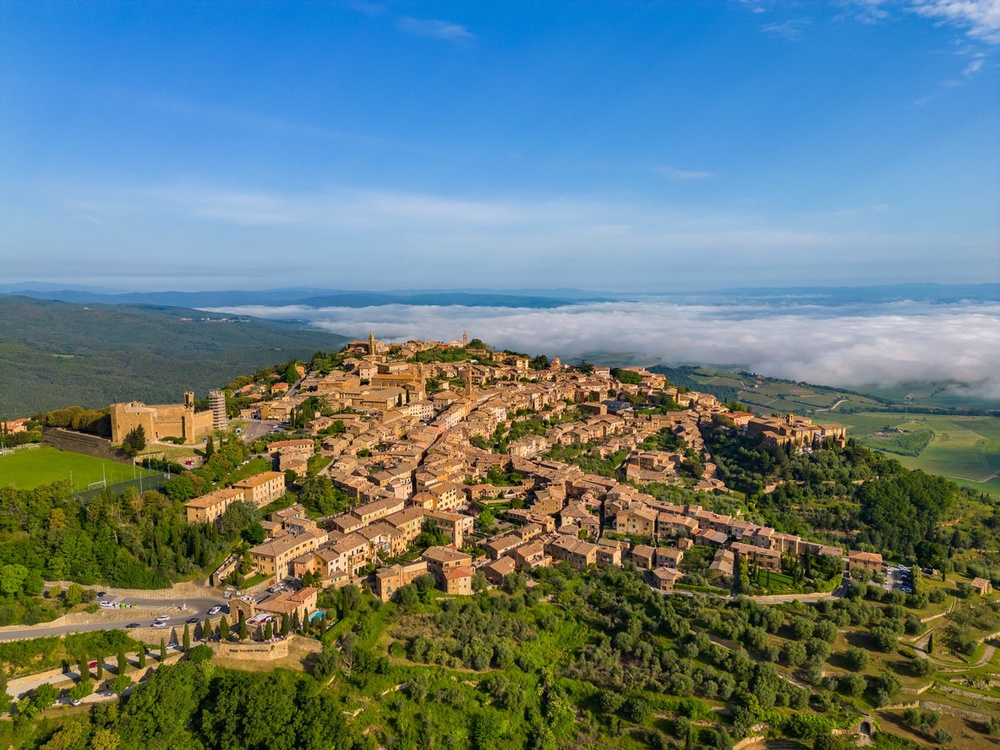
Montalcino is an excellent choice for wine lovers – it’s well known for its brunello di Montalcino and rosso di Montalcino wines. The location in the hills of the Val d’Orcia gives it an even more rustic setting than other towns on this list. Visitors will find themselves surrounded by countryside dotted with cypress trees and flowers, as well as rolling olive groves and vineyards. Tourists can climb the stairs to the top of its fortress walls, amble through the winding streets and spend some time on the town’s Piazza del Popolo – but no visitor should miss the wine tastings which can be enjoyed in and around the town.
While there are so many wineries and vineyards to choose from, one of the most popular places – and most accessible as it is within the town rather than on the outskirts – to sample some DOC bottles is Enoteca la Forezza. Here, guests will be served glasses of brunello accompanied by cheese and cured meats while sitting inside the town’s medieval fortress.
Where to stay
Perched just above the town, Borgo Canalicchio di Sopra Relais offers an authentic way to embrace the region’s speciality with copious opportunities to try the estate’s wines. After wine tastings, vineyard and cellar tours, cool off at the resort’s idyllic pools.
Read more: This Lake Como hotel allows you to experience Bellagio without the crowds
3. Pienza
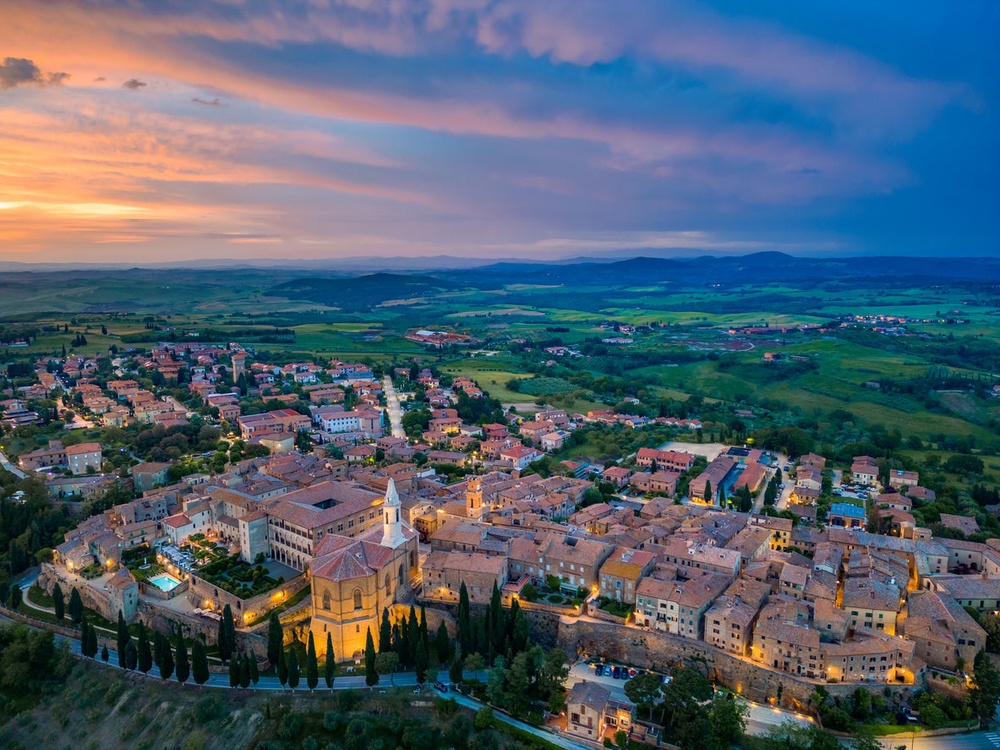
Pienza also lies in the Val d’Orcia, where gently rolling hills are populated by Renaissance towns, vineyards and medieval castles. The town itself is surrounded by medieval walls, inside of which is a maze of pretty cobbled streets lined with typical Tuscan houses. From the town you can enjoy amazing views over the hills and olive groves, and in the distance sits Mount Amiata.
All roads in this town lead to the Piazza Pio II, with particularly picturesque streets including the Via dell’Amore and Via del Bacio. The town’s cathedral sits in this square, as do Palazzo Piccolomini, a Renaissance-style palace that once was Pope Pius II's summer residence, and Palazzo Borgia, also once owned by another pope, Alexander VI, before he took on the papacy. Both of these palazzos are now museums, the latter of which displays important artworks such as Madonna of Monticchiello by Pietro Lorenzetti.
Where to stay
Just a stone’s throw from Pienza’s cathedral, history runs throughout the impressive Relais Il Chiostro Di Pienza. A former Franciscan convent, the hotel’s rooms are architecturally spectacular, completed with a garden terrace overlooking the Val d’Orcia.
Read more: To escape Rome’s heat this summer you need to go underground
4. Greve in Chianti and Montefioralle
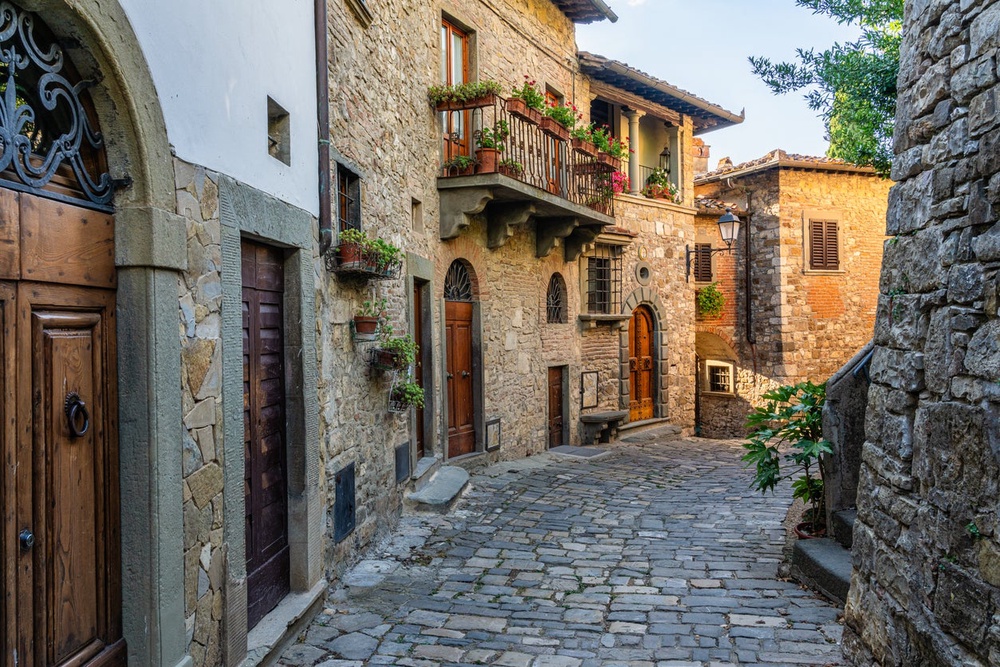
A visit to Tuscany is arguably not complete without a visit to Chianti, the region’s famous wine-producing area. Greve in Chianti is one of the more scenic towns in this part of Tuscany – it’s centred around the triangular Piazza Matteotti, the porticos of which shelter vendors of various fresh produce.
In the foothills just below Greve in Chianti lies Montefioralle, one of the oldest villages in Tuscany. It’s still enclosed by its original defensive walls, and its (nearly) car-free centre is a great place for a relaxed stroll. The surrounding vineyards will likely be the focus of your visit, but be sure to climb up the hills to the highest point in the village where you can see the Santo Stefano church and take in a sweeping view of the vineyards, olive groves and cypress trees.
Where to stay
With bright furnishings and painted beams, each room in the luxury wine resort Borgo Del Cabreo is elegant and charming. Guests can enjoy homemade treats at breakfast before strolling to Greve in Chianti or booking an on-site cooking class to discover traditional Tuscan recipes.
Read more: This sleek hotel offers a peaceful escape on the shores of Lake Como
5. Volterra
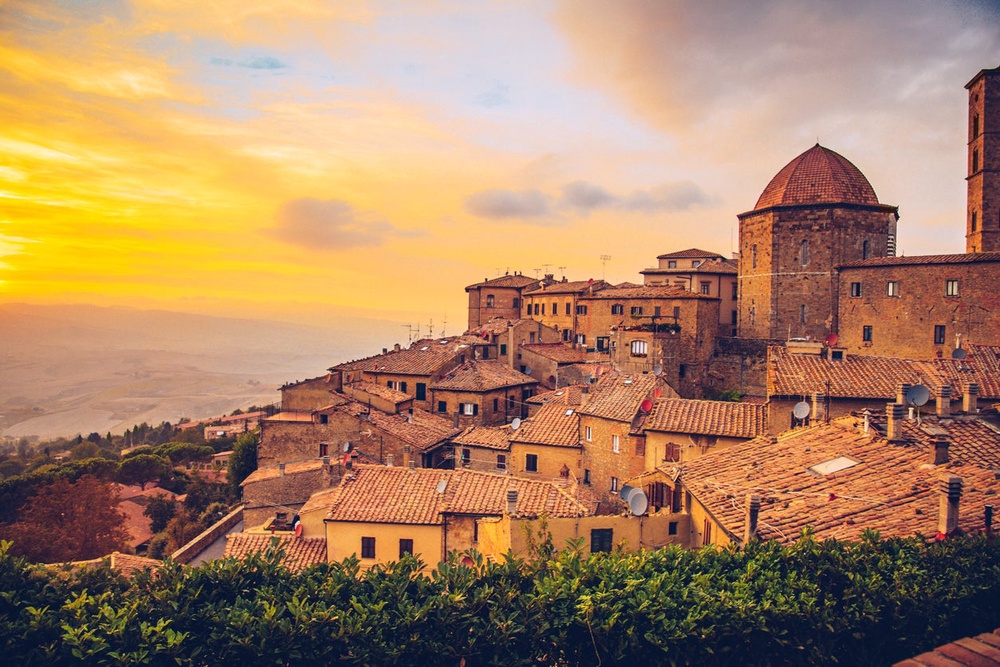
Volterra was once a mighty Etruscan city, but nowadays it is best known for Italian handicrafts and remnants of its medieval past. It is dominated by its Duomo along with the 13th-century Palazzo dei Priori, though the 2,000-year-old Roman amphitheatre is another highlight. Remnants of its Etruscan past remain in the fifth-century Porta all’Arco walls and the Guarnacci Etruscan Museum, showcasing artefacts such as the world-famous third-century bronze Ombra della Sera, while the smaller Pinacoteca museum focuses on art from between the 14th and 17th centuries.
Votella takes its gastronomy very seriously, with truffles prominently featured in dishes such as fresh Pici pasta, a Tuscan staple. Specialities in Votella specifically include trippa alla Volterrana (Volterra-style Tripe) and aged Pecorino delle Balze Volterrane DOP, a cheese made from unpasteurised milk with vegetable rennet.
Where to stay
Just outside (15km) of the town itself, Borgo Pignano Volterra is perched on a hilltop with sweeping views across the Tuscan countryside. This 18th-century villa sits in 750 acres of countryside, with three pools (one of which is carved into the rock), an excellent restaurant focused on local produce and a range of activities, including horse riding around the estate, truffle hunting, wine tasting (including the hotel’s own grapes), and artisanal workshops.
Read more: The Dolomites are having a moment. Our writers say you should visit these spots
6. Pitigliano
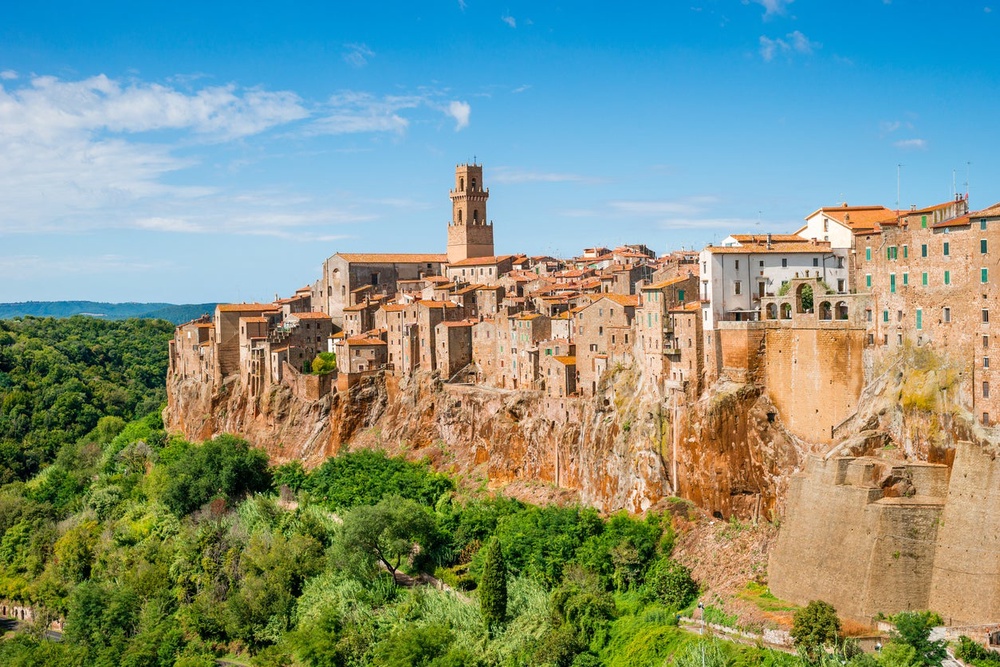
Pitigliano is located in the Maremma region near the Tuscan coast. It’s another hilltop town, and features rows of sandstone buildings built on top of volcanic red “tuff” stone. As well as enjoying wine tastings, tourists can amble through the maze-like streets, stop for a drink or bite to eat around the Piazza della Repubblica, explore the palace-fortress of Palazzo Orsini (and its Diocesan museum) and visit the Sette Cannelle fountain.
This town is also known as “Little Jerusalem” as a large Jewish population started residing there around the end of the 16th century, and there are several remnants of its religious history still present, from a synagogue to an underground village where a Kosher cellar is still used to store kosher wines. There is also a Jewish Museum that tells the story of the Jewish community in Pitigliano.
Where to stay
Cross the ancient drawbridge to fairytale rooms and a romantic courtyard at Hotel della Fortezza. Located in the neighbouring Sorano, the former 12th-century fortress offers a delightful way to explore both historic towns.
Read more: The 12 best ski resorts in Italy for the perfect winter escape
7. Pietrasanta
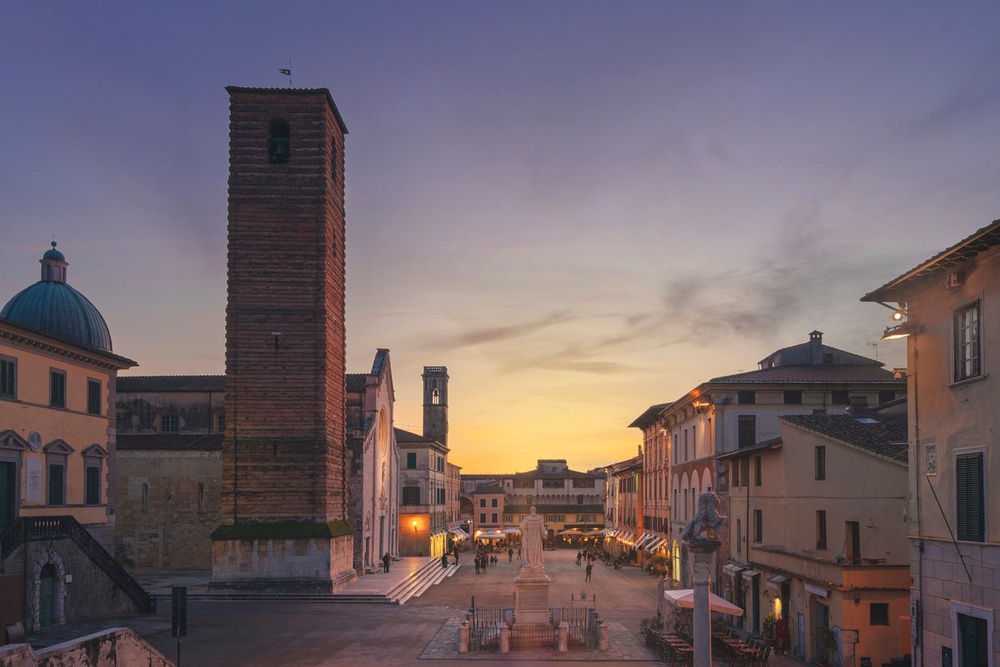
Pietrasanta still retains some of the artistic creativity that was associated with it in bygone times when artists such as Michelangelo frequented the town. Today it has one of the highest concentrations of art galleries in any Italian town, from the Favret Mosaici Artistici to the Flora Bigai gallery of contemporary art.
Pietrasanta is located very close to the coast, near upmarket resorts like Forte dei Marmi, and so is a town influenced by both local history and modern tourism. Away from the beaches, the highlights include the Duomo and the Rocca di Sala fortress, while an archaeological museum, marble quarry and yearly performing arts festival (La Versiliana) are a little more off the beaten track.
Where to stay
Overlooking a 100-year-old citrus grove, Orangerie prizes a central location and rooms finished with local antiques. Guests can wake up to breakfast under the orange trees, before stepping out to enjoy the town’s cultural delights.
Read more: I checked into an Italian longevity spa – and the news wasn’t good
8. Montepulciano
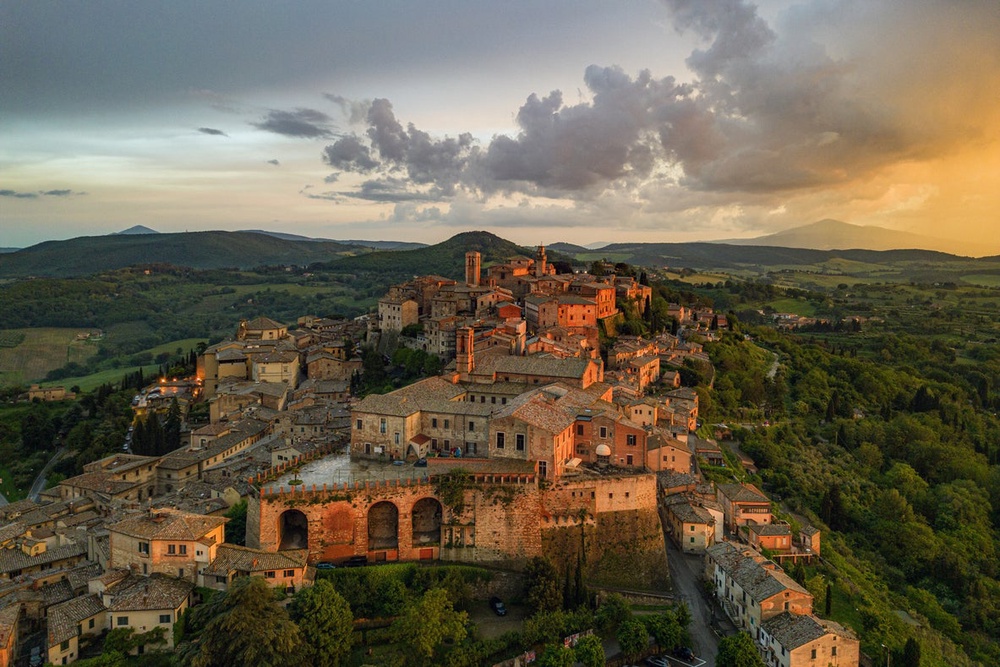
Perched atop a limestone hill in the ridge that separates Val d’Orcia from Valdichiana is the village of Montepulciano, one of Tuscany’s most popular tourist destinations – something that is likely to do with its wine-producing prestige. The village is known internationally for its Vino Nobile, a medium-bodied red wine produced in Montepulciano’s surrounding vineyards. Among its most impressive wineries is De' Ricci Cantine Storiche, which holds barrels in historic cellars nicknamed the “Cathedral of Wine” due to its three naves, pillars, vaults and arches reminiscent of a church. The village is also known for its wellness-focused features, like its natural thermal baths that make use of its sulfur-rich waters for its therapeutic properties.
Piazza Grande is the historic heart of the village, encircled by a series of Renaissance buildings, palaces and the Duomo di Montepulciano cathedral. One of the most impressive structures in this area is the Palazzo Comunale, the city hall, with its Gothic-style facade and its protruding clock tower. The Temple of the Madonna di San Biagio, which stands just outside the town, is considered one of Renaissance Italy’s masterpieces.
Where to stay
Stay at Borgo San Vincenzo, a reimagined 18th century within Montepulciano’s vineyards, which has 21 rooms, a pool, and a restaurant and bar that celebrates local Tuscan flavours, accompanied by a large wine list and a resident mixologist.
Price: From £568
Read more: South Tyrol’s sensational sauna culture made me wonder if I’ve been taking wellness too seriously
9. Cortona
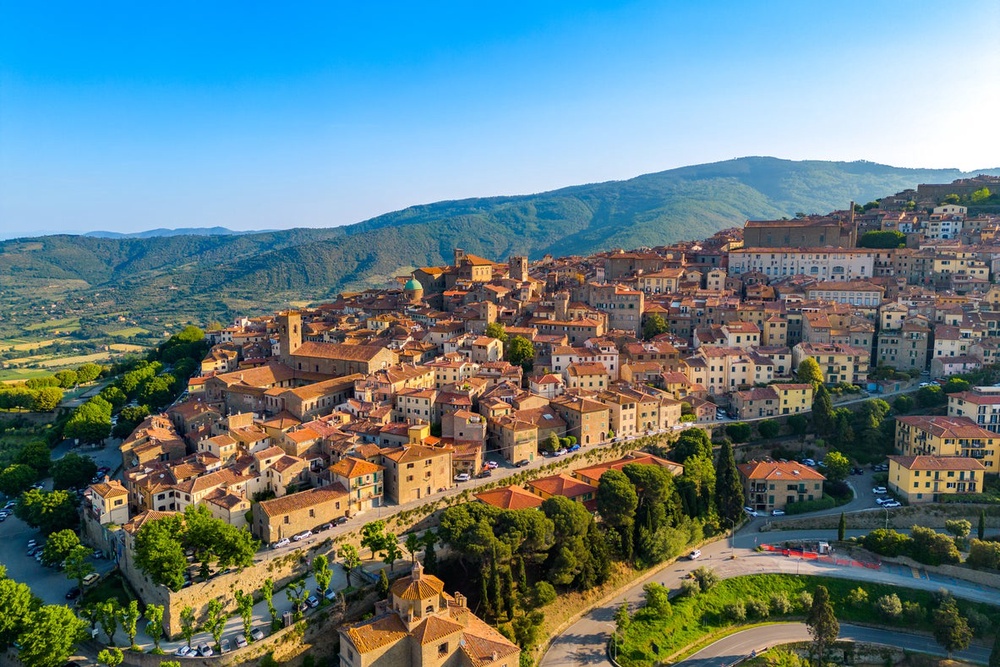
The ancient city of Cortona dates back to the Etruscan civilisation around 3,000 years ago, meaning this Tuscan location is practically oozing historical intrigue. Existence of this ancient settlement is still visible today in two kilometres of wall that has been dated back to the fifth century. Only around 500 years old, but equally as impressive, is Cortona’s medieval heart, consisting of palazzos, narrow streets and Tuscan trattorias.
The city’s main museum, MAEC, is split into two separate parts. The first is found in the historic centre and keeps an Egyptian collection, an 18th century library and Etruscan and Roman artefacts, including the famous Etruscan bronze chandelier. The second MAEC location is found just outside the centre, an open-air archaeological museum where two Etruscan tombs stand.
Where to stay
The five-star Monastero di Cortona Hotel & Spa has transformed a 15th century monastery into a world-class stay with 36 rooms and suites, while the ancient Roman cistern that lies beneath it has been revitalised into a spa. The hotel also has two restaurants, a wine cellar, and a bar.
Price: From £223
Read more: Can you have a cappuccino after 11am? The Italy faux pas all tourists should know
10. Murlo
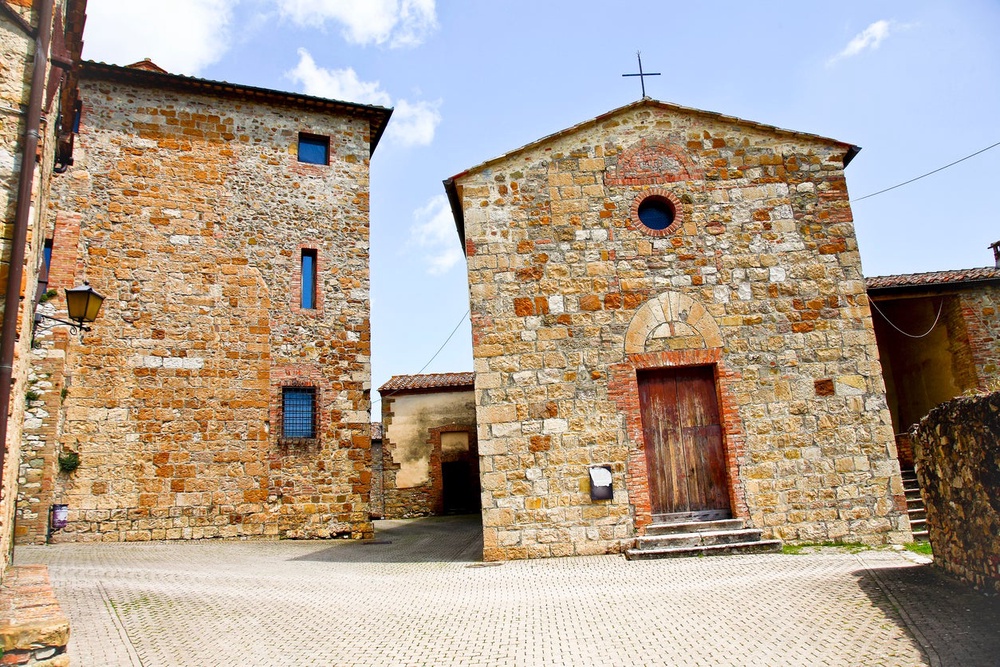
Murlo is thought to take its name from the Latin word murulus, which means “walled place” – a fitting name for the small commune that is enclosed by terracotta walls at the top of a hill looking over the forested Crevole valley. Fortified Murlo Castle, which makes up the entirety of the village on the hilltop, dates back to the 12th century when it served as the feudal centre of bishops from Siena and Vescovado. Inside, visitors will find the Archaeological Museum that displays Etruscan artefacts from nearby excavation sites, Poggio Civitate and Poggio Aguzzo, such as the well-known terracotta figurine that looks like it is wearing a sombrero.
Every year, Murlo hosts BluEtrusco, a festival celebrating Etruscan culture held in the summer, with historical re-enactments, workshops, guided tours and lectures as the village transforms into an ancient settlement. The festival is also a chance to revel in the archaeological finds from both excavation sites, with hikes and tours around the Poggio Civitate Loop led by archaeological experts.
Where to stay
While there aren’t many options for staying within Murlo’s fortified walls, L'Albergo di Murlo in the neighbouring village of Vescovado is close by. The hotel provides 44 basic rooms, a restuarant and a large swimming pool.
Price: From £102
Read more: Alto Adige is the unusual part of Italy that’s perfect for families
Read MoreI recreated my own Roman Holiday on a Vespa tour of Italy’s capital
This Rome hotel has the best rooftop views in the Eternal City
I went on the perfect Tuscan family road trip – at the worst time of year
This hotel is perfect for a stylish break in Sardinia
This high altitude retreat has the most striking pool in the Dolomites