2026 is on track to be one of the hottest year on record, as decades of human-caused global warming clashes with a “supersized” El Niño.
A report published by the World Meteorological Organization (WMO) on Monday warns that the last 12 years have individually been the warmest on record, with the past four years being the top four.
The global average surface temperature for January-September 2026 was about 1.47 C above the pre-industrial average.
But experts say this figure is likely to rise through the end of the year due to the warming effect of the naturally occurring weather phenomenon.
The EU's Copernicus climate service already said 2026 was all but certain to become the second calendar year after 2024 to exceed the threshold of 1.5C above pre-industrial levels set in the 2015 Paris Agreement.
The report, titled The WMO State of the Climate Update 2026, comes as countries prepare to meet in Turkey from 9 to 20 November for the UN COP31 climate summit.
It found that sea level is the highest on record, and sea-surface temperatures hit monthly records during 2026.
The long-term retreat of glaciers continues - as the report warns that the annual mass loss of ice in 2025 would have filled five Olympic pools every second of the year. Freshwater storage has also been dwindling since 2014.
“Every indicator here is telling the same story,” WHO head of climate information John Kenendy told reporters in Geneva ahead of the conference.
“We’re seeing the heat trapped by greenhouse gases is showing up in the ocean, in the atmosphere, in the melting of ice and the rising of sea levels.”
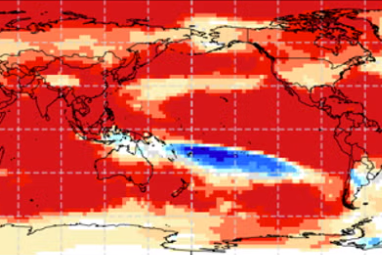
This year’s El Niño, which occurs when sea temperatures in the tropical eastern Pacific rise 0.5C above the long-term average, is not expected to peak until December.

This means extreme weather associated with the phenomenon could continue well into 2027.
But El Niño cannot add new heat to the planet, and instead releases existing heat stored in the ocean.
According to the WMO, the ocean absorbs 90 per cent of excess heat trapped by greenhouse gases – created primarily by the burning of fossil fuels.
“We have entered a new age of climate extremes,” said UN Secretary-General António Guterres.
“A supersized El Niño is colliding with a planet already superheated by manmade climate change. Climate records keep falling. The human costs keep rising and those least responsible are suffering first and worst.”
Mr Guterres called on world leaders to “get serious” by cutting emissions faster, accelerating the transition from fossil fuels to clean energy, and delivering the finance and protection required for vulnerable countries.
Read MoreHow close are we to a long-term breach of critical 1.5C global warming limit?
These states can expect a white Christmas, according to the Old Farmer’s Almanac