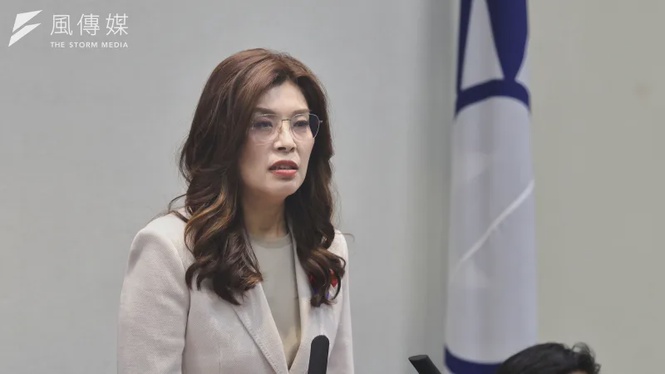
Taiwan's main opposition party, the Kuomintang (KMT), is bracing for a leadership fight after the November 28 vote. Party insiders say that if the KMT loses ground in the 2026 Taiwan local elections, Taichung Mayor Lu Shiow-yen is prepared to step forward on election night and lead a push to replace party chair Cheng Li-wun and change the party's direction.
The KMT now governs 15 of Taiwan's 22 cities and counties, including four of the six special municipalities, the country's largest cities: Taipei, New Taipei, Taoyuan, and Taichung. But races in Taipei and New Taipei are fierce, and contests in Keelung and Taichung have grown more competitive, all under pressure from the "Yang Wave," the surge of support built around Puma Shen, the ruling Democratic Progressive Party's (DPP) Taipei mayoral candidate. The wave takes its name from the last character of Shen's Chinese given name, Po-yang.
Cheng has said publicly that the KMT will hold all four cities, if narrowly. Inside the party, however, there is little sign of that confidence. Many fear a result the KMT will struggle to absorb.
Three Scenarios, And None Is A KMT Victory
A senior KMT figure who has run for office several times and has long experience managing campaigns told Storm Media that the party no longer has any realistic path to declaring victory. There are only three outcomes, he said: a small defeat, a major defeat, or a collapse.
A small defeat would mean keeping Taipei, New Taipei, Taoyuan, and Taichung while losing Chiayi City and Changhua County, with possible slips in Keelung, Yilan County, or Hsinchu County. With the KMT expected to win back the outlying island counties of Penghu and Kinmen, the party would end up only two or three short of its current 15. But Changhua, with more than 1 million voters and often called Taiwan's "seventh special municipality," is a heavy loss, which is why he counts it as a defeat.
Keeping the four big cities would make any other losses a defeat at a controllable price, he said. Losing one of them, especially Taipei or New Taipei, would be a major defeat, bringing infighting and recriminations and a devastating blow to the KMT's hopes in the 2028 presidential election.
Losing two or more, for example Taipei and New Taipei along with Taichung, would be a collapse, he said. Even the Taiwan People's Party (TPP), the smaller opposition party campaigning alongside the KMT, would not escape the damage. The whole opposition camp would sink into a long period of weakness and disarray, the 2028 race would effectively enter garbage time, and President Lai Ching-te's reelection would be almost a foregone conclusion.
Cheng's Allies Are Already Hunting For Scapegoats
The KMT's candidates are too busy chasing votes to think about what comes next. But the party heavyweights, legislators, and local faction leaders campaigning for them, along with Cheng and the party leadership, have sensed that the mood is not good and are quietly preparing for a shake-up.
A veteran KMT party official said that if the results are poor, the party's anti-Cheng and pro-Cheng camps will go to war immediately. Cheng's camp knows that once her opponents move, their only goal will be to force her to take responsibility and resign, and that they will not stop short of a new chairmanship election.
Party headquarters and Cheng's allies have reportedly heard for some time that her opponents are organizing a post-election push to oust her, and they have begun looking for scapegoats in advance. In recent days, deep-blue social media groups that back Cheng have widely shared posts blaming Jaw Shaw-kong, the former chairman of the Broadcasting Corporation of China and leader of the "Fighting Blue" movement, for interviewing Shen and fueling the Yang Wave, badly hurting Taipei Mayor Chiang Wan-an's campaign. Other Cheng supporters have posted calls to "consolidate the leadership core."
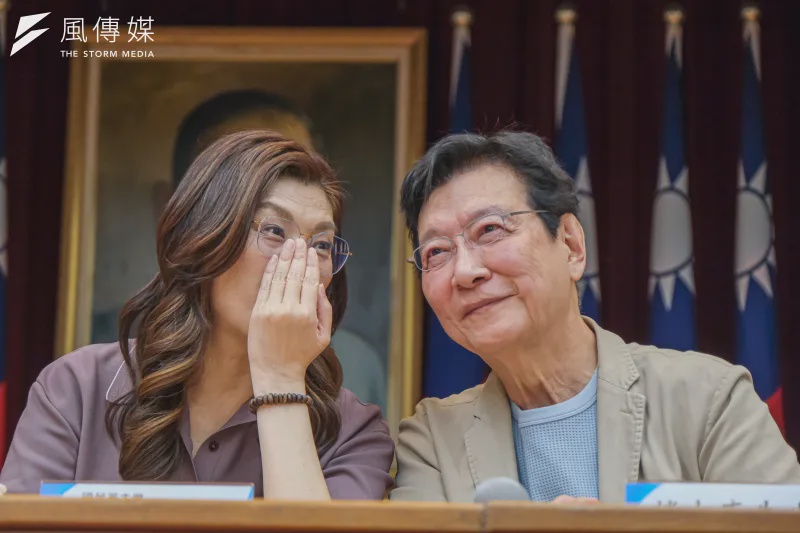
Cheng herself has signaled in media interviews that she will not quit over a loss. Asked in a television interview on November 10 whether losing any particular city or county would count as a defeat or lead her to resign, she answered directly: "No! I don't think that will happen."
She has also cast her role in the campaign as secondary. "I'm just a supporting actor, just doing my part to help the campaigns as much as I can," she said. In an interview with Mirror Media, she said that the KMT's struggles in strongholds such as Taipei, New Taipei, and Taichung were due not only to the unexpected Yang Wave but also to the low-key strategies of the candidates in those cities.
Those remarks stirred up plenty of debate in the party. Many found it inappropriate for the party chair to publicly fault her own candidates while they were still fighting, and campaign teams in the cities she mentioned privately accused her of a serious lapse in conduct.
Candidates Kept Cheng At Arm's Length
A former senior KMT party official read Cheng's comments as an inoculation against a post-election push to oust her. If she was only a supporting player, a defeat would be the fault of candidates who ran poor campaigns with bad strategies. At most, the party's secretary-general and the head of its organizational development committee, who run the campaign machinery, would have to resign, but there would be no reason for the chair to go.
A KMT insider agreed that Cheng had a point, because she really has been a supporting actor with almost no presence in the 2026 campaign. Her strongly pro-China positions led many KMT candidates to see her as box office poison. They did not want her on their stages, fearing she would drive away young and centrist voters.
When Chiang opened his campaign headquarters on October 26, his team had not planned to invite Cheng at all, which upset her. When a Taipei KMT legislator with a senior role in Chiang's campaign went to party headquarters to smooth things over, Cheng told him that TPP Chair Huang Kuo-chang had been invited, and asked how it would look if the KMT's own chair stayed away. Would that help Chiang in such a tight race? The argument won over Chiang's team, which then arranged for Cheng to speak after Huang.
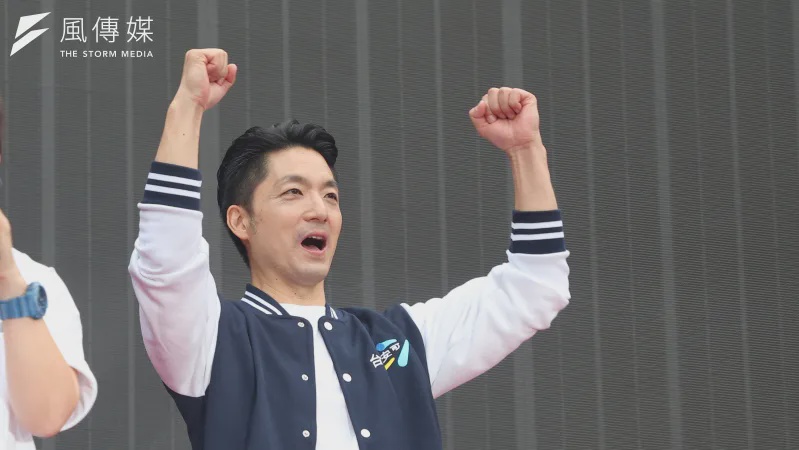
Past KMT Chairs Quit After Big Defeats
An anti-Cheng KMT figure in central Taiwan predicted that Cheng would argue the defeat had nothing to do with her, since candidates kept her off their stages. She might even tell supporters that the party would not have lost had candidates brought her in to campaign and project unity.
He was scathing. From the 2025 mass recall campaign against KMT legislators through early 2026, he said, the KMT's prospects across the country looked very good. But after Cheng became chair, her insistence on a pro-China line raised doubts among voters, nominations in Changhua and elsewhere descended into chaos, and both her own image and the party's standing suffered. As chair, she showed neither leadership nor campaign pull, he said, and if the party is routed, she should take political responsibility and resign, with no excuse to cling to the post.
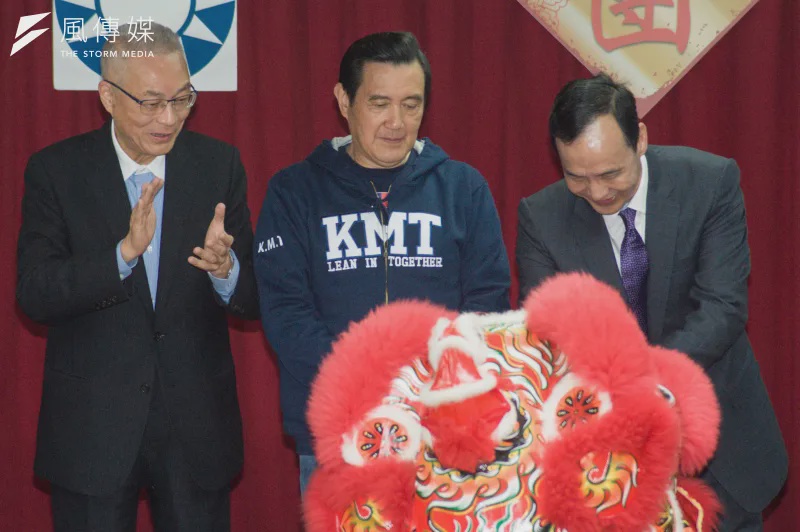
A senior KMT campaign figure noted that resigning after a major electoral defeat has long been the norm for KMT chairs. Ma Ying-jeou, who was both president and party chair, stepped down after the 2014 local elections. Eric Chu resigned after the 2016 presidential and legislative defeat, and Wu Den-yih after the 2020 one. Cheng's political weight and seniority within the party fall far short of theirs, he said, so what political capital would let her hold on if the results disappoint? KMT supporters have their own standards of accountability, he added, and even the members who elected her would not back her to the end at the cost of the party's survival.
Lu Shiow-yen Is Ready To Move On Election Night
Cheng does not see herself as a traditional KMT figure, and her background in the DPP and the student movement has made her highly resilient under pressure. If she refuses to resign, the party has no mechanism to remove her.
A leading anti-Cheng figure said she would likely resist stepping down, but that the pressure on her after the vote would be far greater than she imagines. Even if the KMT narrowly holds all four big cities, races that once looked favorable became extremely difficult because of her line and her style, he said. Who among those planning to run for president in 2028, or for reelection to the legislature, would want her to stay on as chair? He expects party members to join forces with the KMT's local power bases to push her out.
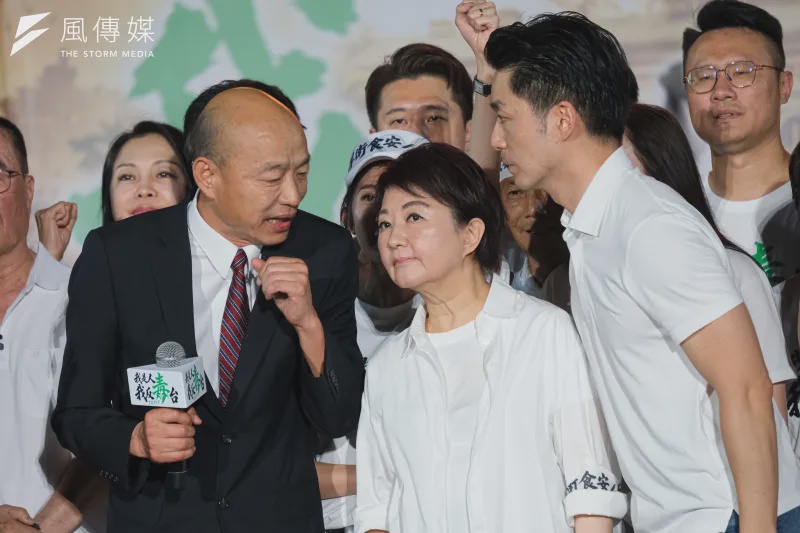
In a small defeat that keeps the four cities, he said, Cheng might face opposition only from KMT legislators. Party heavyweights and local leaders such as Lu, Legislative Speaker Han Kuo-yu, former Speaker Wang Jin-pyng, and Eric Chu might prefer to let things settle rather than risk an ugly fight that damages the party, and might hold off from moving against her directly. But if the KMT suffers a major defeat by losing one of the four cities, or a collapse that leaves it with two or even just one, Lu, who already plans to run for president in 2028, will certainly make a big move, he said.
Even The Huang Fu Hsing Bloc May Waver
A KMT routed at the polls that fails to review and rebuild at once would keep losing in the next presidential and legislative elections, and party leaders will not stand by and watch it head toward ruin. According to people familiar with her thinking, Lu has already made up her mind: if the results are bad when the votes are counted on the night of November 28, she will come forward, echo the demands of legislators and local power brokers, and call for sweeping reform of the KMT, with new leadership and a new direction.
A KMT insider said that once Lu declares herself ready to take on the task of saving the party, other heavyweights such as Han, Wang, and Chu, along with KMT mayoral and county candidates who won or narrowly lost, and even key figures who have been backing Cheng behind the scenes, would follow one by one in supporting Lu, based on an understanding reached beforehand. Cheng would then be isolated at party headquarters.
Even Huang Fu-hsing, the KMT's military veterans' branch and Cheng's most loyal base, might have to rethink whether to keep backing her or put saving the party first, the insider said. If it comes to that, he said, Cheng, who is resilient but also known for being smart and flexible, will surely make a pragmatic choice.
2026 Taiwan Local Elections: Full Coverage
From the Taipei mayoral race between Chiang Wan-an and Puma Shen to New Taipei, Taichung, Keelung and beyond, Storm Media tracks every report on the races and updates the page regularly.
► See all our 2026 Taiwan local elections coverage
You've read it. Now join the conversation — follow us on X, Facebook and IG. Editor: Penny Wang