In an opinion piece published in the newspaper Le Monde, directors and producers denounce the threat posed by the draft 2027 finance bill to the funding of French cinema. The signatories believe that the measures currently being debated in Parliament could lead to the disappearance of 400 films over five years, around 80 productions a year.
Among the signatories are several leading figures in French and European cinema, including Jacques Audiard, Costa-Gavras, brothers Luc and Jean-Pierre Dardenne, Claire Denis, Michel Hazanavicius, Agnès Jaoui, Justine Triet, Julia Ducournau, Cédric Klapisch and Alice Winocour.
"The new finance bill risks wiping French cinema from our screens on a scale never seen before", they write. The authors of the op-ed condemn a build-up of measures likely to weaken the two pillars of funding for the sector: public money and private investment.
Budgets for public broadcasting and the CNC cut back
On the public funding side, industry professionals point out that the budget for France Télévisions (which helps finance many films, around 70 a year) is set to fall by 47 million euros by 2027.
In addition, the general rapporteur for the budget, Philippe Juvin (Les Républicains), is proposing a 35‑million‑euro levy on the resources of the National Centre for Cinema and the Moving Image (CNC) in 2027. The aim would be to return to the state part of the additional revenue expected from changes to advertising tax rules.
The CNC is the beating heart of French cinema: it redistributes money to support writing, shooting, distribution and the screening of films in cinemas. This system has a unique characteristic: it does not cost the state a cent.
The CNC is funded by small taxes collected directly on cinema tickets, television and streaming platforms. It is topped up by private copying levies, which apply to devices used to store creative works, such as smartphones, tablets, external hard drives and USB sticks.
It is therefore the sector itself that pays for its own creation.
The CNC is in fact funded by several earmarked taxes, collected notably on cinema tickets, television channels and streaming platforms. It is topped up by private copying remuneration, which applies to devices that can store works, such as smartphones, tablets, external hard drives and USB sticks.
Funding for creation therefore rests to a large extent on contributions collected directly within the sectors concerned and from consumers.
"French cinema therefore runs without costing taxpayers a single cent", the signatories recall. They also highlight the "major" economic weight of this industry, which generates 260,000 jobs (compared, for example, with 400,000 in the car industry), "brings life to the regions thanks to location shooting and sustains an exceptionally dense network of cinemas across the country".
Canal+: fears that a VAT hike could spell the final curtain for hundreds of films
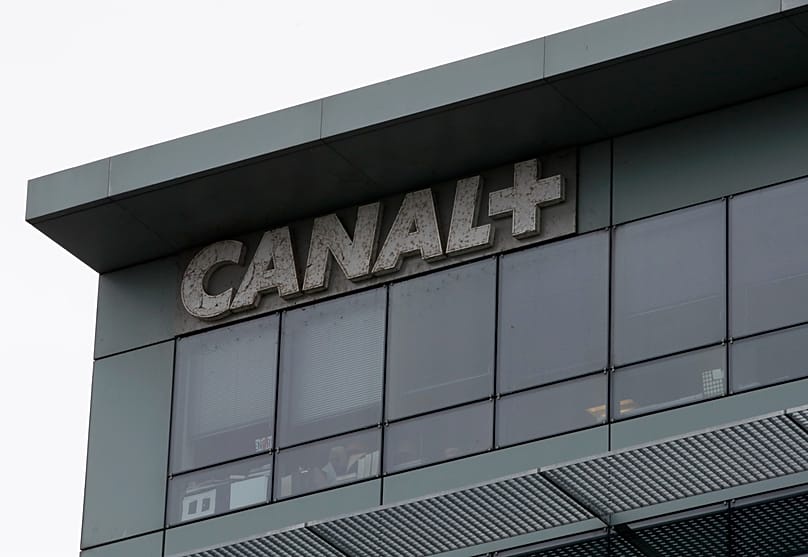
The other major threat concerns the private sector, and Canal+ in particular, which is the biggest private contributor to French cinema. In France, Canal+ has a legal obligation to reinvest part of its revenue in funding national film production.
The government is considering doubling VAT on pay-TV subscriptions by 2027, raising it from 10% to 20%. To absorb this extra tax, the pay-TV channel could pass the cost directly on to its subscribers or decide to invest far less money in cinema.
It is worth remembering, however, that at this stage it is still only a draft budget under examination. There is no guarantee that this VAT hike will be retained in the final version of the 2027 budget.
If adopted, the measure could nonetheless have far‑reaching consequences. Filmmakers point out that a cross-industry agreement signed at the end of July stipulates that any increase in VAT for Canal+ would render its investment obligations in cinema null and void. They estimate that such a break would mean a reduction of 750 million euros for film creation between 2028 and 2032.
"Very concretely, over a five‑year period, this means 400 films simply will not exist", they warn. The most fragile productions could struggle even more to raise finance, with knock‑on effects on shoots, jobs and ultimately the diversity of films available to audiences.
Canal+: a love-hate relationship
The situation is not without irony.
In May, during the Cannes Film Festival, several of the signatories to this new op-ed took part in the "Zapper Bolloré" movement, launched by some 600 film professionals to protest against Vincent Bolloré’s growing influence over the sector, notably through Canal+, which belongs to the group controlled by the conservative billionaire.
The protest prompted a sharp reaction from Canal+: its CEO, Maxime Saada, then announced that he no longer wished to work with the signatories.
A few months on, some of these filmmakers are therefore sounding the alarm about the impact that a VAT hike for Canal+ could have, when its financial contribution remains vital for French production.
A paradox that illustrates how dependent French cinema has become on a player whose influence is nevertheless contested by part of the profession.
Tribune des cinéastes dans Le Monde, contre le projet de budget 2027
A new law on cinema
Beyond budget measures, the signatories call for a complete overhaul of the sector’s legal framework, still largely governed by the audiovisual law dating back to 1986. They are therefore arguing for a genuine cinema law that would safeguard the "chronologie des médias" – a French rule which sets out how long after a theatrical release a film can be shown on different platforms, from VOD and free-to-air television to Netflix.
They also want tighter regulation of artificial intelligence and protection of the remit of the National Centre for Cinema and the Moving Image (CNC).
The signatories are urging MPs to back the amendments proposed by professional organisations in support of public broadcasting, the CNC budget and the retention of a 10% VAT rate for Canal+, in return for firm commitments in favour of creation.
The filmmakers believe that the stakes go far beyond the sector’s economic balance. Faced with the standardisation of content, which they blame on major US platforms such as Amazon Prime, Disney+ and Netflix, they defend a model which, in their view, helps sustain France’s cultural influence.
This text was translated with the help of artificial intelligence. Report a problem : [feedback-articles-en@euronews.com].