THE Department of Justice (DOJ), Bureau of Customs (BOC) and National Bureau of Investigation (NBI) have established a joint front against agricultural economic sabotage.
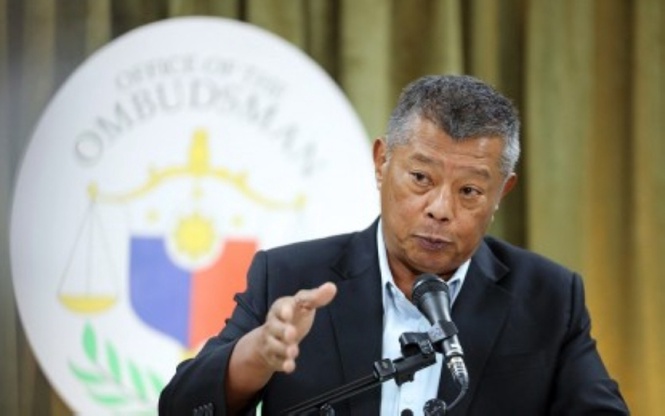
The three agencies on Monday signed an agreement to share intelligence, coordinate investigations and prosecutions, and pursue not only the smugglers but also their financiers, organizers and government officials who coddle them. Ombudsman Jesus Crispin Remulla witnessed the signing. DOJ Acting Secretary Fredderick Vida said agricultural smuggling, hoarding, profiteering and cartelization are not ordinary commercial activities because they take income from farmers and put food prices beyond the reach of consumers.
He cited the sharp spike in onion prices several years ago, when white onions reached as much as P300 to P400 a kilo, as an example of how agricultural economic sabotage affects ordinary Filipinos.
“These are not peculiar stories. Everyone has lived to it. Every Filipino has lived some part of it,” Vida said.
He noted that Republic Act 12022, or the Anti-Agricultural Economic Sabotage Act, makes large-scale agricultural smuggling involving products worth at least P10 million a form of economic sabotage, punishable by life imprisonment and a fine equivalent to five times the value of the goods.
Vida said enforcement has often been hampered when information and evidence remain scattered among agencies.
“A shipment is seized, but the evidence never reaches the investigator. A case is built, but the prosecutor sees it only when the gaps can no longer be filled,” he said.
Under the new agreement, the BOC will guard the borders; the NBI will do the investigating, intelligence gathering and forensic work; and the DOJ will evaluate evidence and prosecute cases in court.
The agencies will create a joint task force and referral protocols, while a technical working group will be convened within 30 days to turn the agreement into an operational framework.
Vida said DOJ prosecutors, including a special team created under the anti-agricultural economic sabotage law, will engage early in cases to help ensure that evidence is properly developed from the outset.
“Our goal is not simply to file cases. It is to file cases that can stand judicial scrutiny,” he said.
Vida also warned smugglers and government officials who may protect them: “The gaps between our agencies are where you have operated. Today, we begin closing those gaps.” BOC Commissioner Ariel Nepomuceno said the partnership would strengthen the agency’s ability to pursue what he described as the highly lucrative illegal business of smuggling.
He said the bureau had sought the DOJ’s assistance as early as 2024, when then-Justice secretary Jesus Crispin Remulla supported the creation of an inter-agency team.
Nepomuceno said the team will coordinate in intelligence gathering and interdiction to investigation, case preparation and prosecution.
He said the objective was to build stronger cases and improve the rate of convictions by ensuring that evidence is developed consistently from the beginning.
NBI Director Melvin Matibag stressed that the agreement must go beyond the signing ceremony, calling for concrete action, timely information sharing, clear accountability and measurable results.
He said enforcement must remain grounded in the law, due process, professionalism and integrity.
Remulla said agricultural economic sabotage cannot be effectively addressed by a single agency because it involves importation, customs enforcement, intelligence, investigation, prosecution and financial transactions.
He urged the agencies to “connect the dots” rather than allow critical information to remain isolated within individual offices.
Remulla also warned that the government must pursue insiders who facilitate smuggling, saying the trade cannot thrive without corrupt officials who manipulate documents, overlook inspections, leak information or selectively enforce regulations.
He said the Office of the Ombudsman would act when there is evidence that public officials abused their positions to enable, protect or profit from agricultural economic sabotage.
“Rank, position, connections, and political influence will provide no protection,” Remulla said.