Wine glasses might seem like one of those products where different designs are simply a clever marketing ploy, but the right glass really can make a difference to how you experience and taste a wine. From the shape of the bowl to the thickness of the rim, small details can influence how aromas develop and how the wine reaches your palate.
For most wine drinkers, a good all-rounder is a sensible place to start. Look for a clear, lightweight design with a fine rim and enough room to swirl your wine. Of course, there are other practical considerations, too, including how comfortable the glass is to hold, whether it’s dishwasher-safe and how easily it can be replaced if broken.
In this guide, I’ve tested a range of designs, from affordable everyday glasses to premium crystal options, to find the best buys for different budgets and occasions. Whether you’re after a reliable set for everyday use or something a little more special for entertaining, there’s an option to suit.
Read more: Best red wines, taste-tested by an expert
The best wine glasses for 2026 are:
- Best overall – Klink London Chelsea wine glasses, set of six: £30, Amazon.co.uk
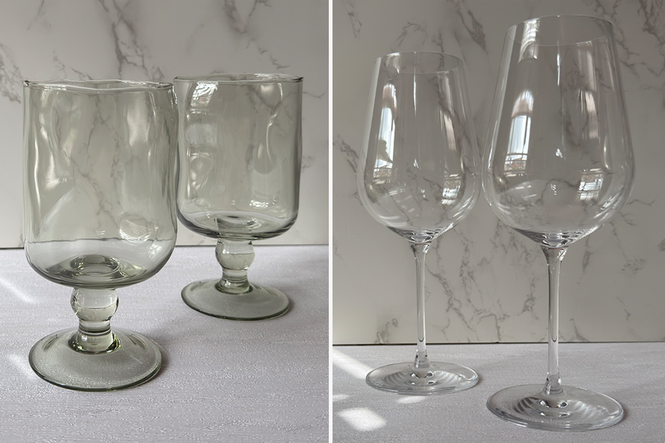
- Best budget buy – George Home green hammered wine glasses, pair: £8, Asda.com
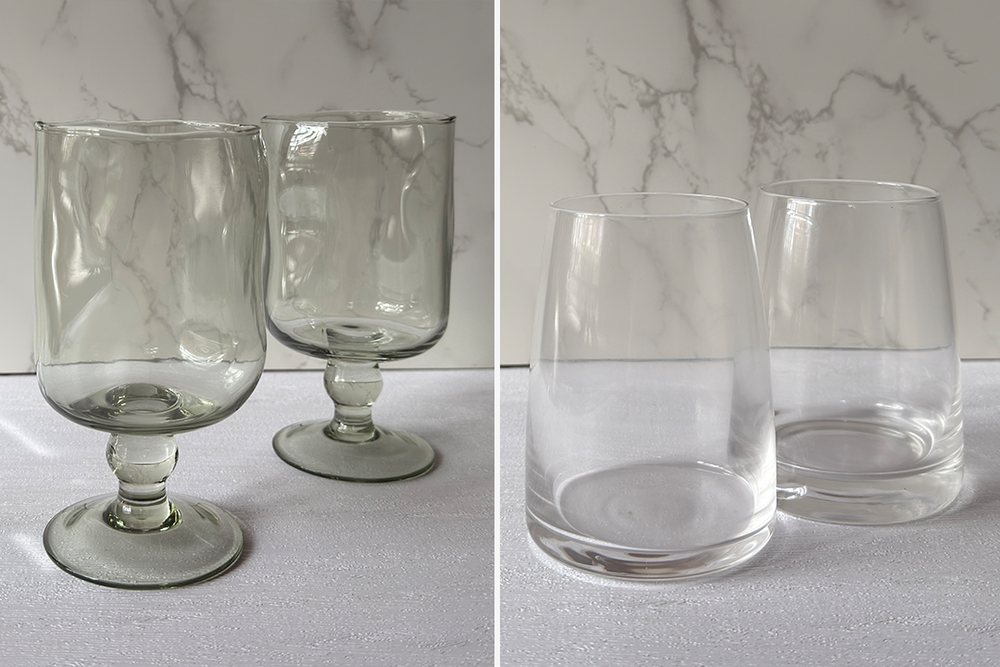
- Best stemless design – Mikasa Palermo stemless glasses, set of four: £27.99, Lakeland.co.uk
Read more: Best orange wines, taste-tested
Klink London Chelsea wine glasses
Best: wine glasses overall
Why we love it
- Exceptional value for six lead-free crystal glasses
- Generous, versatile bowl
- Well-balanced stem
Take note
- Might be too tall for some dishwashers
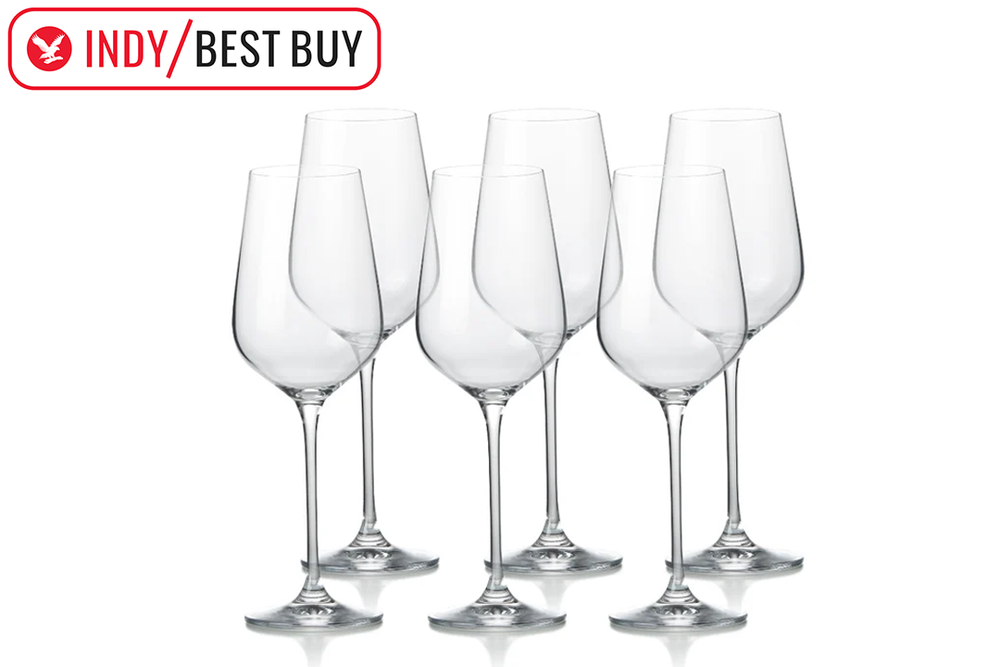
Six lead-free crystal glasses for £30 sounds like a compromise before the box is opened, but that’s definitely not the case. Klink London’s Chelsea glasses are the best I tested, with a standard 540ml tulip bowl, a fine enough rim and a long, well-balanced stem. They give red wine room to open without making a 125ml pour look ungenerous, while the taper holds on to the aromas.
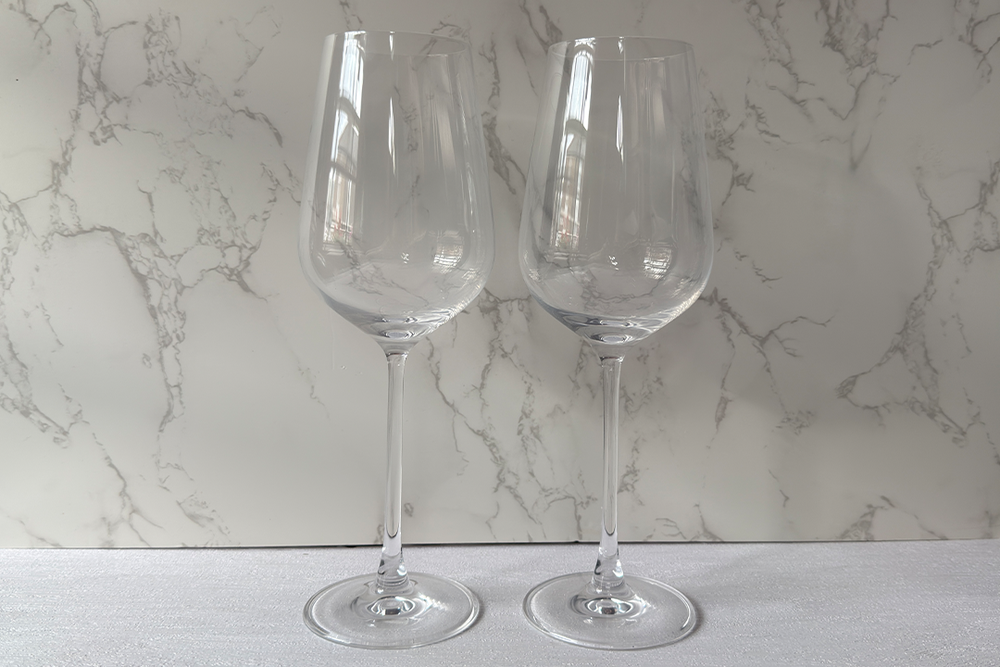
Compared with others on the list, the glasses are slightly heavier and less exact through the rim, but they’re also dramatically cheaper than the most premium and better suited to a busy table. At 26.2cm, they may not clear every dishwasher rack or cupboard shelf, but Klink's factory-owned pricing model delivers unusually convincing value.
Key specifications
Buy now £30, Amazon.co.uk
George Home green hammered wine glasses
Best: budget wine glasses
Why we love it
- Very inexpensive without looking anonymous
- Stable shape and tactile hammered finish suits busy tables
Take note
- Green, textured glass is unsuitable for judging wine colour
- Thicker rim offers less finesse than clear crystal options
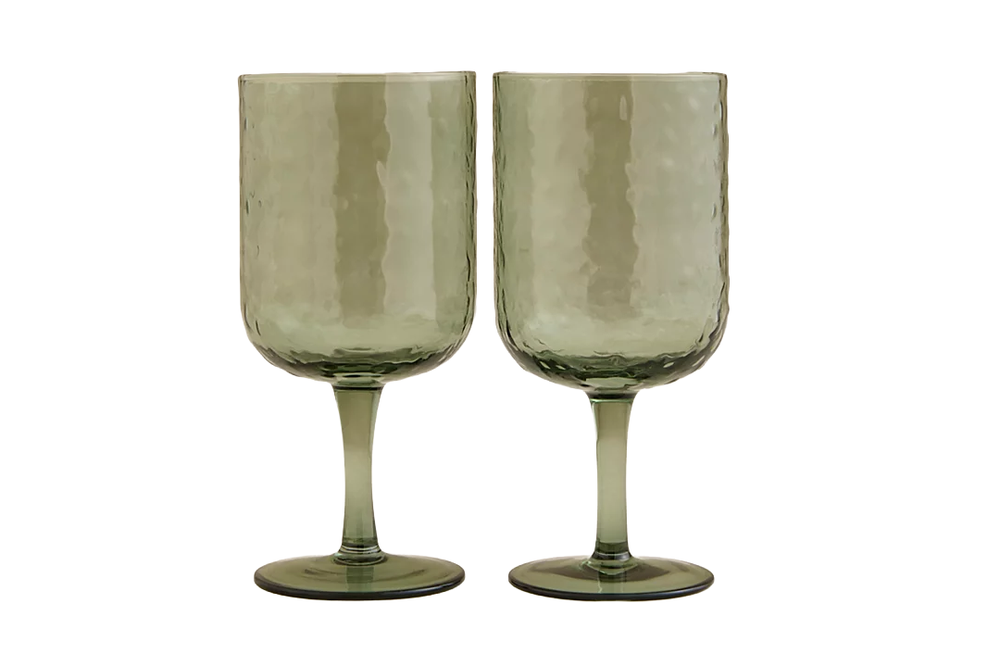
These are not tasting-room glasses, yet nor is that the point. George Home’s chunky green glass and hammered design make them feel cheerful and forgiving, while the short, substantial stem is far less alarming on a crowded table than most. They’re comfortable for casual red, white and rosé and the textured bowl catches the light particularly well.
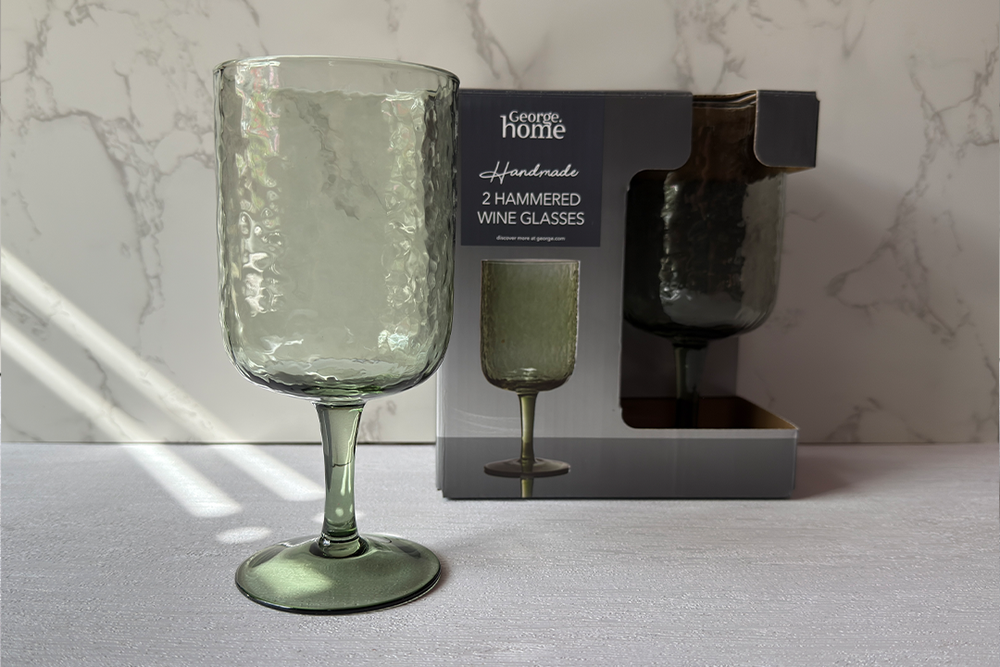
The colour and thickness inevitably obscure a wine's exact hue, while the broader rim cannot match a fine crystal glass for aromatic focus. At £4 each, however, they offer far more personality than most entry-level clear sets and can go through the dishwasher afterwards.
Key specifications
Buy now £8, Asda.com
Villeroy & Boch manufacture rock red wine glasses
Best: statement wine glasses
Why we love it
- Distinctive black stem and foot still leaves the wine visible
- Generous red-wine bowl feels balanced in use
Take note
- Requires hand washing
- Black finish shows water marks and limits versatility on the table
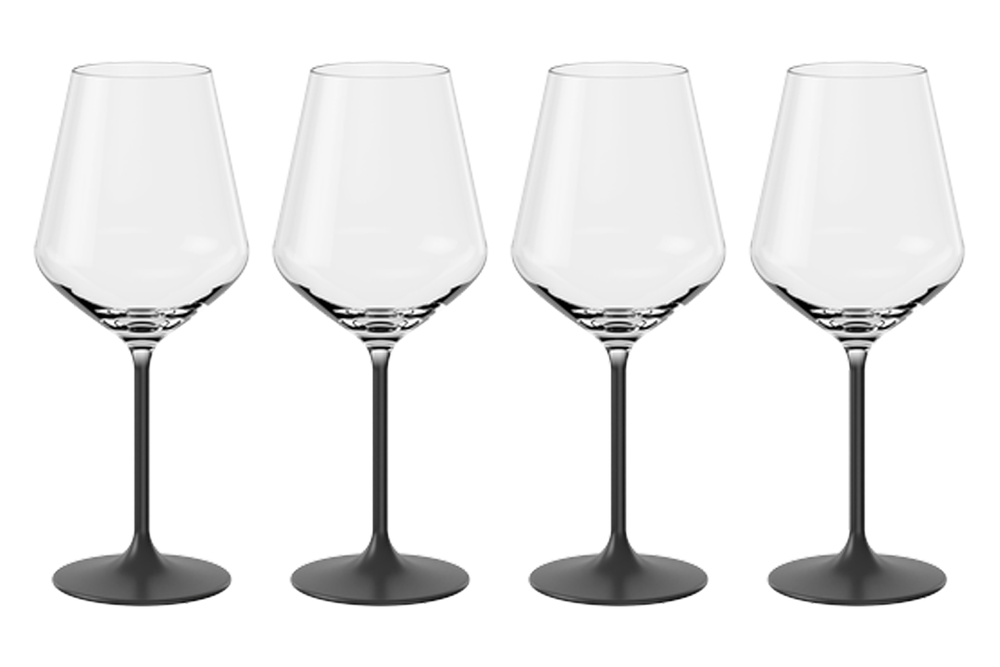
A clear 200ml bowl perched on a matte-black stem and foot makes Villeroy & Boch’s manufacture rock glasses immediately different, without tinting the wine itself. The contrast looks especially sharp with pale reds, and the generous bowl gives red wine enough air.
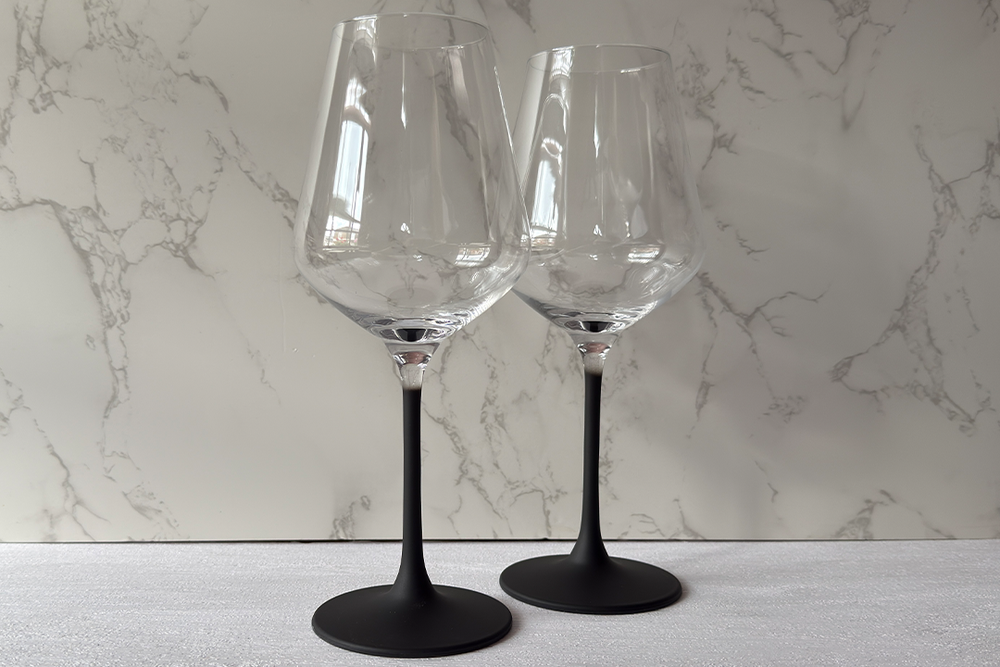
Despite the theatrical appearance, the glass feels composed rather than top-heavy. It’s less neutral and less precise than some of the better options, but the visual impact helps to set these glasses apart. However keep in mind that the black finish shows water marks and hand washing a set this tall is more work than loading the dishwasher.
Key specifications
Buy now £41.4, Amazon.co.uk
Mikasa Palermo stemless glasses
Best: stemless wine glasses
Why we love it
- Stable, space-saving shape is less vulnerable to knocks
- Clear crystal and etched detail look smarter than everyday tumblers
Take note
- Hands warm the bowl and leave visible fingerprints
- Less aromatic focus than stemmed glasses
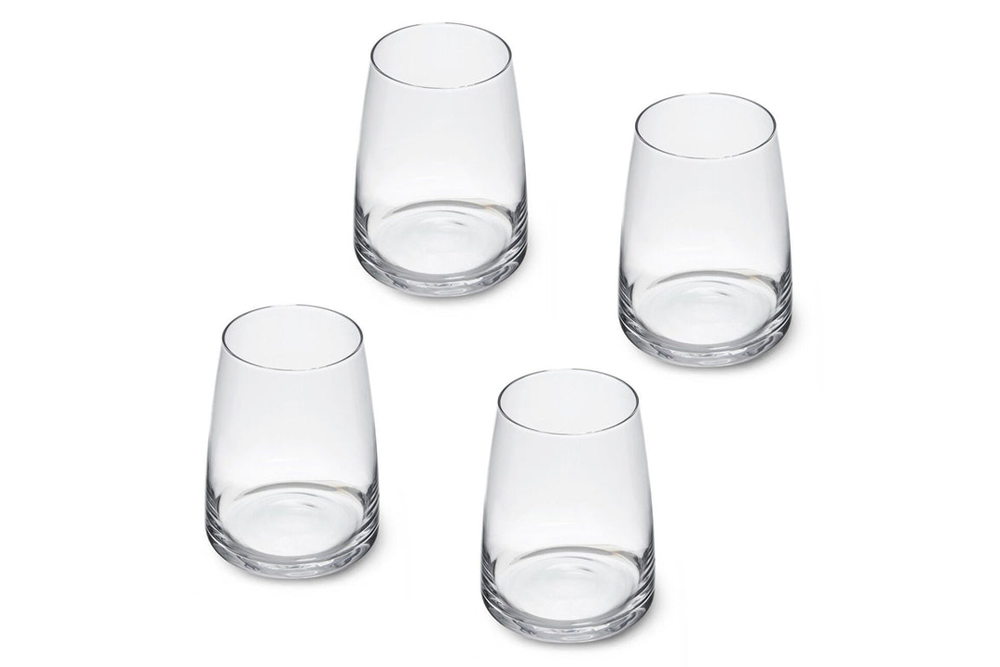
Removing the stem solves one wine-glass problem and creates another. Mikasa's Palermo glasses are difficult to knock over, easy to fit in a cupboard and comfortable enough for wine or practically any other drink.
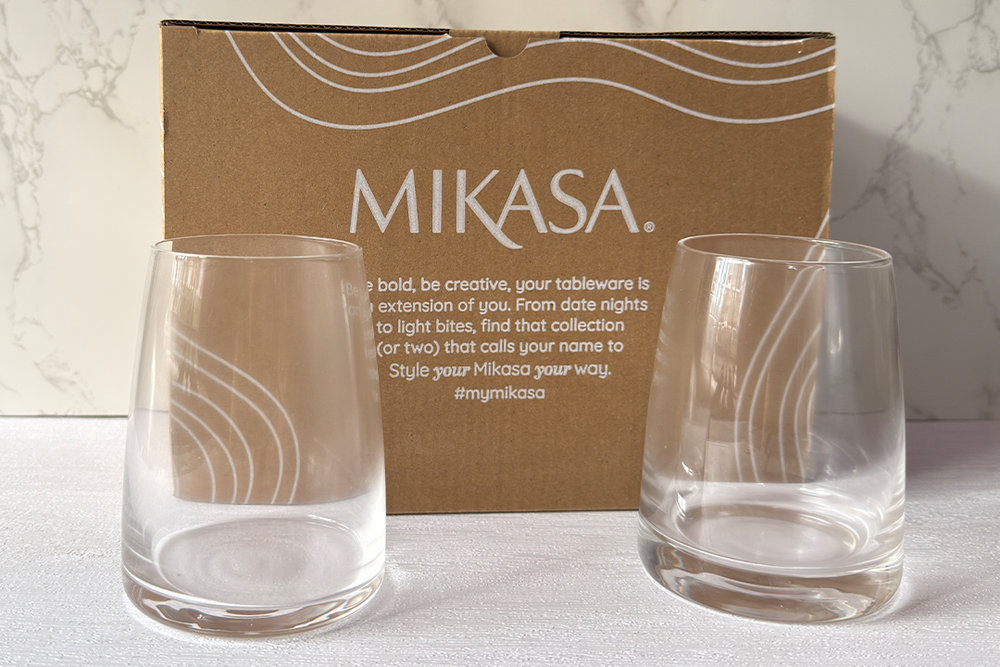
The clear lead-free crystal and subtle etched detail make them feel more considered than ordinary tumblers and the 350ml bowl leaves sensible room to swirl. However holding the bowl warms chilled white wine more quickly, and fingerprints become part of the view. They cannot quite match a stemmed glass for aroma or ceremony, but are the practical choice for small kitchens and animated dinner tables.
Key specifications
Buy now £27.99, Lakeland.co.uk
Richard Brendon Jancis Robinson precision universal wine glasses
Best: universal wine glasses
Why we love it
- Fine rim and tulip bowl express a broad range of wines clearly
- Long, elegant stem
Take note
- Pricey for a set of two
- Slender stem needs careful loading and storage
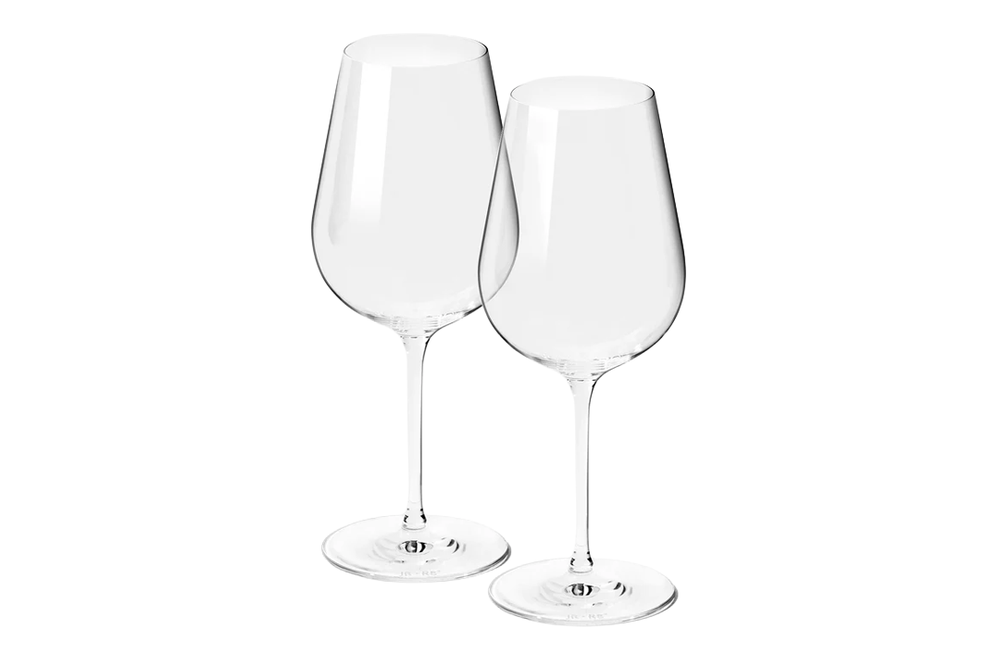
The word universal is often optimistic, but Richard Brendon’s collaboration with wine writer Jancis Robinson comes remarkably close. The machine-made bowl reproduces the proportions of the much dearer mouth-blown original glasses, with a fine rim and controlled tulip shape.
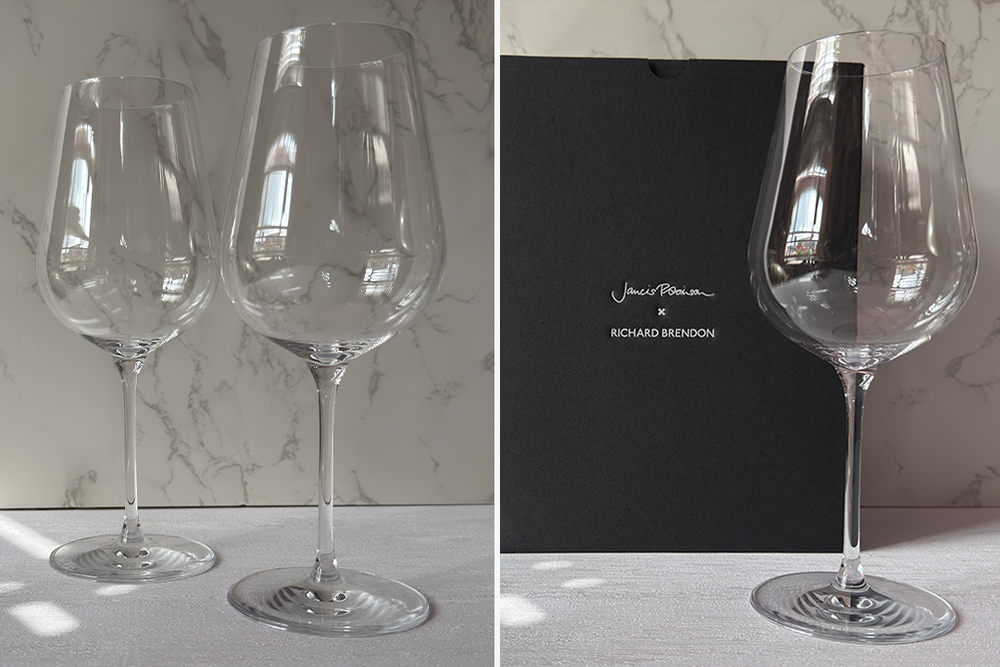
Alongside the other glasses tested, these preserved the most detail in the wines tasted. They are slightly heavier than their handmade sibling, which makes them less nerve-racking to use, though they still cost considerably more than Klink's Chelsea set. The long stem requires careful handling, but one design can credibly replace several specialist glasses.
Key specifications
Buy now £52, Richardbrendon.com
Ikea Stockholm 2025 wine glasses
Best: value mouth-blown wine glasses
Why we love it
- Remarkable price for mouth-blown glass
- Low profile and stable flat foot are easy to store and use
Take note
- Open rim does not concentrate aroma as effectively as tulip shapes
- Handmade variations mean the set is not perfectly uniform
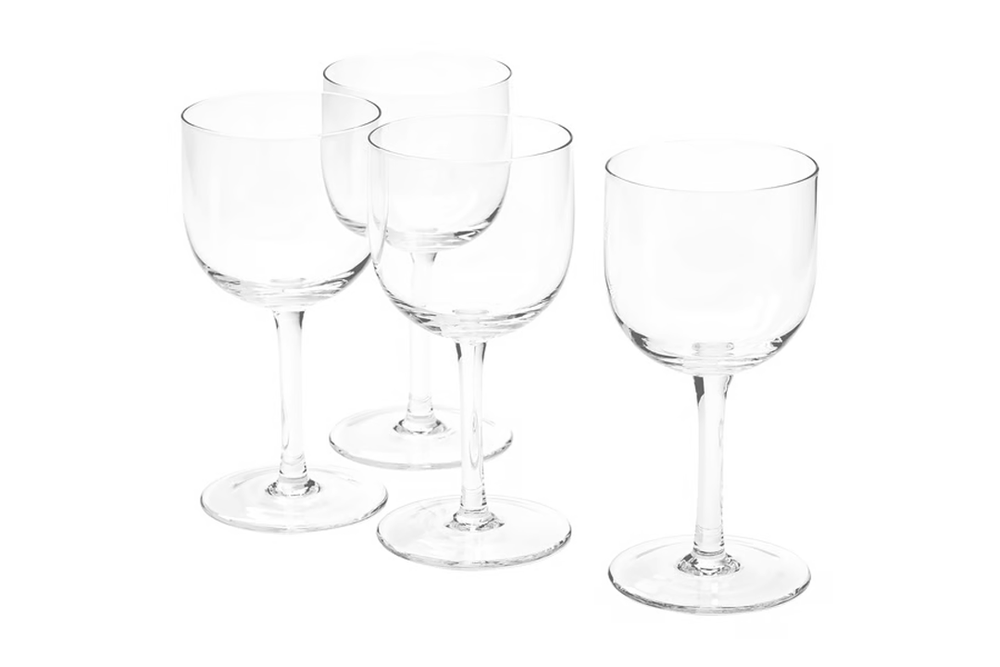
Mouth-blown glass at less than £5 a stem is a claim that understandably rouses suspicion. Nonetheless, Ikea's Stockholm 2025 set is genuinely impressive. Each glass is thin, neatly weighted and just 17cm tall, with a broad, flat foot that feels secure and slides easily into shorter cupboards.
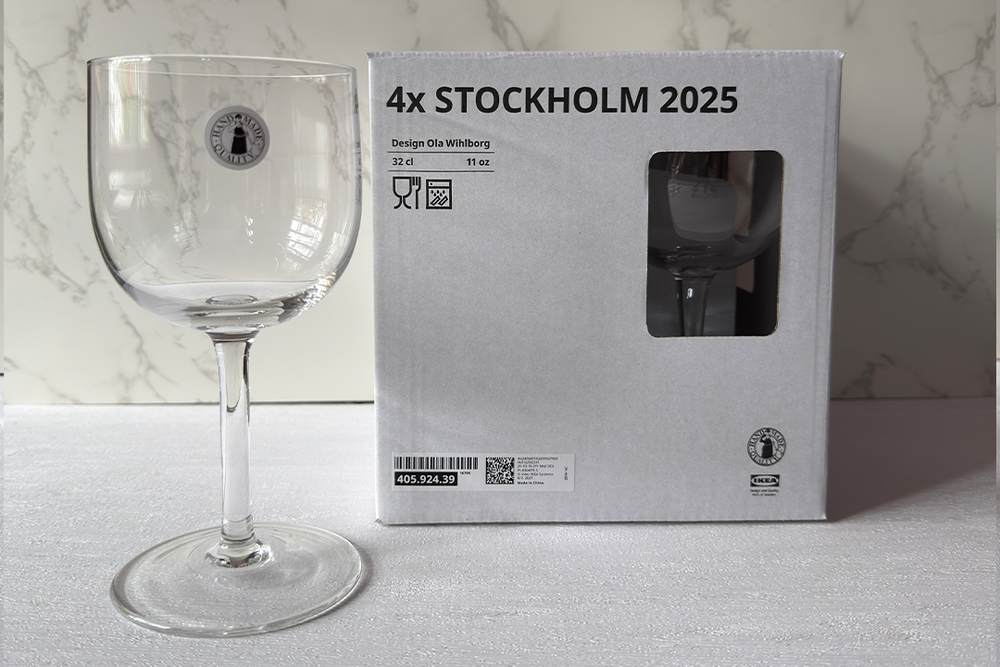
Small variations between pieces add character rather than looking careless. The 320ml bowl is more compact than others on the list and the relatively open rim lets aroma disperse a little quicker, so it is not the choice for forensic tasting. Yet for everyday wine, dishwasher cleaning and a modern table, the balance of craft, price and storage is difficult to fault.
Key specifications
Buy now £19, Ikea.com
Made Afonso wine glasses
Best: colourful wine glasses
Why we love it
- Soft green colour and low profile bring character to the table
- Stable, comfortable shape works well for relaxed drinking
Take note
- Tinted glass prevents accurate assessment of wine colour
- Hand-wash only care is inconvenient at this price
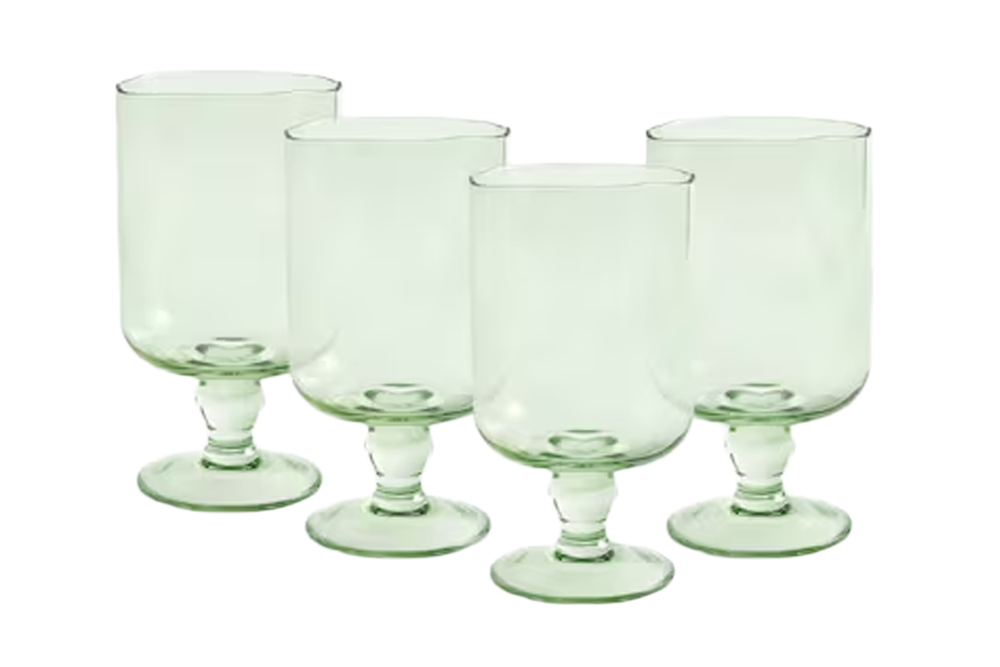
The Afonso is a deliberately relaxed wine glass. The glasses are low at 14.5cm, softly green and finished with a rounded lip rather than a sharp, tasting-style rim. They look particularly good at garden barbecues, while the squat proportions feel stable and less formal than the taller glasses.
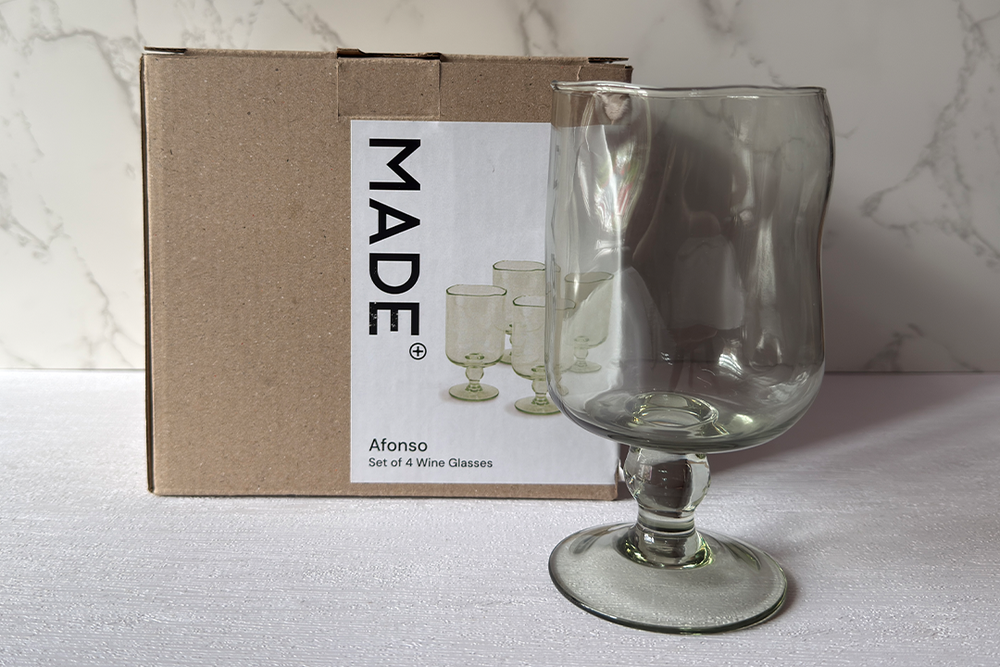
A 350ml bowl is ample for an everyday pour without becoming cumbersome, yet the trade-off is accuracy. Green glass changes the appearance of the wine, while the softened edge is pleasant rather than especially precise. More frustratingly, they’re hand-wash only despite being positioned as casual glassware. Great for colour and atmosphere, yet not so much for analysing expensive bottles.
Key specifications
Buy now £38, Made.com
Your questions on wine glasses answered
What are the best wine glasses?
Klink London's Chelsea set is the best wine glasses I tried, as they get the important things right at a price that encourages use, rather than reverence. The large bowl works across red, white and rosé, the lead-free crystal feels suitably refined, and six glasses for £30 is difficult to beat.
If performance matters more than price, the Jancis Robinson precision is the superior universal glass. Its finer rim and controlled tulip bowl made wine more articulate across the widest range of styles. For parties or a first set, Asda's green hammered pair is the best budget recommendation. It sacrifices tasting accuracy, but not all the pleasure of drinking wine.
How I tested wine glasses
I used every set repeatedly at home, comparing the glasses side by side, filled with a wine style that best suited them, including pinot noir for the red wine-specific glasses and sauvignon blanc for the more white-leaning. Universal shapes were also tried with sparkling wine. Rather than rewarding fragility for its own sake, I looked for the point where a fine rim and useful bowl met the realities of storage, washing and replacing a broken glass.
How to hold a wine glass
Hold a traditional wine glass by the stem, ideally between your thumb, index and middle finger, rather than cupping the bowl. This keeps fingerprints off the glass and, crucially, prevents the heat from your hand from warming the wine. Moreover, holding closer to the base offers a little more stability, while pinching the very bottom of the stem does look elegant but gives far less control.
Stemless glasses are the exception. Hold them low on the bowl and avoid nursing them for too long, particularly with chilled whites and rosé. There is no need for theatrical rules, though. Comfort and avoiding spills matter significantly more than etiquette here.
How to choose a wine glass for white vs red wine
While red and white wines are often served in different glass shapes, the distinction isn’t as important as you might think. According to Christopher Tanghe, master sommelier and owner of Walter's Wine Shop and Upwell Wine & Coffee, choosing a high-quality, preferably thin and lightweight glass matters more than whether it’s designed specifically for red or white wine. One exception is higher-alcohol wines, which are generally better suited to a narrower bowl rather than an especially wide one.
Are thin wine glasses better?
Yes, according to Tanghe. Thinner glasses are lighter and less distracting, allowing you to focus on the wine rather than the glass itself. They can also help introduce air to the wine as you drink, which can improve its expression. He also recommends avoiding oversized glasses and leaving enough room in the bowl to swirl the wine, helping release its aromas.
Do stems matter when it comes to wine glasses?
Stems aren’t essential, but they do serve a purpose, according to Tanghe. Holding a wine glass by its stem prevents fingerprints from obscuring your view of the wine and stops the warmth of your hand from raising its temperature. That said, stemless glasses are perfectly suitable for more casual occasions, such as picnics. If you’re drinking wine regularly at home, Tanghe recommends investing in a decent set of stemmed glasses.
Why you can trust IndyBest reviews
Jonathan Hatchman is a writer who specialises in alcoholic beverages and spirits – he’s taste-tested everything from the best bourbons to the best gins, best rums and more. He combines his expertise with a keen eye for value, making him well placed to judge the best wine glasses.
Meet the expert
Restocking your drinks cabinet? We’ve rounded up the best supermarket wines