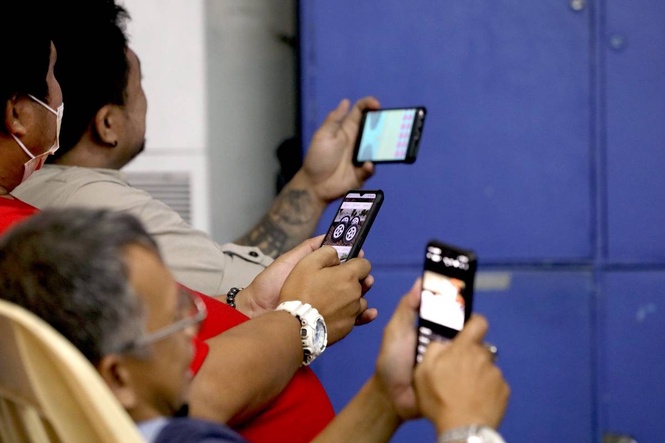
EIGHTY-FIVE percent of Filipino adults use the internet, with four in five users going online more than once a day, the latest Pulse Asia Research survey released on Monday showed.
The July 2026 Ulat ng Bayan survey found that internet use remained largely unchanged from the organization’s March 2026 poll, although internet penetration in the Visayas increased by 10 percentage points.
Among internet users, 80 percent said they access the internet more than once daily, while 14 percent go online once a day and only a small fraction use it less frequently.
Pulse Asia said internet use was widespread across all geographic areas and socioeconomic classes, with between 78 percent and 93 percent of adults in various regions reporting internet access.
Checking social media accounts was the most common reason for using the internet, with virtually all internet users (100 percent) citing it.
This was followed by reading, watching or listening to political news (97 percent), accessing other content of interest such as movies and recipes (91 percent), online buying or selling (55 percent), using email (37 percent), and online learning (16 percent).
Facebook remained the country’s dominant social media platform, with 99 percent of internet users reporting they have an account.
It was followed by YouTube at 73 percent, TikTok at 42 percent, Instagram at 17 percent, and X, formerly Twitter, at 6 percent.
Pulse Asia noted that TikTok recorded the largest increase in ownership, rising by 7 percentage points from March 2026.
Facebook was also the leading online news platform, used by 91 percent of internet users, followed by YouTube at 61 percent.
TikTok was cited by 21 percent, while vlogs, news websites, Instagram and X were used by smaller shares of respondents.
The survey also found that 72 percent of Filipino adults consider disinformation a major problem in the country.
Nearly a quarter, or 24 percent, were undecided, while only 4 percent viewed it as a minor problem.
When asked how they would deal with conflicting information, 56 percent said they would verify it through another trustworthy source.
Meanwhile, 19 percent said they would believe the version supported by most people, 14 percent would believe the first information they encountered, and 11 percent said they would simply accept that there are two sides to every story.
Among internet users, 41 percent said they were likely to believe information that had been widely shared online, while 44 percent were undecided and 15 percent said they were unlikely to believe it.
When determining whether online information is credible, 35 percent of internet users said they rely primarily on the source of the news, while 33 percent rely on their personal beliefs.
Smaller proportions said they consider the number of shares or likes, the opinions of family or friends, trusted government personalities, trusted private sector personalities, or celebrities and influencers.
The survey was conducted through face-to-face interviews from June 28 to July 3 and July 6, 2026, among 2,400 adults nationwide. It has a margin of error of ±2 percentage points at the 95 percent confidence level, while regional estimates have a ±4 percentage point margin of error.