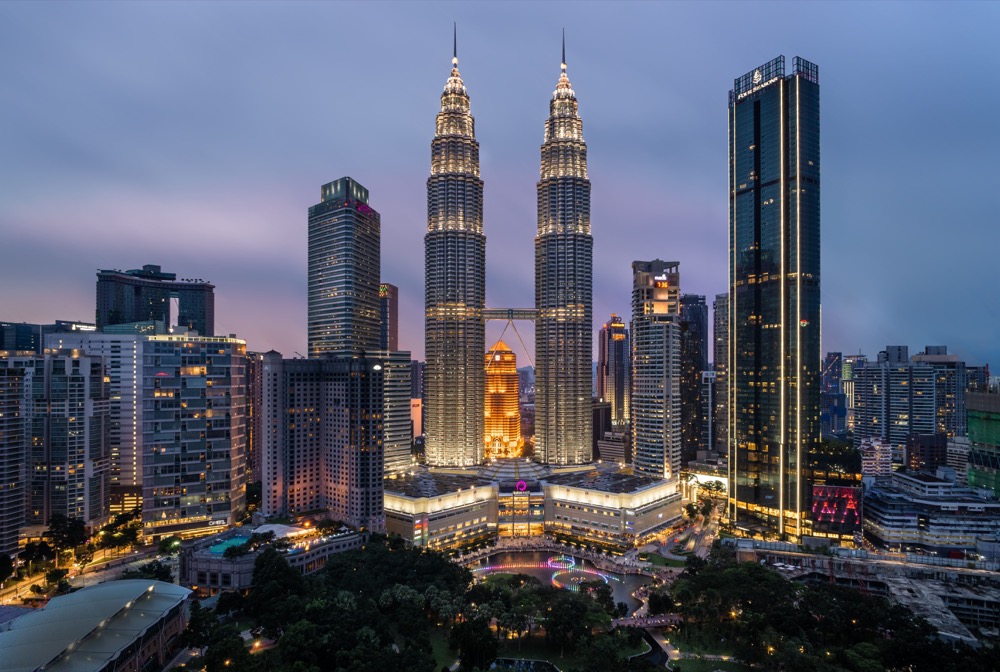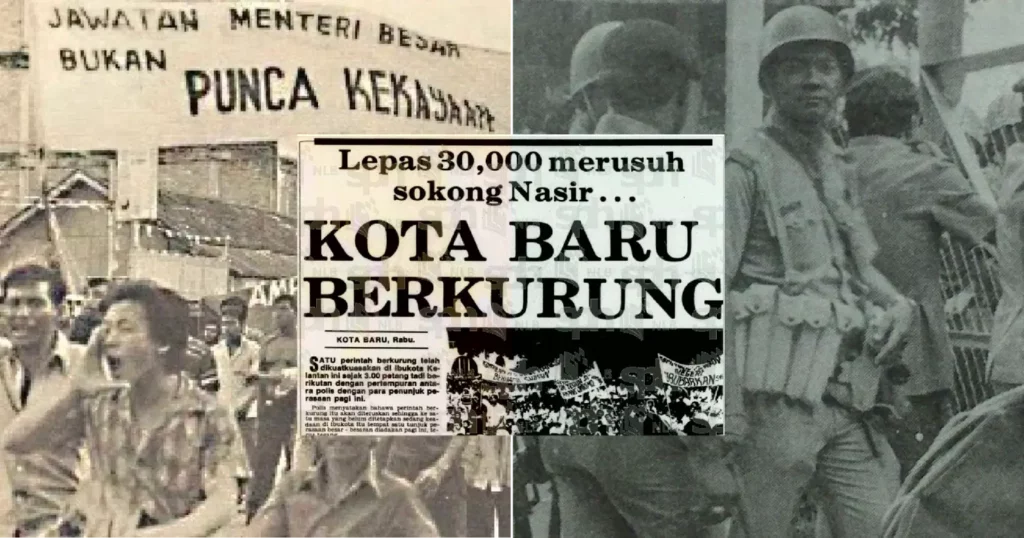
Oh, what a difference 3 years can make. The UMNO general assembly currently taking place in PWTC is very much different from the one that we witnessed in 2019.
Back then, PAS delegations were invited for the first time ever to UMNO’s annual general assembly. Fresh from the signing of the ‘Muafakat Nasional’ pact, the once sworn enemies were suddenly akin to a newly-married couple; inseparable.
However, now that UMNO has returned to the driving seat of federal power – a position that many within the party believe is their birthright – the relationship between both parties have gone south. In fact, the ongoing 2022 UMNO general assembly is full of speeches by UMNO leaders that attack and mock PAS leaders, especially for the latter’s decision to side with Bersatu.
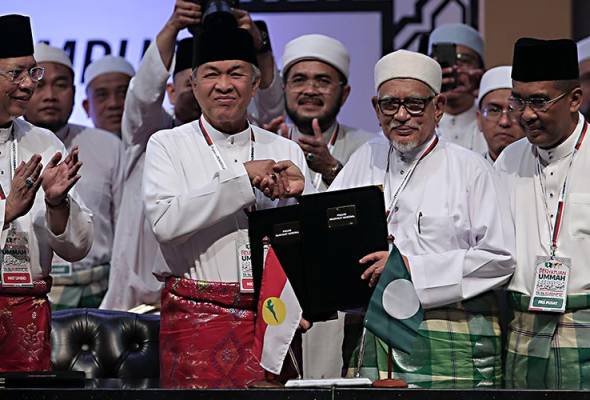
It’s safe to say that Muafakat Nasional has unofficially been disbanded and that UMNO and PAS are splitting up once again. Let’s just hope that things won’t go as bad as when both parties first parted ways though!
Speaking of which, did you know that the last time an UMNO-PAS union broke down, it resulted in a State of Emergency being enforced in Kelantan? Given this imminent second ‘divorce’, it seems fitting for us to revisit the events in the 1970s that saw PAS forming the Federal Government for the first time by teaming up with UMNO as well as the subsequent feud that caused both parties to become sworn enemies for decades.
1. Historical background of the Kelantan Darurat
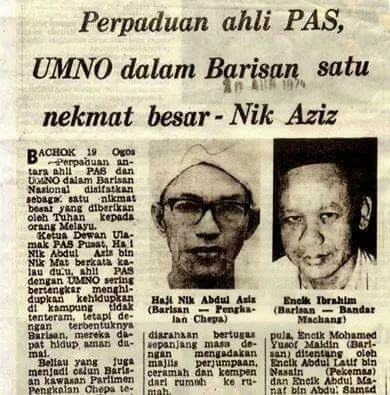
Khairil Azmin explained it best in his article published in The Constitutional Landmarks in Malaysia: The First 50 Years journal about the background and aftermath of the Darurat.
According to Khairil, the Malaysian political status quo in the 1970s was very different from today. However, one thing that has always been constant is the state of Kelantan’s support for the Malaysian Islamic Party (PAS).
Back then, PAS was also in the Federal Government coalition like they are now. If today it is this weird hybrid coalition spearheaded by UMNO, in the 1970s it was the newly formed Barisan Nasional (BN), a rebrand of the original Perikatan coalition formed after Merdeka.
Specifically, in 1972, then Prime Minister Tun Abdul Razak invited PAS and other opposition parties to form a grand coalition to make up a new government.
Thus the Barisan Nasional coalition was formed.
Afterwards, PAS, now being a component party in the government coalition had to make certain sacrifices that did not sit well with the party’s leadership and supporters. These include:
- Allocation of seats in General Elections at the state and federal level.
- In the 1974 General Election, PAS had to give up traditional seats in Kelantan to UMNO and MCA.
- Being a component party of BN, they have to abide by certain restrictions and lost the autonomy that they were used to.
- The appointment of the new Kelantan Menteri Besar post-GE1974.
The last point was the main reason behind the declaration of emergency and the subsequent dissolution of the Kelantan DUN in 1977.
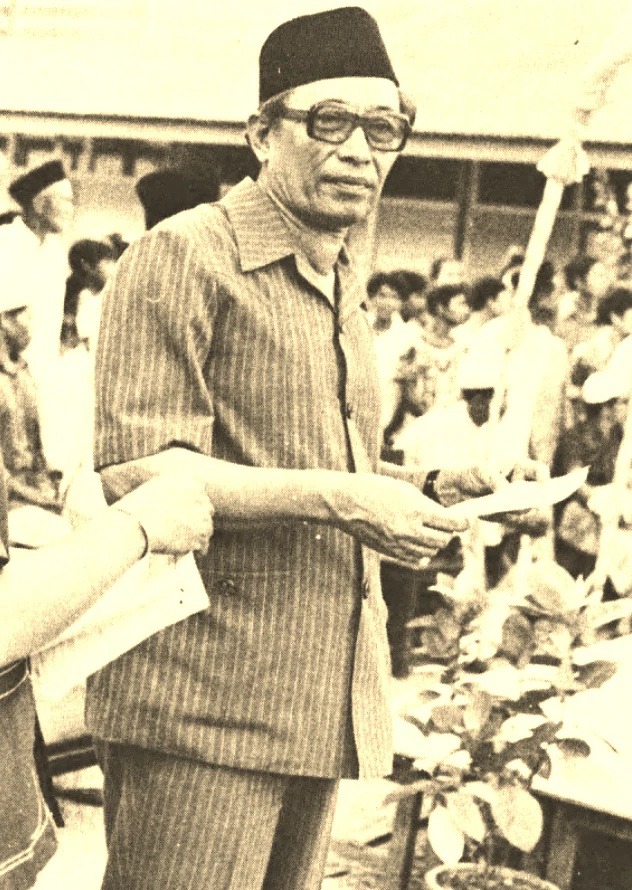
You see, PAS preferred Wan Ismail bin Wan Ibrahim as the new Menteri Besar while UMNO wanted Datuk Mohamad Nasir. Both were prominent PAS leaders at the time.
With the nod from Prime Minister Tun Abdul Razak, Datuk Mohamad Nasir was eventually selected as Menteri Besar and Wan Ismail became his deputy.
2. The motion of ‘no confidence’
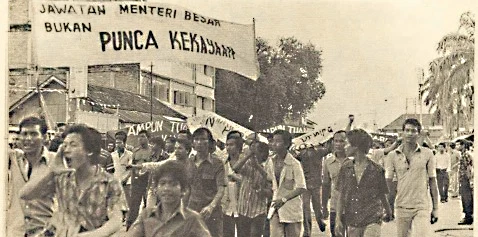
Datuk Mohamad Nasir’s tenure as Kelantan’s Menteri Besar came under scrutiny after several actions that he took. These include:
- He called for investigations to alleged corruption of some PAS members.
- He cancelled a timber company’s lease that allegedly benefited PAS.
- He failed in his attempt to become PAS President in June 1975.
This created factions within the party and many accused him of being closer to UMNO than to his own party. As such led to many within PAS during that time to call for Nasir’s resignation as Menteri Besar.
Worse, it deteriorated relations between PAS, UMNO and BN as a whole. The tragic death of Tun Abdul Razak in 1976, the leader responsible for the merger of the 2 parties in the first place also saw the coalition lose a charismatic mediator.
After mounting pressure from his party, Mohamad Nasir promised that he would step down as Menteri Besar but he never did. This prompted PAS to table the dreaded motion of ‘no-confidence’ in the Kelantan DUN on 15 October 1977. The motion passed successfully, but Nasir was defiant and did the unthinkable:
He requested for the State Legislative Assembly to be dissolved.
3. Direct events that led to the 1977 Proclamation of Emergency
According to the Kelantan State Constitution, if a vote of no confidence is passed, the Menteri Besar can ask for the dissolution of DUN but the discretionary power to do so lies with the Head of State which is the Sultan of Kelantan. However, during that time, the Sultan of Kelantan was elected as the Yang di-Pertuan Agong. Therefore, the duty of being the Kelantan Head of State lay with the Kelantan Regent.
Nasir’s request for the dissolution of DUN was not responded to by the Regent. This silence and inaction were interpreted as a refusal by legal experts.
With the DUN not dissolved and Nasir’s refusal to resign as Menteri Besar, a political impasse happened. Negotiations between UMNO and PAS ensued led by Tun Mahathir, as a representative of then Prime Minister Tun Hussein Onn for UMNO. It was rejected by PAS.
A second negotiation followed, this time Tun Hussein Onn himself met with PAS delegations. The third Prime Minister gave a 72 hours ultimatum for PAS to accept his proposal or federal rule will be imposed over Kelantan.
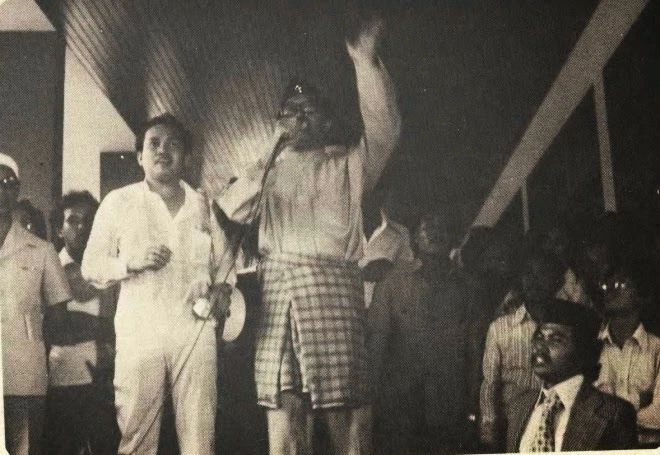
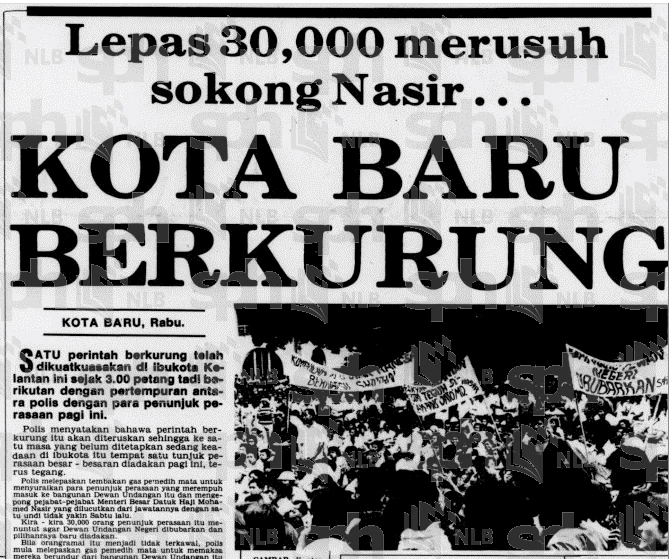
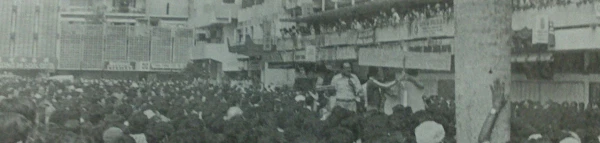
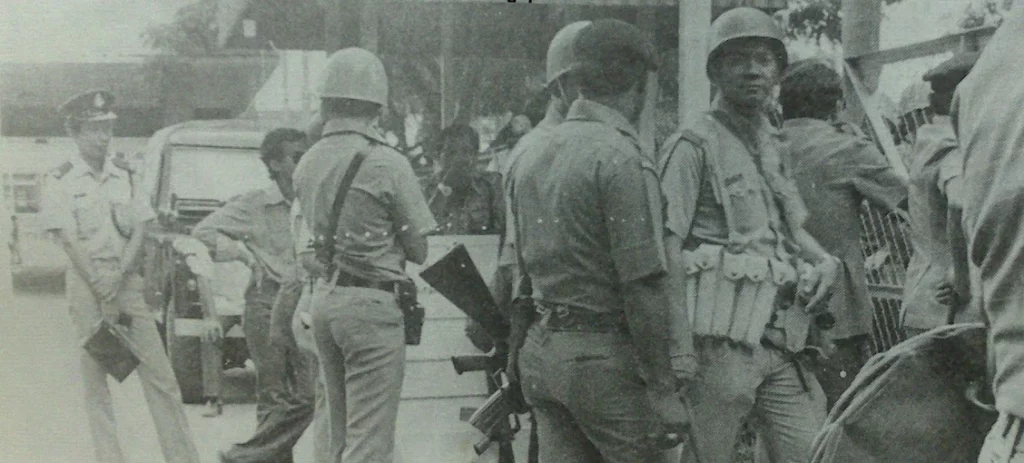
Tun Hussein Onn gave this ultimatum because chaos has begotten the state. By 8 November 1977, curfews, public rallies and demonstrations led to:
- 19 people seriously injured.
- 35 houses and shops damaged.
- 280 arrests made.
4. The Emergency Powers (Kelantan) Act 1977 and federal rule
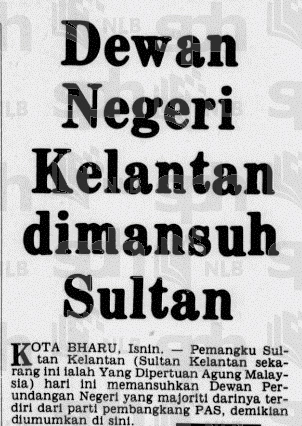
8 November 1977 was also the same day darurat was proclaimed by the Yang di-Pertuan Agong after he was “satisfied that a grave Emergency exists whereby the security and economic life of a part of the Federation, to wit, the State of Kelantan, are threatened”.
Thus the Emergency Powers (Kelantan) Act 1977 was passed in Parliament.
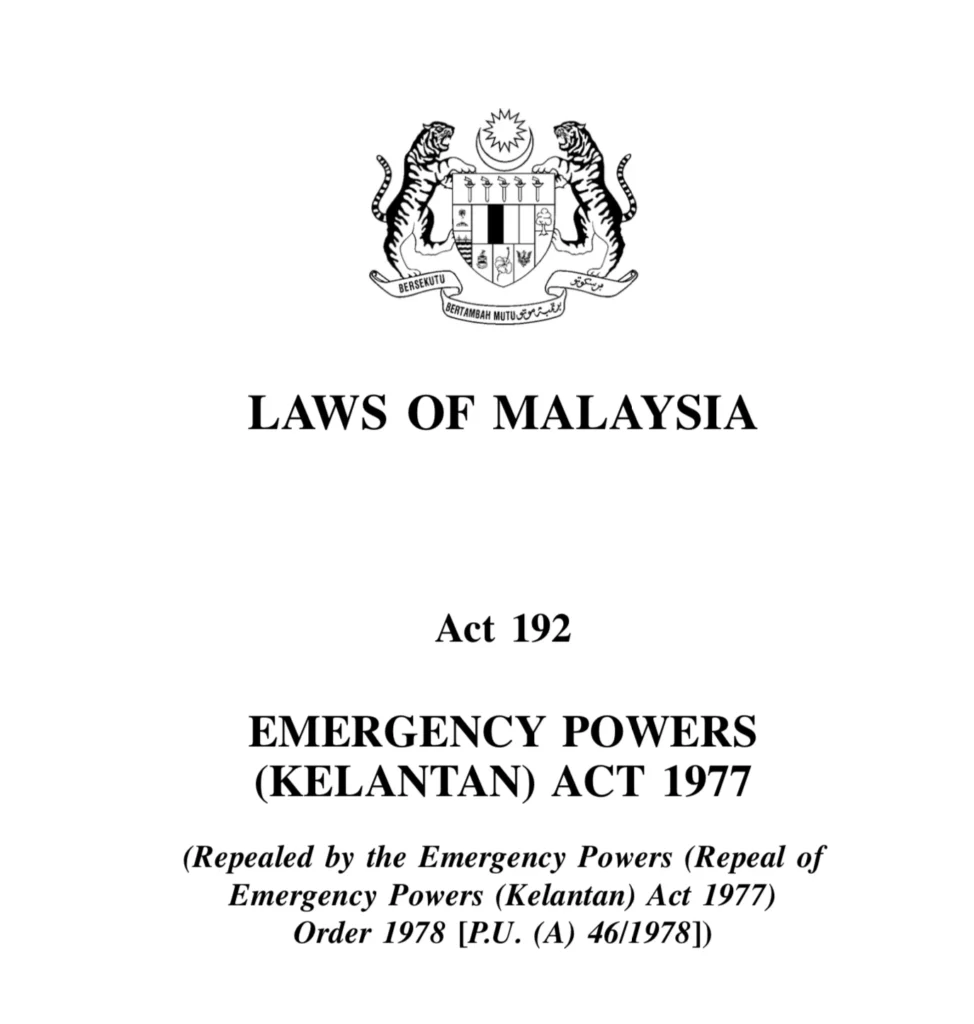
During the darurat, the Constitution of the State of Kelantan was suspended and the state was ruled by the federal government for a 4-month period to quell unrest.
On 12 February 1978, the Act was repealed and the Emergency rule on Kelantan was lifted. The full governing powers of Kelantan were returned to Menteri Besar Mohamad Nasir and on 13 February 1978, the State Legislative Assembly of Kelantan was dissolved.
A Snap State Election in Kelantan occured on 11 March 1978.
5. Aftermath of the Emergency rule and snap election
With the vote of no confidence, Mohamad Nasir was no longer a PAS member and he subsequently formed a new party called BERJASA. The snap election saw a 3-way fight between UMNO, PAS and the new party.
UMNO ended up victorious, winning 23 seats while BERJASA won 11 and PAS only 2.
UMNO formed the government in Kelantan for the first time in history in 1978.
BERJASA joined Barisan Nasional after the elections and its founder became a Senator and a Minister in the Federal government. PAS officially left BN in December 1977.
UMNO went on to govern Kelantan for more than 10 years up until PAS won back the state in 1990. They have been the State Government of Kelantan up until today.
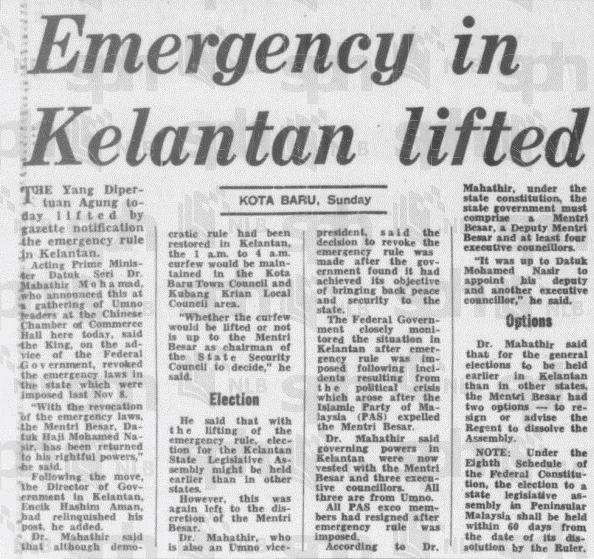
Fast forward to 2022, we just saw another darurat being enforced nationwide throughout most of last year, which thankfully has ended. While the circumstances between both emergencies are undoubtedly different, we can still draw parallels as to the root cause of both: endless politicking in the power search.
As the old saying goes, those who do not learn from history are doomed to repeat it. And just like what was engraved in the history book, the UMNO-PAS relationship is currently nearing its doom again.
Jamie is a content writer under Headliner by Newswav, a programme where content creators get to tell their unique stories through articles and at the same time monetize their content within the Newswav app.
Register at headliner.newswav.com to become one of our content writers now!
Newswav is solely an aggregation platform and hosts the content. The views expressed and content above including media (pictures, videos, etc) were provided by the author. If you have any questions about the content, copyright or other issues of the work, please contact Newswav.