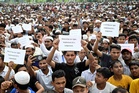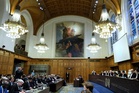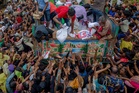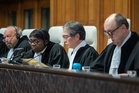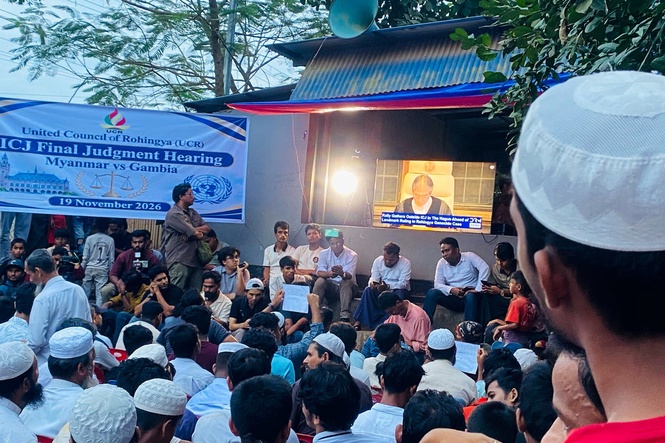
The landmark judgment in the genocide case against Myanmar was delivered in the grand courtroom of the International Court of Justice in The Hague, but its impact was felt thousands of kilometres away, in the cramped shelters and muddy lanes of Cox’s Bazar, the world’s largest refugee settlement.
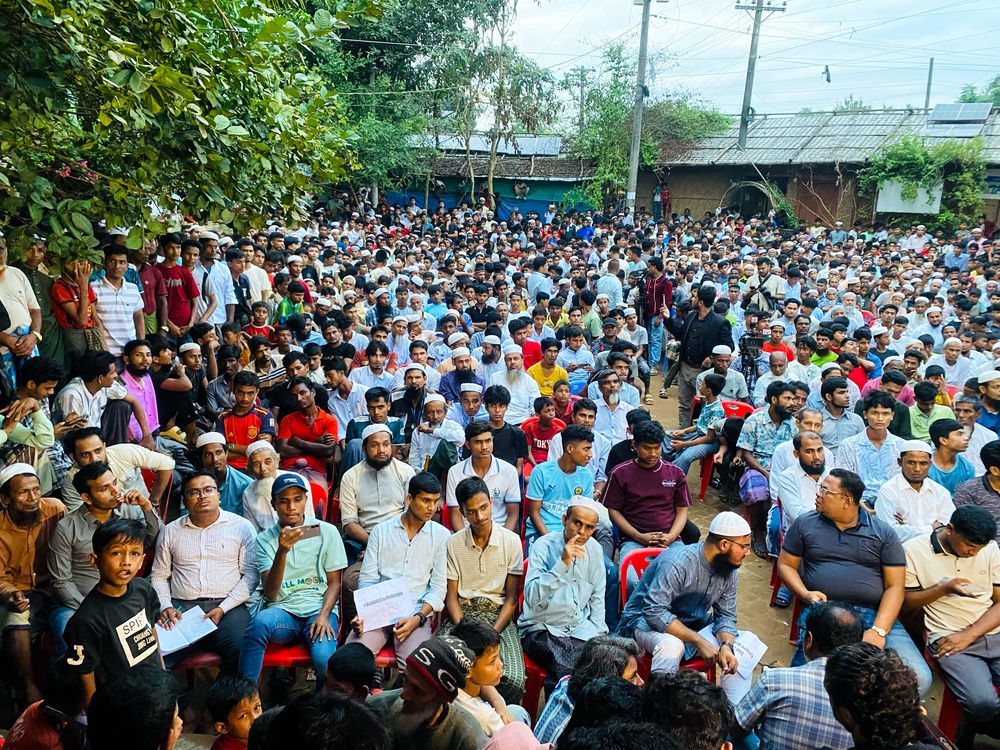
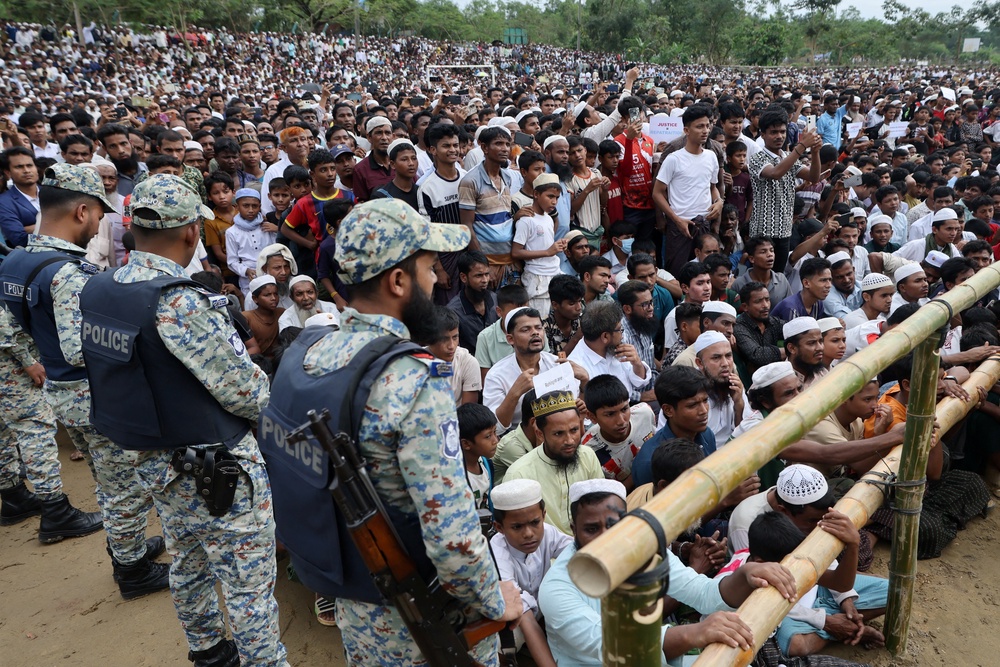
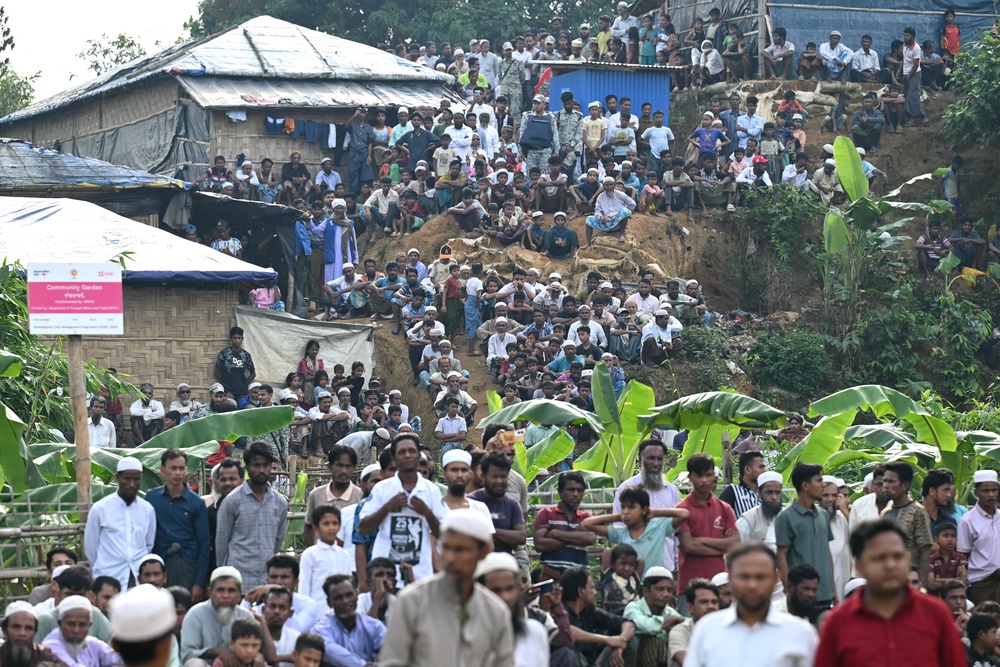
Large screens and televisions were propped up, rows of plastic chairs were arranged, and interpreters were given loudhailers to relay the ruling to thousands of Rohingya living in the bamboo-and-tarpaulin camps of Bangladesh.
Cheers and applause rippled through the settlement as the ruling was translated: the ICJ had found Myanmar responsible for committing genocide against its Rohingya minority through a campaign of mass killings and rape.
The court found Myanmar’s military intentionally tried to destroy the mostly Muslim minority in 2017, in an offensive that killed 10,000 Rohingya and drove more than 700,000 to neighbouring Bangladesh.
During a visit to the Cox’s Bazar camp in 2024, The Independent witnessed the harsh reality of life for the Rohingya who had fled Myanmar years earlier, only to find themselves trapped in another form of uncertainty.
This is the first time any international court has ruled against a state for committing genocide under the 1948 Genocide Convention.
The ruling is expected to have an effect on the genocide cases brought against Israel and Russia over their wars in Gaza and Ukraine, respectively.
Mohammad Rofik, a Rohingya community leader in the Cox’s Bazar camp, called the verdict “a victory” that recognised the genocide and the suffering of the Muslim minority in Buddhist-majority Myanmar.
But it was “not an end” to their ordeal, he said. There was still a “long way to go” to achieve long-delayed justice.
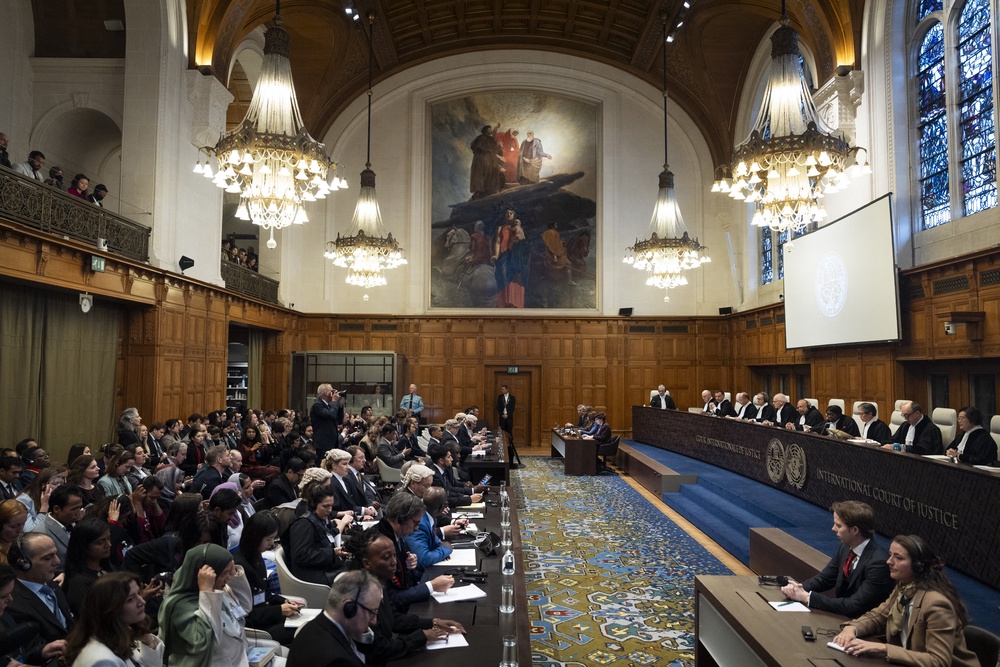
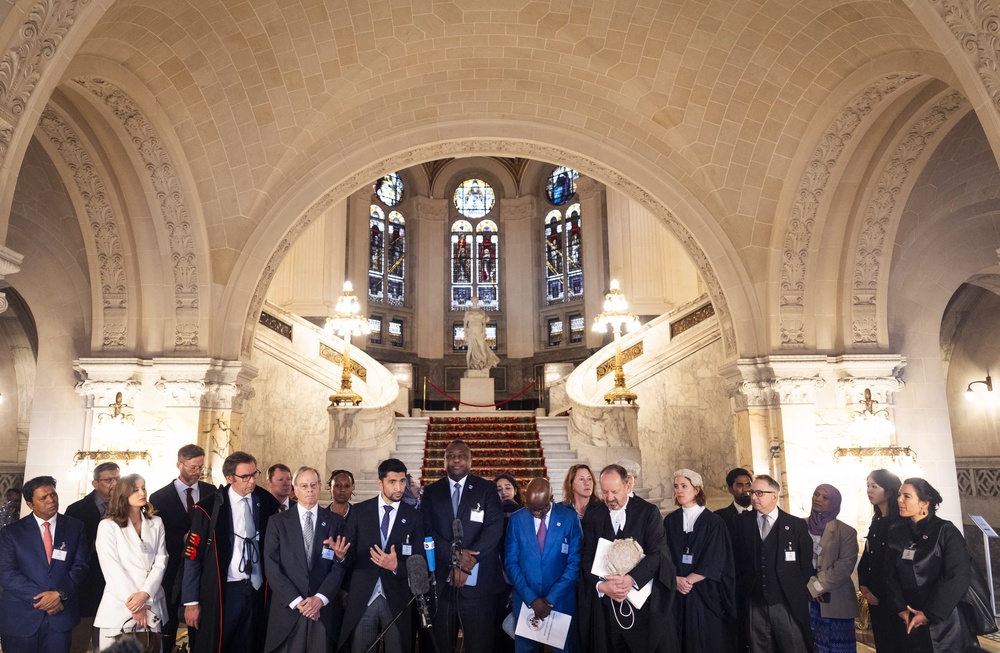
The verdict was delivered by ICJ president Yuji Iwasawa, who recounted harrowing evidence presented since the Gambia brought the case in 2019 with the backing of the Organisation of Islamic Cooperation.
The evidence detailed mass killings, rape, torture, and the destruction of entire villages, including instances where Rohingya residents were burned alive inside their homes.
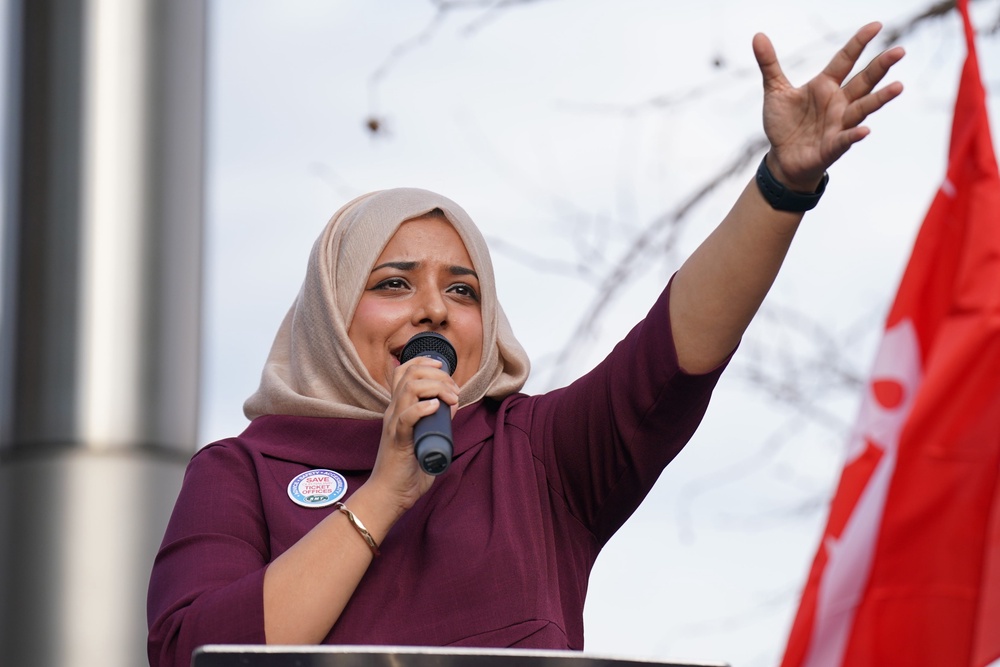
In the courtroom, silence was required, and outside it, the emotion was immediate, British lawmaker Apsana Begum said about the moment when the ruling was read.
“Immediately afterwards there were a lot of tears and a lot of relief. They have waited for a long time,” the chair of the parliamentary group on Bangladesh told The Independent, referring to survivors and campaigners.
“What came across very strongly from representatives of the community was not just the recognition of the genocide, but also the recognition of the Rohingya as a distinct ethnic group,” she added.
“There was a lot of relief, a lot of hope and a lot of tears because of the immense pain and suffering they have endured.”
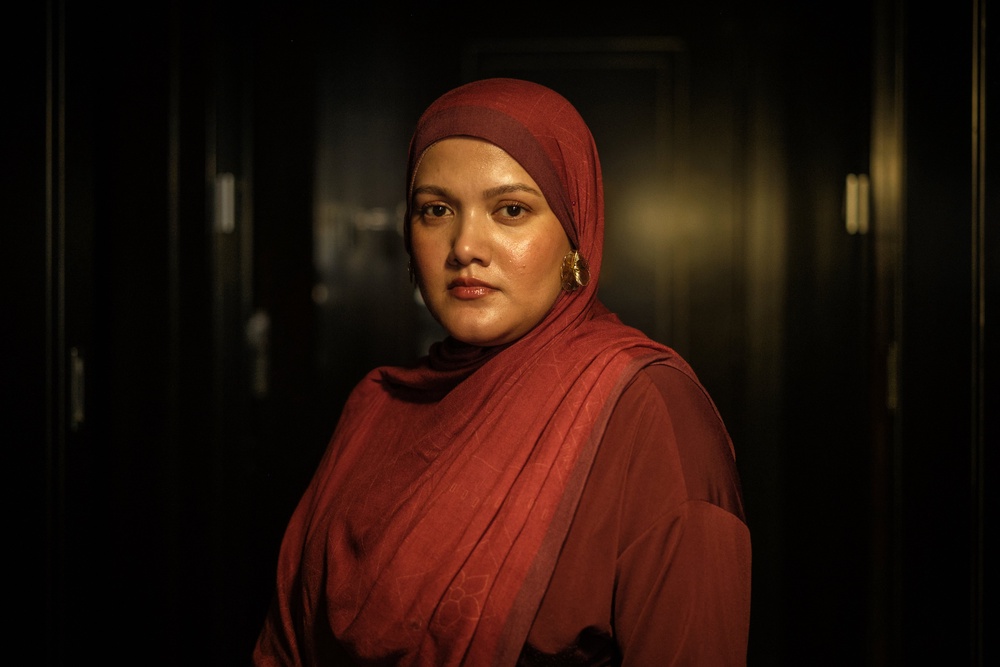
Yasmin Ullah, a Rohingya activist from Canada who was in The Hague for the ICJ ruling, described the outcome as a “bittersweet moment of validation” after years of fighting for her community’s suffering to be recognised.
“I felt validated for the suffering that we have long known the name,” she said. “Being heard and being seen in this way feels comforting that we were not crazy or made this up. It was all real.”
For her, the most significant moment was the ICJ’s recognition of the Rohingya as an ethnic group with a longstanding presence in Myanmar, directly dismissing years of state propaganda portraying them as outsiders or "Bengali Muslims".
“I didn't think the court would go this far to acknowledge and underline our belonging too,” she said.
The ruling, delivered by a majority of nine judges to six, could portend far-reaching implications beyond Myanmar, particularly for other genocide cases before the court. By clarifying the standard of evidence required to establish genocidal intent, the judgment may influence how such allegations are assessed in future proceedings.
Among the cases is South Africa’s allegation that Israel committed genocide against Palestinians in Gaza following the Hamas attack of 7 October 2023. Israel strongly denies the accusation.
Myanmar’s government on Friday dismissed the ruling as “unfair”.
"When we look at the result, not all 15 judges agreed with the decision," the president’s spokesperson, Khaing Khaing Soe, said.
But the ruling was enough for UK foreign secretary Ed Miliband to order the expulsion of Myanmar’s defence attaché from the country.
“We must ensure the court’s ruling sends a clear message that such crimes cannot be committed with impunity,” the foreign office said.
Benedict Rogers, senior director at Fortify Rights, said it was a landmark case because the ICJ had never before found a state responsible for genocide.
“This is a truly historic moment, both for the Rohingya specifically and for international justice and accountability,” he told The Independent.
“It finally acknowledges the scale and severity of the atrocities committed against the Rohingya and opens an extraordinary opportunity to advance justice and affirm the rights of the Rohingya people.”
Rogers, who has been researching and advocating Rohingya rights for three decades, said the ruling was more than symbolic.
“It is a turning point, because it now puts responsibility on the international community to take action to stop the genocide,” he said. “Now the international community must fulfil its responsibility and seek ways to bring the perpetrators of genocide to account and seek reparations for the Rohingya.”
In practical terms, Rogers said the ruling must lead to more robust pressure by the international community on the regime in Myanmar, including new targeted sanctions.
“The campaign by Myanmar’s illegal – and criminal – dictator, Min Aung Hlaing, to seek to legitimise his illegitimate and genocidal regime must be met with a clear rejection by governments around the world,” he said.
Secondly, he said, efforts to pursue individual criminal responsibility, advance reparations for Rohingya survivors, and increase international pressure to end impunity were strengthened by this verdict.
“There are several mechanisms that could be used, including advancing a case at the International Criminal Court, or through universal jurisdiction mechanisms, several of which are underway,” he added.
The ruling comes at a time when the international legal order established after the Second World War is facing mounting political pressure.
The 1948 Genocide Convention, adopted in the aftermath of the Holocaust, was intended to prevent a repeat of the mass atrocities that devastated the world in the first half of the last century. Nearly eight decades later, the judgment represents a significant test of whether those international safeguards can still deliver accountability.
On the same day as the ruling, US president Donald Trump, Chinese leader Xi Jinping, and Russian president Vladimir Putin issued a statement following their meeting in Shenzhen, warning that the International Criminal Court and similar institutions must not abuse their jurisdiction.
Rogers said the ICJ ruling was “very significant in restoring the credibility and independence of international justice” at a time when the international rules-based order was most under threat.
At a time of “hopelessness and despair” over international law and the rules-based order, Begum said, the verdict offered “a glimmer of hope”.
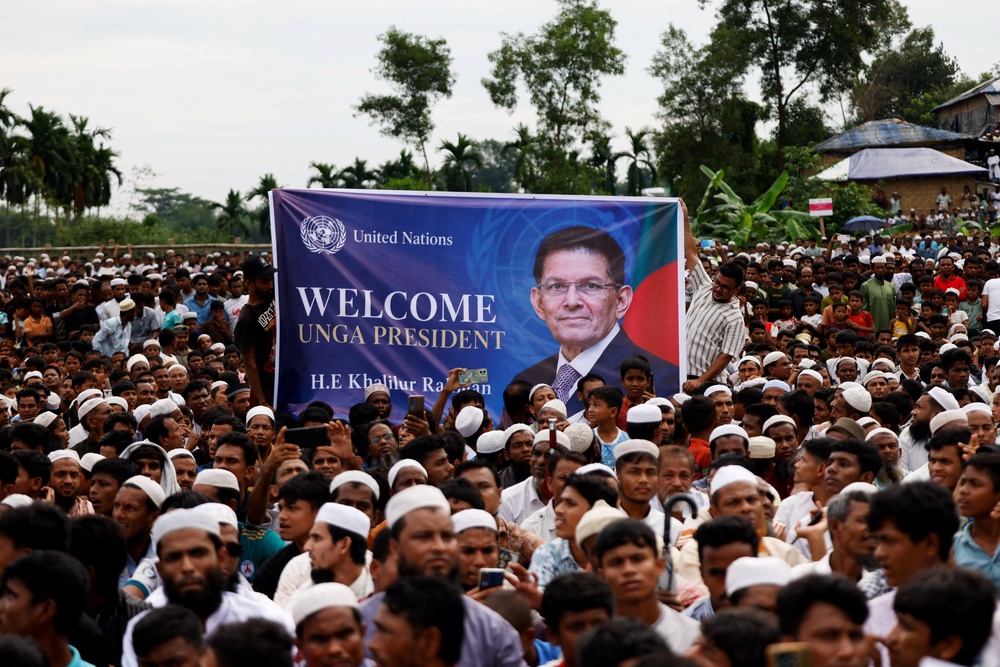
For Rohingya campaigners, however, the key question is whether the ruling will bring any meaningful change to the lives of the refugees still living in camps.
Tun Khin, a prominent Rohingya activist involved in advocacy and public hearings on the genocide case, said the verdict was a validation of what the Rohingya had been saying all this while.
“Rohingya have suffered from a denial of our identity as Rohingya and denial of the human rights violations being committed against us,” he told The Independent.
“We hope now that neighbouring countries will be more sympathetic and understanding towards Rohingya refugees and realise it is not safe to send Rohingya back to Myanmar.”
The ICJ ordered Myanmar to commit to reparations and allow Rohingya “safe, voluntary and dignified return to their place of residence”. It directed Myanmar’s government to investigate, prosecute and punish people responsible for committing genocidal acts and to pay compensation to the Rohingya.
The amount will be decided at later court proceedings.
Rogers, however, said the conditions in Myanmar were still far too dangerous to consider a safe and dignified return of the Rohingya.
“If the perpetrators of genocide are brought to account, and the rights of the Rohingya recognised and protected in Myanmar, then their safe and dignified return becomes a possibility,” he said. “This verdict at least opens the door to that possibility, even if it is unlikely to be immediate.”
The question of repatriations became more complicated after the military seized power in a 2021 coup, overthrowing the elected government of Aung San Suu Kyi and plunging the country into a devastating civil war.
The military, led by Min Aung Hlaing, who commanded the armed forces during the 2017 crackdown against the Rohingya, is now battling armed resistance across much of the country.
It’s in this context that Begum is urging world leaders not to allow the judgment to become another symbolic victory without action.
“The court cannot directly enforce the ruling, but it’s down to politicians and world leaders to act now,” she said.
She warned that other wars and humanitarian emergencies had pushed the Rohingya crisis out of international attention.
“This historic ruling surely should be the catalyst for everyone to come together once again,” she said.
Read MoreGenocide expert explains how the Myanmar ruling could impact other cases
How Myanmar became first state found guilty of genocide – and why others have not
Xi hails ‘complete turnaround’ in ties with Australia as Apec summit wraps up
Trump, Putin and Xi target UN and ICC in four-point ‘peace declaration’
The horrific scale of Rohingya genocide after years-long fight for justice
Bangladesh police raid home of star actress linked to former PM Hasina’s party