

Communication between the brain and body is hampered by a spinal cord injury, which damages the spinal cord and may also impact the cauda equina. In addition to possible mental and emotional repercussions, this frequently results in long-lasting alterations in strength and sensation beneath the lesion site. Recovery is categorized as either complete (complete loss of function) or incomplete (some function remains) based on the location and severity of the damage. Tetraplegia, which affects both limbs and the torso, and paraplegia, which affects the trunk and legs, are two ways that paralysis can appear. The goal of research is to improve therapies so that many people can continue to lead fulfilling lives despite their impairments. https://www.mayoclinic.org/diseases-conditions/spinal-cord-injury/symptoms-causes/syc-20377890
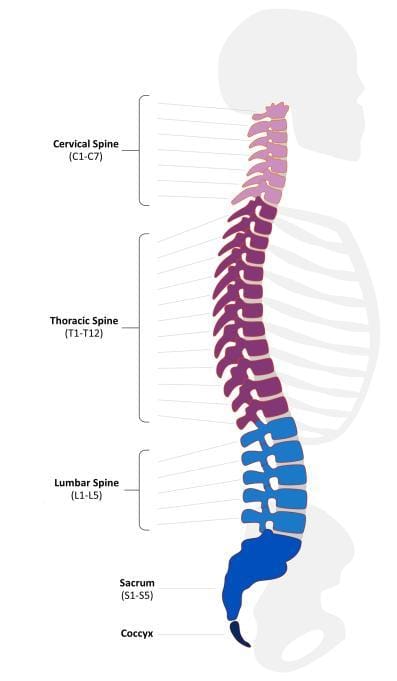
A spinal cord injury (SCI) is damage to the spinal cord, which transmits signals between the brain and the body. This injury can result from direct damage to the cord or surrounding tissues and can cause temporary or permanent changes in sensation, movement, and bodily functions below the injury site. Symptoms vary based on the injury's location and severity, ranging from numbness and paralysis to loss of bladder control and difficulties in breathing. SCIs are classified as complete (no nerve communication below the injury) or incomplete (some nerve function remains). The spinal cord comprises nerve cells and fibers protected by three tissue layers and surrounded by cerebrospinal fluid. Common causes of SCIs include motor vehicle accidents, falls, acts of violence, sports injuries, and medical mishaps. https://www.ninds.nih.gov/health-information/disorders/spinal-cord-injury
In addition to medical imaging tests like MRIs, CT scans, and X-rays, assessments for movement and sensation, respiratory function, and weakness are used to diagnose spinal cord injuries (SCI). In order to stop additional injury, treatment starts at the scene of the accident with a stiff collar and backboard. This is frequently combined with medication for breathing support and relaxation. In order to stabilize the injury, medical facilities may perform surgery and spinal alignment. Respiratory problems, pneumonia, cardiovascular troubles, muscle stiffness, autonomic dysreflexia, pressure sores, neurogenic pain, problems with the bladder and bowel, abnormalities in sexual function, and depression are among the long-term consequences of SCIs. Every issue requires a different approach to management, such as medicine, rehabilitation therapy, and monitoring.https://www.ninds.nih.gov/health-information/disorders/spinal-cord-injury
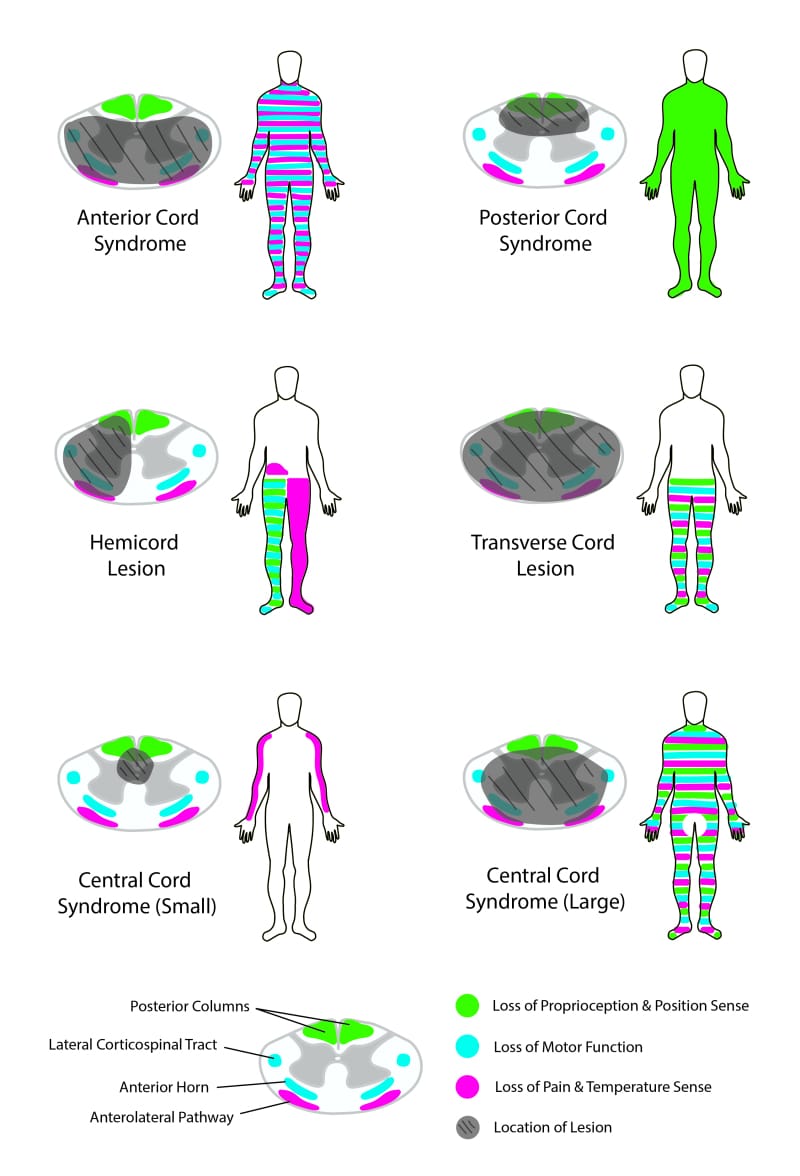
Several spinal cord injury (SCI) patterns are documented, each with unique origins and manifestations. https://www.ncbi.nlm.nih.gov/books/NBK560721/
1. Complete Spinal Cord Transection: Results in total bilateral loss of motor function and sensation below the injury level. Lumbosacral injuries affect lower extremities and autonomic functions, thoracic injuries add trunk motor weakness, while cervical injuries lead to tetraplegia and potential respiratory issues.
2. Central Cord Syndrome: The most common incomplete SCI, caused by neck hyperextension. It typically results in greater upper extremity weakness compared to lower extremities due to the distribution of axons in the spinal cord.
3. Anterior Cord Syndrome: Caused by compromised blood flow, leading to bilateral pain and temperature loss, with preserved proprioception and vibration due to unaffected dorsal columns.
4. Posterior Cord Syndrome: Often arising from non-traumatic causes, it results in loss of tactile, vibratory, and proprioceptive perception while preserving pain and temperature functions.
5. Brown-Séquard Syndrome: Results from hemisection of the spinal cord, causing ipsilateral loss of motor and proprioceptive functions and contralateral pain and temperature deficits.
6. Conus Medullaris Syndrome: Develops from damage at the terminal spinal cord, leading to sacral nerve dysfunction impacting reflexes and bladder, bowel, and sexual functions.
7. Neurogenic Shock: Results from injuries above mid-thoracic levels, leading to loss of sympathetic tone, hypotension, and bradycardia.
Mirhaa05 (hemirhaphysio@gmail.com) is a content creator under the Newswav Creator programme, where you get to express yourself, be a citizen journalist, and at the same time monetize your content & reach millions of users on Newswav. Log in to creator.newswav.com and become a Newswav Creator now!
The User Content (as defined on Newswav Terms of Use) above including the views expressed and media (pictures, videos, citations etc) were submitted & posted by the author. Newswav is solely an aggregation platform that hosts the User Content. If you have any questions about the content, copyright or other issues of the work, please contact creator@newswav.com.