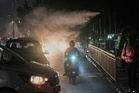
EVERY festive celebration should be a time for joy, gratitude, generosity and goodwill. Yet, across Malaysia, celebrations are often accompanied by firecrackers and fireworks.
For a few moments, the skies light up and the streets ring with explosions. But have we stopped to think about the environmental, financial and human costs behind this brief spectacle?
Fireworks originated in China, where early firecrackers emerged following the discovery of gunpowder around the ninth century, during the Tang dynasty.
At first, people threw bamboo stalks into fires to produce loud bangs, believed to scare away evil spirits.
Later, gunpowder was packed into bamboo and paper tubes, evolving into firecrackers and elaborate aerial displays. The technology then spread through the Middle East and Europe before becoming a worldwide feature of celebrations.
What started as a cultural tradition has grown into a substantial commercial industry but its consequences deserve serious reconsideration.
Hidden environmental price
Fireworks are not just harmless flashes of light. When they burn, they release fine particulate matter, including PM2.5, sulphur dioxide and potentially harmful metallic compounds such as barium, copper and strontium, substances used to create different colours.
A 2026 scientific review, published in Environments, titled “Environmental Impact of Fireworks”, identifies air, water and soil contamination, noise, light pollution and waste debris as significant environmental concerns.
The consequences go beyond the air. Chemical residues settle on roads, rooftops, vegetation and waterways. Debris left uncollected becomes yet another source of environmental waste.
Animals are among the most overlooked victims. Dogs and cats feel fear, anxiety and disorientation from sudden explosions. Birds may abandon their roosting places, collide with buildings or become separated from their young.
Wildlife is especially vulnerable when celebrations coincide with breeding and migration periods. We celebrate but animals have no say in enduring the noise and distress.
How much money are we burning?
The financial side matters just as much. According to World Bank trade data through UN Comtrade, Malaysia imported roughly US$40.41 million (RM175 million) worth of fireworks in 2025, weighing approximately 28.5 million kilogrammes. Almost all of it came from China.
This is an import figure, not the total amount Malaysians spend at retail. The government should publish annual import, retail sales and festive expenditure figures so the public can have an informed discussion.
Still, the scale of imports raises an important question. How much of our collective spending could be redirected towards more meaningful purposes?
Turning explosive spending into compassionate investment
Imagine if households, neighbourhood associations, businesses and community organisations voluntarily redirected even part of their fireworks budgets towards social causes.
That money could provide meals for underprivileged families, scholarships for disadvantaged children, medical assistance for elderly citizens, support for orphanages and homes for persons with disabilities. The fund could also be channelled towards animal shelters, wildlife conservation efforts and environmental rehabilitation.
Instead of spending RM200 to RM500 on fireworks that vanish within minutes, families could give the same amount to feed needy families or support abandoned animals.
Businesses and local councils could set up a Festive Giving Fund, encouraging communities to replace noisy celebrations with charitable activities, cultural performances, illuminated decorations, laser displays and drone shows.
This wouldn’t diminish the significance of our diverse religious and cultural celebrations. Rather, it would elevate their meaning through compassion and social responsibility.
A change in how we understand celebration
Malaysia takes pride in its multicultural society. Our festivals should reflect unity, respect, consideration and the shared values that bind us together.
The government should strengthen enforcement of existing fireworks regulations, improve public education, monitor environmental consequences and encourage safer, quieter alternatives.
Cultural traditions deserve respect but traditions can also evolve as society becomes more conscious of environmental sustainability and animal welfare.
Ultimately, what is the value of lighting up the skies while polluting the air, contaminating waterways, frightening animals and burning money that could have relieved human suffering?
A truly meaningful celebration should leave behind happiness, not pollution; generosity, not unnecessary expenditure; and compassion, not fear.
Let us move from celebrating with explosions to celebrating through contributions. The brightest light a society can produce is not in its skies but in the lives it improves.
Comments: letters@thesundaily.com