
More options for colorectal cancer screening could help more people get tested before symptoms appear, when the disease is often easier to treat or prevent.
The American Cancer Society (ACS) has updated its US guidance to include newer at-home stool tests and a blood-based test for adults at average risk of colorectal cancer.
Colonoscopy remains the most comprehensive screening option, but the update recognises that some people cannot access it or choose not to have the procedure.
The central message is unchanged: completing an appropriate screening test matters more than waiting for symptoms.
Why colorectal cancer screening matters
Colorectal cancer includes cancers of the colon and rectum. It often develops slowly, sometimes beginning as a growth called a polyp in the lining of the bowel. Some polyps can become cancerous over time.
Screening can find cancer before it causes symptoms. Colonoscopy can also identify and remove certain polyps before they turn into cancer, making it both a test for cancer and a preventive procedure.
Colorectal cancer remains among the leading causes of cancer death globally. Rates have also risen in younger adults in recent decades, although the reasons are not fully understood. This pattern was one reason the ACS lowered the recommended starting age for average-risk screening from 50 to 45 in 2018.
Many people do not complete screening. Barriers can include the cost and availability of colonoscopy, the need to take bowel-cleansing medicines beforehand, time away from work, concerns about sedation and discomfort, or simply reluctance to have an invasive test.
What the updated guidance includes
The ACS guidance continues to recommend that adults at average risk begin colorectal cancer screening at age 45.
Colonoscopy remains an option every 10 years for people with a normal result. It allows clinicians to examine the whole bowel and remove polyps during the same procedure.
However, the updated guidance includes additional tests that can be completed without a colonoscopy as an initial step.
These include:
- A stool DNA test, marketed in the US as Cologuard, which looks for changes in DNA shed by abnormal cells into stool, as well as traces of blood.
- A stool RNA test, marketed as ColoSense, which measures selected RNA markers and blood in stool. RNA is a molecule that helps cells use genetic information.
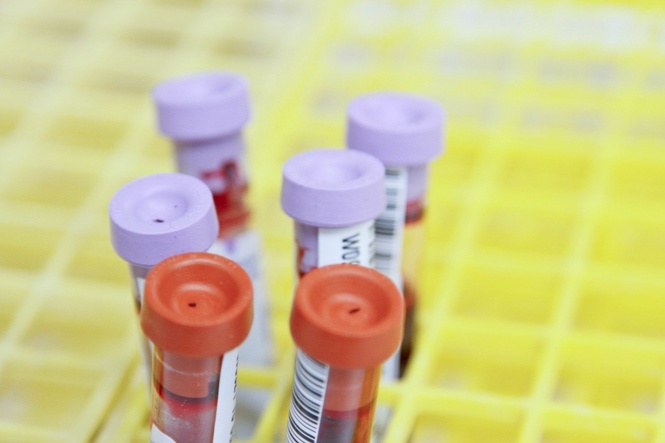
- A blood test, marketed as Shield, which looks for fragments of tumour-related DNA circulating in the bloodstream.
The ACS recommends the newer stool-based tests every three years for average-risk adults aged 45 and over. The blood test is also listed as an option at three-year intervals, but the society says it should mainly be considered for people who decline or cannot complete other recommended screening tests.
Other established options, including yearly faecal immunochemical testing, known as FIT, remain part of colorectal screening guidance.
What the evidence shows
The updated recommendations are based on studies in people undergoing screening, alongside the availability of newly approved tests. They are not based on a single new study showing that blood testing is equivalent to colonoscopy.
In clinical studies, the stool DNA and stool RNA tests have shown high sensitivity for established colorectal cancer. Sensitivity describes how often a test correctly identifies people who have the condition.
These stool tests have more moderate sensitivity for advanced precancerous polyps or lesions. This is important because finding and removing these growths can prevent cancer from developing.
The blood-based Shield test can detect some colorectal cancers by identifying tumour-derived DNA in the blood. However, it appears less able than stool-based tests and colonoscopy to identify advanced precancerous lesions.
In plain terms, a blood test may be a useful route into screening for someone who would otherwise not be tested at all. But it is less likely to find the polyps that can be removed to prevent cancer.
Why the tests differ
Colorectal tumours and polyps can release small amounts of blood, DNA or RNA into stool as cells are shed from the bowel lining. Stool-based tests are therefore looking directly for material that has passed through the colon or rectum.
Blood tests work differently. Cancer cells can release fragments of their DNA into the bloodstream. The test searches for patterns linked to colorectal cancer.
This approach is convenient, since it only requires a blood sample. But early cancers and precancerous polyps may release very little DNA into the blood, making them harder to detect.
Colonoscopy does not depend on finding biological markers. A clinician uses a flexible camera to inspect the bowel directly. If a polyp is found, it can usually be removed during the same procedure and sent for laboratory testing.
A positive result still requires colonoscopy
A stool or blood test is not a final diagnosis of cancer.
If one of these tests finds blood or a relevant genetic marker, the next step should be a diagnostic colonoscopy, generally within six months, according to the ACS guidance. The colonoscopy is needed to find the source of the abnormal result, check for cancer or polyps, and remove polyps where appropriate.
A negative result also does not guarantee that cancer or a precancerous lesion is absent. No screening test is perfect. The value of non-invasive tests depends partly on repeating them at the recommended interval.
People should also seek medical advice promptly if they develop concerning symptoms, even if they have had a recent screening test.
How strong is the evidence?
There is strong evidence that colorectal cancer screening reduces deaths from the disease. Colonoscopy, stool blood tests and other established approaches have been studied for many years.
The evidence for newer molecular stool tests and blood tests is still developing. Studies show that these tests can identify a substantial proportion of colorectal cancers, but detecting cancer is not the same as proving that a test reduces deaths over decades of use.
Another limitation is that test performance in clinical studies may not fully reflect real-world use. A screening programme only works if people receive the test, complete it correctly, get their results and undergo follow-up colonoscopy after a positive result.
The newer tests may also have different costs and insurance coverage depending on where a person lives and their health plan.
What this means for the public
The update provides more routes to screening rather than replacing colonoscopy.
A person who is willing and able to have a colonoscopy may still choose it because it can both detect and remove polyps. Someone who would otherwise avoid screening may prefer a stool kit completed at home, or in some circumstances a blood test.
The best option depends on personal risk, access, previous test results, preferences and the availability of follow-up care. A GP or other clinician can help people decide which test is suitable.
This US guidance does not change screening recommendations in other countries, including Malaysia. It only serves as a guidance. Clinical judgement and recommendation rests with clinician and regulatory bodies in the respective countries.
Who may need earlier or more frequent screening?
The recommendations for starting at age 45 apply to adults at average risk.
People may need screening earlier, more often or with a different test if they have a personal or family history of colorectal cancer or certain polyps; inflammatory bowel disease such as Crohn’s disease or ulcerative colitis; a known or suspected inherited cancer syndrome; or previous radiation treatment to the abdomen or pelvis.
Symptoms that warrant medical assessment include persistent changes in bowel habit, blood in the stool, very dark stools, unexplained anaemia, ongoing abdominal pain or bloating, and unexplained tiredness or weight loss. These symptoms are common and often have causes other than cancer, but they should not be dismissed.
Prevention remains important
Screening is only one part of reducing colorectal cancer risk. Regular physical activity, maintaining a healthy weight, not smoking, limiting alcohol, and eating a diet rich in fibre-containing foods such as vegetables, fruit and wholegrains are linked to lower risk.
Eating large amounts of red and processed meat is associated with a higher risk of colorectal cancer. These lifestyle measures cannot remove all risk, and they do not replace screening.
What comes next
Researchers will continue to study how well blood-based screening performs over repeated testing cycles and whether it can improve screening participation without reducing the detection of preventable precancerous lesions.
There are also unanswered questions about how these tests should be used in communities that have historically had less access to cancer screening and follow-up colonoscopy.
For now, the ACS update reflects a practical public-health approach: colonoscopy remains the most complete test, but offering credible alternatives may help reach people who would otherwise go unscreened.
The most important step is to take up an appropriate screening option before symptoms develop.
The post ACS Updates its Colorectal Cancer Screening Guidelines first appeared on PP Health Malaysia.
