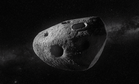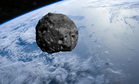
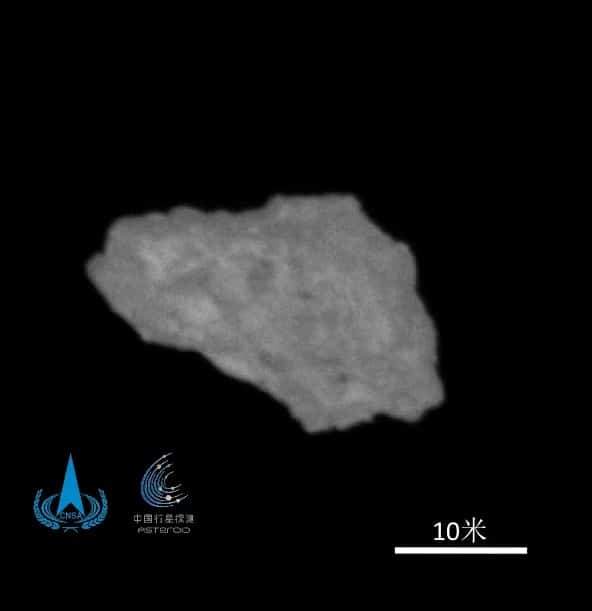
China’s Tianwen-2 spacecraft has reached a major milestone by arriving just 20 kilometers from the near-Earth asteroid 2016 HO3, beginning the scientific phase of one of the country’s most ambitious deep-space missions. According to Xinhua, the achievement follows a journey of roughly 400 days and nearly 1 billion kilometers, placing the probe in position to study the asteroid before attempting a sample collection that could provide valuable insights into the origins and evolution of the Solar System.
A New Phase Begins Around Asteroid 2016 HO3
The arrival near 2016 HO3 marks the transition from interplanetary travel to close-range scientific investigation. Launched on May 29, 2025, Tianwen-2 represents China’s first asteroid sample-return mission and is designed as a decade-long expedition with multiple objectives. After collecting material from the near-Earth asteroid, the spacecraft is expected to continue toward the main-belt comet 311P, extending the scientific value of the mission well beyond its initial target.
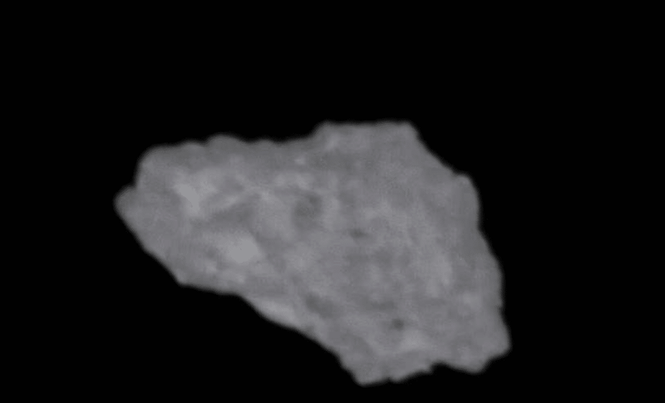
As the spacecraft approached the asteroid, onboard instruments captured detailed imagery while navigation systems continuously refined its trajectory. According to the China National Space Administration (CNSA), optical navigation measurements dramatically improved scientists’ knowledge of the asteroid’s position. Estimates that had previously relied on ground-based observations with uncertainties measuring hundreds of kilometers were refined to an accuracy on the kilometer scale. This increased precision is essential for safely operating close to such a small celestial body and preparing for the demanding sample collection phase.
A Carefully Planned Journey Across Deep Space
The voyage required a series of complex maneuvers to ensure the spacecraft reached its destination with exceptional accuracy. During its cruise through deep space, Tianwen-2 executed trajectory correction operations and propulsion burns to remain aligned with its target. On June 6, 2026, the spacecraft achieved its first detection of 2016 HO3. Just one day later, at a distance of approximately 30,000 kilometers, it entered a coplanar trajectory with the asteroid. By June 19, the probe had reduced that distance to roughly 2,000 kilometers, paving the way for its successful arrival at just 20 kilometers from the surface.
These milestones demonstrate the precision required for autonomous navigation in deep space, particularly around small objects with extremely weak gravity. Unlike missions to planets or moons, asteroid encounters demand continuous adjustments and highly accurate optical tracking to maintain safe operations while gathering meaningful scientific data.
The Science Mission Is Only Getting Started
With the spacecraft now operating close to 2016 HO3, the focus shifts toward understanding the asteroid in unprecedented detail before any sampling attempt takes place. The probe will study its overall shape, surface characteristics, composition, and internal structure using a suite of scientific instruments designed for close-range observations.
As the CNSA explained, “The probe will progressively conduct more detailed scientific exploration to acquire data on the asteroid’s morphology, material composition and internal structure, laying the groundwork for subsequent sample collection operations.”
The statement, reported by Xinhua, outlines the methodical approach mission controllers are taking before attempting one of the most technically challenging aspects of the expedition. Every new dataset collected during this phase will help engineers determine the safest and most scientifically valuable location for retrieving asteroid material.
Why This Mission Matters for Planetary Science
Asteroids such as 2016 HO3 are often regarded as time capsules from the earliest stages of the Solar System. Because many have remained relatively unchanged for billions of years, samples returned to Earth can preserve information about the materials that existed during planetary formation. Studying these objects allows scientists to investigate the chemical building blocks that contributed to the development of planets and may even provide clues about how water and organic compounds reached Earth.
For China, Tianwen-2also represents another significant step in its expanding deep-space exploration program. Success would demonstrate advanced capabilities in autonomous navigation, asteroid proximity operations, sample acquisition, and long-duration interplanetary flight. With a planned follow-on mission to 311P, the spacecraft is expected to continue delivering scientific discoveries for years after completing its work around 2016 HO3, making this milestone only the beginning of a much broader exploration campaign.