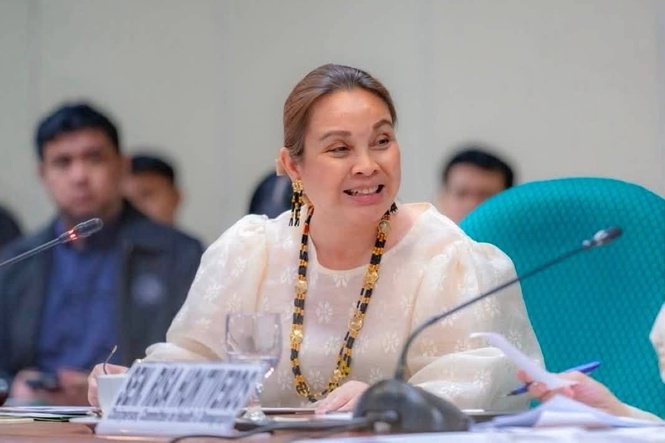
SEN. Loren Legarda is pushing for sustained government support and financial compensation for indigenous communities protecting the country’s forests and watersheds, saying their conservation efforts are crucial to securing water supplies amid prolonged dry conditions brought by El Niño.
The proposal is the fourth point of Legarda’s 10-Point Policy Action Plan against El Niño, launched on Oct. 19. It seeks to establish a Payment for Ecosystem Services (PES) system that would provide direct financial incentives to indigenous communities serving as guardians of forests and water sources.
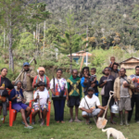
“Indigenous communities have long been protecting our forests and sources of water. If there is anyone who should be the first to receive compensation for protecting our water resources, it should be them,” Legarda, who is on leave, said in a statement on Monday.
Her proposal comes as the Philippine Atmospheric, Geophysical and Astronomical Services Administration (Pagasa) reported the presence of a strong to very strong El Niño in the tropical Pacific.
In its Oct. 21 update, Pagasa projected that the phenomenon would persist until the first quarter of 2027, with its effects potentially extending through the first half of the year.
Legarda said forests and healthy watersheds are critical in regulating water flows, preventing soil erosion, and sustaining water availability, particularly during prolonged dry spells when households and agricultural communities face increasing pressure on water resources.
She cited the importance of integrating Indigenous Knowledge Systems and Practices into modern water governance.
To strengthen community-led conservation, Legarda proposed that the Department of Environment and Natural Resources (DENR), National Commission on Indigenous Peoples (NCIP), and local government units work directly with indigenous communities to establish conservation agreements.
These agreements may provide financial assistance for forest monitoring, watershed rehabilitation, and the protection of critical water sources, with arrangements developed in consultation with the communities concerned.
The Department of Science and Technology’s Philippine Council for Agriculture, Aquatic and Natural Resources Research and Development documented a payment scheme in Rizal, Palawan, that supports indigenous communities through seedling production and incentives for community forest patrols.
In Bago City, Negros Occidental, an environmental protection fee generates an average of P2 million annually to fund watershed rehabilitation initiatives.
Legarda is the principal author of Republic Act (RA) 11038, or the Expanded National Integrated Protected Areas System Act, which strengthens the protection of ecologically important areas while recognizing the rights of Indigenous Peoples.
She authored and sponsored the Senate measure that became RA 11995, or the Philippine Ecosystem and Natural Capital Accounting System Act, which institutionalizes the accounting of ecosystems and natural capital in government policymaking.
The senator has also filed Senate Bill 311, or the proposed Indigenous Community Conserved Territories and Areas Act, which seeks to recognize indigenous communities’ conservation practices and establish a national registry of territories and areas they protect.
Another measure she filed, Senate Bill 2258, or the proposed Kabuhayan at Kaunlaran ng Kababayang Katutubo Act, which seeks to promote market-driven initiatives, enterprise development, and direct market linkages to support sustainable agriculture and fisheries among Indigenous Peoples.