
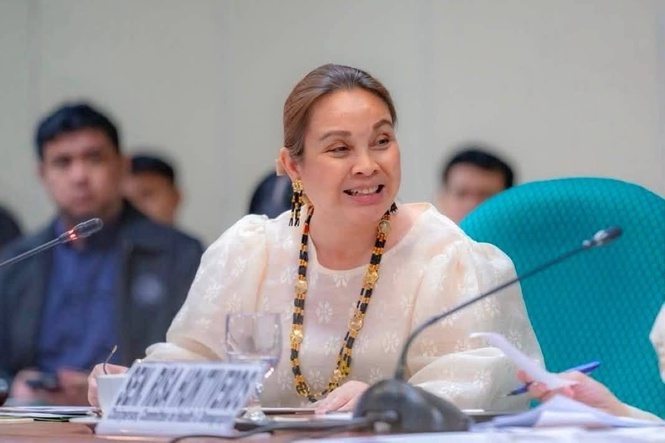
SEN. Loren Legarda called for wider public access to museums, stronger cultural institutions outside major cities and greater support for communities keeping the country’s living traditions alive.
In a statement marking Museums and Galleries Month this October, Legarda said the next phase of museum development should bring cultural spaces closer to Filipinos and ensure that heritage preservation remains connected to the people and communities behind it.
The 2026 Museums and Galleries Month carries the theme “Bridging Divides, Preserving the Present for Tomorrow,” highlighting the role of museums and galleries in connecting communities, generations and stories.
“Museums become more meaningful when a child, a family, or a community sees their own story reflected in them. We should not have to travel far to discover our own history and culture,” she said.
Legarda, chairman of the Senate Committee on Culture and the Arts, said museums should go beyond collecting and preserving objects by connecting their collections to the people who created them and ensuring that cultural traditions continue to be practiced and passed on to future generations.
Her cultural initiatives have supported Schools of Living Traditions, the documentation of indigenous knowledge, traditional weaving, cultural mapping and programs that bring local heritage to wider audiences.
Among the cultural spaces she initiated or supported with the National Museum were the Baybayin Gallery, Manlilikha ng Bayan Gallery and Hibla ng Lahing Filipino, the country’s first permanent textile gallery at the National Museum.
“These spaces were never meant to say, ‘This is what our culture was like in the past.’ The more important questions are, ‘Where is this culture today, who is keeping it alive, and how can we help them?’” Legarda said.
“A museum should allow us to look back, but it should also help culture move forward,” she said.
Legarda said this approach is reflected in Republic Act 10066, or the National Cultural Heritage Act of 2009, which she authored and co-sponsored, and RA 11961, or the Cultural Mapping Law, which she authored and principally sponsored.
Republic Act 11961 strengthened the country's heritage protection framework by requiring local governments to identify and document their tangible, intangible, natural and built heritage, giving communities a greater role in safeguarding their cultural assets.
In the 20th Congress, Legarda has pursued additional measures to strengthen the country's cultural infrastructure.
Senate Bill 510 seeks to amend the National Museum framework to strengthen the preservation of traditional folk arts as part of the country's intangible cultural heritage, while SB 1852 seeks to strengthen heritage conservation through incentives under RA 10066.
She also cited SB 1507, which seeks to institutionalize the Schools of Living Traditions, where cultural masters pass on traditional knowledge and skills through community-based learning.
Another measure, SB 1425, proposes the establishment of an Aklan Piña Conservation and Innovation Center in Kalibo to support the conservation, development, research, training and continued innovation of the province's piña weaving tradition.
Legarda also stressed the importance of keeping museums open to contemporary creativity, noting that preserving heritage and supporting innovation should complement each other.
She authored RA 11904, or the Philippine Creative Industries Development Act, which recognizes the contribution of creative workers and industries to national development.
