THE Air Quality Index in Metro Manila was “good,” but “acutely unhealthy” in several areas in the Visayas and Mindanao, readings by the Department of Environment and Natural Resources’ (DENR) Environmental Management Bureau (EMB) indicated on Friday.
The EMB monitoring stations took readings of the levels of Particulate Matter (PM) 10 and 2.5.
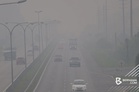
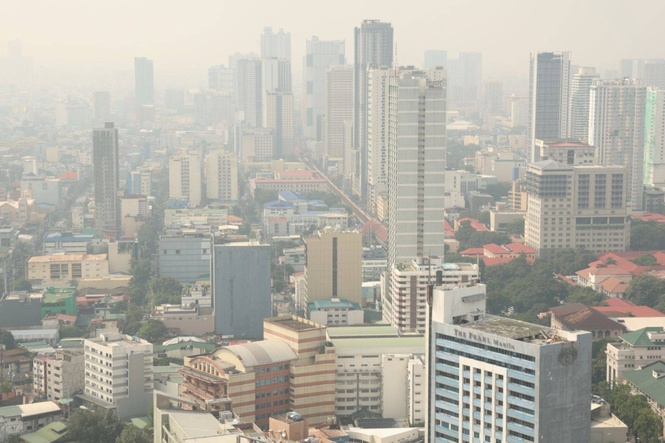
Smoke from ongoing fires in Kalimantan, Indonesia, were carried by winds toward the Philippines, creating a haze that has shrouded the country, particularly the southern regions, it said.
As of 8 a.m. Friday, the PM levels in Metro Manila were “good.”
Talisay City, Zamboanga City, Iligan City, Sta. Cruz, Misamis Oriental and Koronadal City recorded an “acutely unhealthy” level.
Bacolod City and La Castellana in the Negros Island Region recorded “very unhealthy” air quality.
Iloilo City, La Carlota City, Toledo City, Cagayan de Oro City, and Butuan City had a PM level of 2.5 that is “unhealthy for sensitive groups.”
PM10 are particles 10 micrometers or smaller that can enter the nose, throat and lungs. Dust, pollen and ash can be PM10.
PM2.5 are dust particles that are 2.5 micrometers in diameter or smaller, and can travel deep into the lungs and sometimes enter the bloodstream, and can trigger asthma, heart disease and breathing problems.
Smoke, vehicle pollution and volcanic emissions can contain PM2.5.
Under the DENR’s provisional national ambient air quality guideline values for PM 2.5, the air quality index (AQI) has six levels:
– Green for “good,” meaning air quality is satisfactory and clean.
– Yellow for “fair,” or acceptable quality, though sensitive individuals may experience minor issues.
– Orange for “unhealthy for sensitive groups,” with advice for people with respiratory, children and elderly to limit heavy outdoor exertion.
– Red for “very unhealthy,” and the general public could experience health effects, and sensitive groups should avoid outdoor activities.
– Purple for “acutely unhealthy,” which means serious health alert and everyone is advised to stay indoors and wear protective masks if going outside.
– Maroon for “emergency,” where the entire population is heavily impacted and advised to remain indoors.