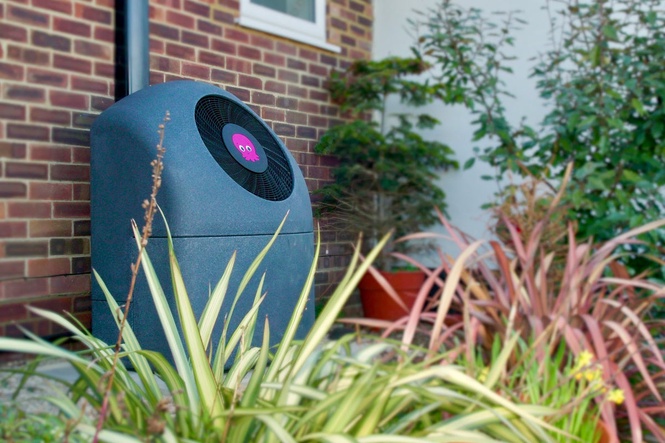
Rather than burning fuel, heat pumps use electricity to move heat from one place to another. Even in cold conditions, the air and ground contain usable thermal energy.
Because they move heat rather than generate it, heat pumps are highly efficient. According to the Energy Saving Trust, a well-designed system can deliver three to four units of heat for every unit of electricity used. However, how that efficiency plays out depends on the type of system and the home it serves.
Air source and ground source heat pumps both provide low-carbon heating, but the two systems differ considerably when it comes to cost, installation and the type of home they suit.
Air source heat pumps extract warmth from the outside air and are generally the cheaper and easier option to install, making them suitable for a much wider range of UK homes. Ground source heat pumps draw heat from pipes buried underground, offering more consistent performance but requiring considerably more space, groundwork and upfront investment.
So, what is the best heat pump for your home? Below, we compare air-source vs ground-source heat pumps, including installation costs, efficiency, running costs, space requirements and the suitability of each system.
Interested in a heat pump? Get a free quote today
Air source vs ground source heat pumps: At a glance
Air source | Ground source | |
Typical installation cost | Around £11,000 | Around £29,000 |
Government grant | £7,500, potentially £9,000 | £7,500, potentially £9,000 |
Installation time | Typically a few days | Can take several weeks |
Outdoor space | Space for an external unit | Land for trenches or access for drilling |
Efficiency | High | Generally higher |
Noise | Some noise from outdoor unit | Very little outdoor noise |
Best suited to | Most existing UK homes | Homes with suitable land and larger budgets |
What is an air source heat pump?
Air source heat pumps extract heat from the outside air using a fan unit installed outside the home, similar in appearance to an air-conditioning unit.
They are the most common type of heat pump in the UK, largely because they can be installed in a wide range of existing homes. Air source systems work year-round, including in winter, and are generally easier and faster to install than ground source alternatives.
An air source heat pump typically requires:
- An external wall or suitable outdoor space for the unit, with adequate airflow
- Space for a hot water cylinder, for most air-to-water systems
- A heating system designed around the property's heat loss, with insulation or radiator upgrades where appropriate
Installation usually takes two to five days, depending on whether radiators or pipework need upgrading.
What is a ground source heat pump?
Ground source heat pumps work in a similar way but extract heat from the ground rather than the air. This is done using pipes buried either horizontally in trenches or vertically in deep boreholes.
Because ground temperatures are more stable throughout the year, ground source systems tend to be slightly more efficient and consistent than air source heat pumps. However, the practical requirements are far more demanding.
A ground source heat pump typically requires:
- A large garden or access to land for trenches, or space for borehole drilling
- Significant groundwork during installation
- Higher upfront investment
As a result, ground source heat pumps are far less common and are usually found in rural properties, new builds or major renovation projects.
Cost of air source vs ground source heat pumps
The upfront cost is one of the biggest differences between air source and ground source heat pumps.
The final price depends on the property size, the exact heat pump and whether radiators, pipework or other parts of the heating system need upgrading. But according to the Energy Saving Trust, installing an air source heat pump typically costs around £11,000.
Ground source heat pumps are considerably more expensive, with a typical installation costing around £29,000. Systems using horizontal ground loops require trenches to be dug across a suitable area of land, while vertical systems involve drilling boreholes, which can push installation costs significantly higher.
Both systems are eligible for government grants that can reduce the upfront cost considerably, although the same level of funding generally leaves homeowners paying much more for a ground source installation.
The grants available for air source and ground source heat pumps
Homeowners in England and Wales can receive £7,500 towards an eligible air-source or ground-source heat pump through the government's Boiler Upgrade Scheme (BUS).
Until March 2027, the grant increases to £9,000 for eligible off-gas-grid properties that are replacing an oil or LPG heating system. This higher grant is available for both types of heat pump.
Based on the Energy Saving Trust's typical installation costs, the standard £7,500 grant could therefore reduce the price of an air source heat pump from around £11,000 to just £3,500, compared with £29,000 reduced down to £21,500 for a ground source system. Actual costs will depend on the installation and any additional work required.
The scheme therefore makes air source heat pumps considerably more affordable for many households, although both technologies qualify for financial support.
Different funding schemes are available in Scotland, while Northern Ireland has separate arrangements.
Read more: Boiler Upgrade Scheme: How to apply for a heat pump grant
Space, planning and practical constraints
Air source heat pumps are generally easier to accommodate because they only require space for an outdoor unit with sufficient airflow, which makes them suitable for many urban and suburban homes, even properties with relatively small gardens.
Planning rules have also become more accommodating. In England, town planning changes introduced in May 2025 increased the maximum permitted volume of an outdoor air source heat pump unit at a house from 0.6m3 to 1.5m3, while detached homes can also have up to two air source heat pumps under permitted development, provided other requirements are met.
This means many installations can proceed without a planning application, although restrictions may still apply, including noise requirements and additional considerations for listed buildings and certain locations.
Ground source heat pumps are more challenging because they require more space for the underground collector system. Horizontal ground loops need a suitable area of land for trenches, while vertical systems require access for specialist borehole drilling equipment. Planning permission and other approvals may also be necessary, depending on the property and installation.
Noise is another difference. Air source heat pumps use an outdoor fan and produce some noise during operation, whereas ground source systems have no outdoor fan and are generally much quieter outside the home.
What are the pros of air source heat pumps?
Air source heat pumps are generally cheaper, quicker and less disruptive to install than ground source systems. They don't require extensive excavation and can be fitted in a wide range of existing homes, even those with relatively small gardens.
They are also highly efficient, can significantly reduce carbon emissions compared with fossil fuel heating and qualify for government grants that substantially reduce installation costs.
What are the disadvantages of air source heat pumps?
Air source heat pumps are generally slightly less efficient than ground source systems, particularly during very cold weather. They also require space for an outdoor unit, which produces some noise and must have adequate airflow.
Depending on the property, larger radiators, improved insulation or other heating system upgrades may be needed to achieve the best efficiency. Running costs can also be higher than those of a modern gas boiler, particularly on an expensive electricity tariff.
Which homes suit air source heat pumps best?
Air source heat pumps suit a wide range of existing UK homes, which is why they account for the vast majority of heat pump installations.
Although good insulation can help an air source heat pump operate more efficiently and reduce heating bills, homeowners don't necessarily need to extensively insulate their properties before installing one. Heat pumps can work effectively in older homes, provided the system is correctly sized to meet the property's heating needs. Your installer should provide a professional heat-loss assessment, which will help identify whether insulation improvements, larger radiators or other upgrades would be beneficial.
While larger radiators or underfloor heating can improve performance, many homes can adapt existing radiator systems with targeted upgrades rather than full replacement.
For homeowners looking to retrofit low-carbon heating without major groundworks, air source heat pumps are generally the most practical option.
What are the pros of ground source heat pumps?
Ground source heat pumps offer very high efficiency and consistent performance because underground temperatures fluctuate less than air temperatures. This can result in lower electricity consumption and running costs compared with an equivalent air source system.
They are also extremely quiet outside the home, have no visible outdoor fan unit and can be particularly attractive for properties with high heating demand.
What are the disadvantages of ground source heat pumps?
The biggest drawbacks are the considerably higher installation costs and the need for suitable land or borehole access. Excavation and drilling can be expensive and disruptive, making ground source systems impractical for many existing properties.
Although their higher efficiency can reduce electricity consumption, the savings may be relatively modest compared with their additional upfront cost, meaning homeowners shouldn't assume the investment will pay for itself through lower heating bills.
Which homes suit ground source heat pumps best?
Ground source heat pumps are far more site-specific and tend to suit a narrower range of properties.
They are most commonly installed in rural or semi-rural homes with large gardens or access to surrounding land, where trenches can be dug or boreholes drilled without significant disruption. Because installation is more invasive, ground source systems are often considered as part of new-build projects or major renovations, rather than straightforward retrofits.
Because of their higher upfront costs, ground source heat pumps are generally more attractive to homeowners planning to stay in their property for many years. However, their greater efficiency doesn’t necessarily mean the additional installation costs will be recovered through lower energy bills.
Which is better: An air source or ground source heat pump?
Choosing between air source and ground source heat pumps is less about which system is “better” and more about which is appropriate for your home and circumstances.
Budget is often the deciding factor. While ground source systems offer slightly higher efficiency, their significantly higher installation costs mean they are rarely the most cost-effective choice unless the property already meets the necessary space and planning requirements.
Space is another key consideration. Homes with limited outdoor space or shared boundaries are far more likely to suit air source systems, whereas ground source heat pumps require a level of land access that many properties simply don’t have.
Disruption and timing also matter. Air source heat pumps can usually be installed relatively quickly, making them a realistic option for homeowners upgrading an existing heating system. Ground source installations, by contrast, are better suited to projects where extended building work is already planned.
Finally, homeowners should consider how long they expect to stay in the property. Those planning a long-term stay may be better placed to benefit from the higher upfront investment of a ground source system, while air source heat pumps tend to offer a more accessible route to low-carbon heating for most households.
In all cases, an independent heat loss assessment and professional system design are essential before making a decision.
The bottom line
Both air source and ground source heat pumps can deliver efficient, low-carbon heating when installed correctly. For most UK homes, air source heat pumps are the more practical and affordable option.
Ground source systems, while highly efficient, remain a specialist solution best suited to properties with the space and budget to support them.
Read MoreHow to apply for a UK heat pump grant in 2026
Gas boiler vs heat pump: which is right for your home?
How much energy and money do heat pumps really save?
8 budget-friendly ways to heat your home during a cold snap
How to choose the best heat pump for your home, according to an expert
Are heat pumps worth installing in your home? The Independent’s guide