.png)
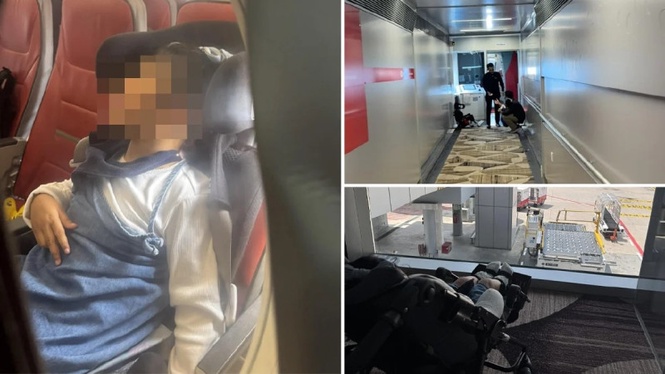
A MALAYSIAN family’s removal from a flight over the use of a specialised medical seat for a disabled child has triggered renewed scrutiny of airline accessibility policies and the handling of passengers with special medical needs.
The controversy emerged after Syarifah Ella Wan Wahab (the mother) publicly expressed disappointment over what she described as the humiliating treatment of her family after they were allegedly instructed to disembark from an aircraft on Tuesday.
According to Syarifah Ella, the incident involved her daughter, who suffers from quadriplegic cerebral palsy and relies on a specialised aviation-approved support seat for safety and medical stability during flights.
In a detailed Facebook post, she said she, her husband, three young children and their domestic helper had successfully completed check-in procedures, immigration clearance and boarded the aircraft before being approached by both ground personnel and cabin crew.
She claimed they were subsequently informed that the pilot had decided not to permit the use of the specialised seat onboard.
“The special seat had already been approved by the United States Federal Aviation Administration (FAA) and this was communicated to staff during check-in at Changi Airport,” she said.
“The staff were also informed about my daughter’s condition, as she is paralysed due to cerebral palsy.
“They even asked about my child’s age, weight, the weight of the seat and her medical condition before ultimately allowing us to board the aircraft. So, we assumed there was no problem.”
Syarifah Ella said her daughter had previously travelled on numerous domestic and international flights, including with the same airline, using the identical seat without encountering any difficulties.
She stressed that her daughter had been medically certified fit to fly and was accompanied by both parents, with all necessary medical support and equipment available throughout the journey.
“I understand the pilot’s right to determine matters concerning flight safety, but I am disappointed with the way the situation was handled,” she said.
“We were not given any clear explanation regarding the safety issue or operational factor behind the decision. We were simply told that ‘it is company policy’.
“What safety issue was involved? Was it related to the seat itself or my daughter’s medical condition?”
The mother also questioned why airline personnel allegedly made no attempt to discuss possible alternatives before ordering the family off the aircraft.
She suggested that other arrangements could have been explored if the issue centred on the seat itself, including storing the device in the cargo hold while holding the child during take-off and landing procedures.
“If it involved a medical issue, perhaps we could have been asked to provide a doctor’s letter or whether our child was fit to travel. My husband himself is a medical doctor and was seated beside our daughter at the time,” she said.
Syarifah Ella, who works in healthcare, said she fully understood the importance of aviation safety procedures but believed children with disabilities should be treated with empathy, professionalism and transparent communication.
She further alleged that her request to view the airline’s official policy governing the matter was initially denied on grounds that the document could not be shown to passengers.
According to her, airline staff only clarified the policy after repeated requests, stating that children using specialised restraint seats must be between six months and three years old and weigh no more than 18 kilogrammes.
However, she questioned whether such policies were designed solely for non-disabled children or were also being applied to children with complex medical conditions requiring specialised support systems.
“My daughter uses the FAA-approved seat not because she is a baby or requires an additional seat, but because of her medical and safety needs,” she said.
“Children with disabilities and special needs should not be equated with standard policies for infants or toddlers because the circumstances are entirely different.”
Following the removal from the aircraft, the family was reportedly informed that they might be able to board a later flight to Kuching scheduled for the afternoon.
However, Syarifah Ella said they declined the offer after being warned that the next pilot could potentially make the same decision again.
“For that reason, we rejected the offer because we did not want to remain in a state of uncertainty, especially with two other young children aged one year and six months, and four months old,” she said.
The incident has intensified public discussion over whether airline safety regulations and operational procedures sufficiently accommodate passengers with disabilities, particularly children with complex medical requirements.
Earlier, AirAsia X confirmed it had begun reviewing its policies and procedures relating to child safety seats following criticism surrounding the case.
The airline said the original decision had been made in accordance with operational safety requirements but acknowledged the family’s frustration and pledged clearer guidelines and more consistent implementation moving forward. - May 29, 2026