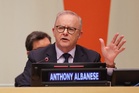
Australian PM Anthony Albanese has defended proposed social media laws requiring a “Digital Duty of Care” despite censorship concerns raised by the US.
NEW YORK: Australian Prime Minister Anthony Albanese has defended his government’s plan to overhaul social media after the United States (US) said the proposal amounted to censorship, reported German Press Agency (dpa).
Earlier this month, Albanese announced plans to require social media platforms to allow users to “opt out” of algorithms and introduce a “Digital Duty of Care”, requiring digital services to protect under-18s from harmful content.
The US embassy in Canberra said it had “serious concerns” about the proposal.
“A framework that empowers governments to enforce vague definitions of ‘harm’ risks becoming a mechanism for viewpoint-based censorship,” it said in a statement.
The embassy said the majority of platforms that would be affected were US-headquartered companies.
“The US government has made clear its opposition to foreign measures that result in extraterritorial censorship of protected speech by Americans online,” the embassy said.
“Preserving a free, open internet and protecting freedom of expression online are top priorities for the Trump Administration.”
Albanese said he would “always stand up” for Australia’s national interest.
“The Digital Duty of Care is something that we’ve foreshadowed for some period of time. It’s not about giving government control; it’s about giving people back control over what they receive on their devices,” he told reporters on the sidelines of the United Nations (UN) General Assembly in New York.
“I’m proud of what we have done on social media, and the fact that the European Union have now announced a major reform as well, joining the more than 20 countries who’ve taken action – Indonesia, Singapore, Malaysia, in our own region, New Zealand have now moved.”
He added that the proposal was still a draft but hoped it would be supported through Parliament.
“This is about giving power back to Australians rather than big global tech companies.”
— Bernama, dpa