While the end has finally come, it feels fitting to start at the peak; a peak which had the most Wawrinkian finale fathomable.
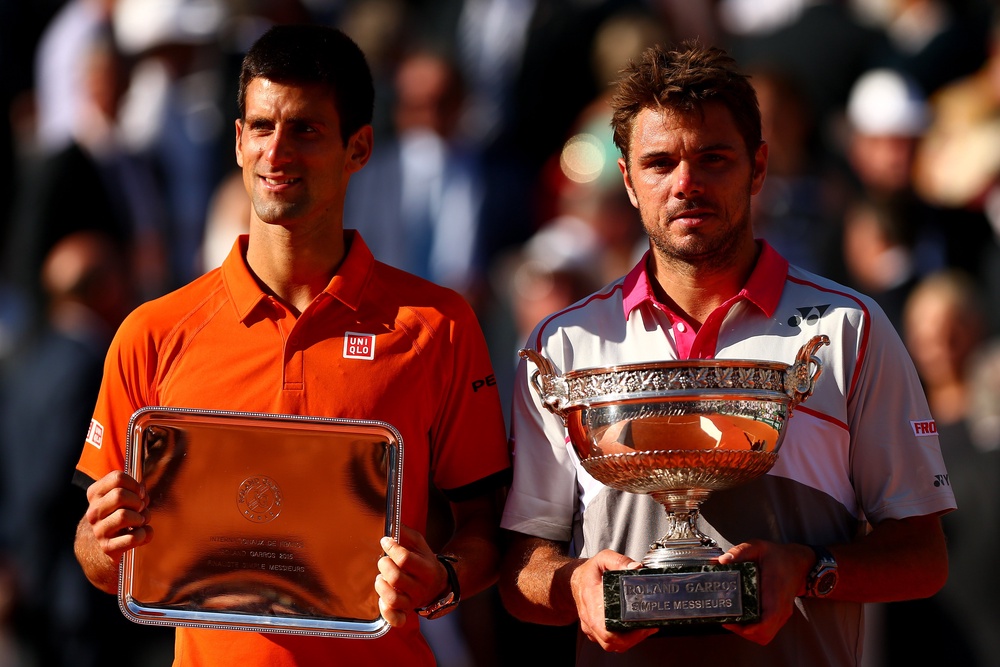
Eleven years ago, with one final swashbuckling backhand down-the-line, Stan Wawrinka completed one of the all-time Grand Slam shocks as he defeated Novak Djokovic – the overwhelming favourite to complete the career Grand Slam – in the final of Roland Garros.
Dropping the first set to the irrepressible Serb, Wawrinka stood shoulder-to-shoulder with Djokovic in his prime – and beat him in four. With a quite astonishing display of clay-court shotmaking, described by then-tennis correspondent of The Independent Paul Newman as a “stunning array of attacking tennis”, Wawrinka executed “the match of his life” to win his second Grand Slam. It is a remark he said at the time – and has not wavered on since.
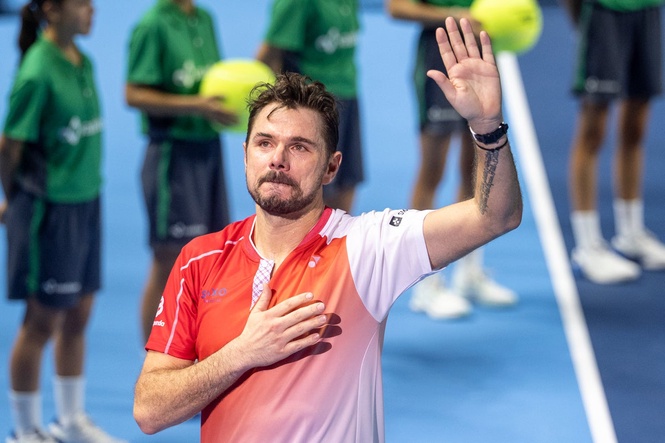
Wawrinka’s sensational career highs – for his 16 titles, three of them were majors and for comparison, David Ferrer won 27 titles but zero majors – should not be overlooked or undervalued when analysing a dizzying era of men’s tennis at the start of his century. Naturally, this all came back into focus as the Swiss legend played his 985th and final match at the Swiss Indoors event in Basel on Tuesday night.
After his straight-set loss to Jiri Lehecka, the 41-year-old – usually a modicum of supreme Swiss composure – looked emotional as he took the acclaim of his home crowd. "All I wanted in my career was to give everything, have no regrets, to always fight, to always give 100% in every match - out of respect for myself, the opponent, the tournament, the fans, for everybody,” he said afterwards.
"That was always the most important thing for more than 20 years, and the only way you can leave the sport: without any regrets."
Nor should he. Wawrinka is the perfect example of an athlete who squeezed every last drop out of his career and potential. Of course, at home and around the world, Roger Federer took the majority of the limelight but Wawrinka, to his immense credit, carved out his own top-of-Everest moments.
More than that: he took them.
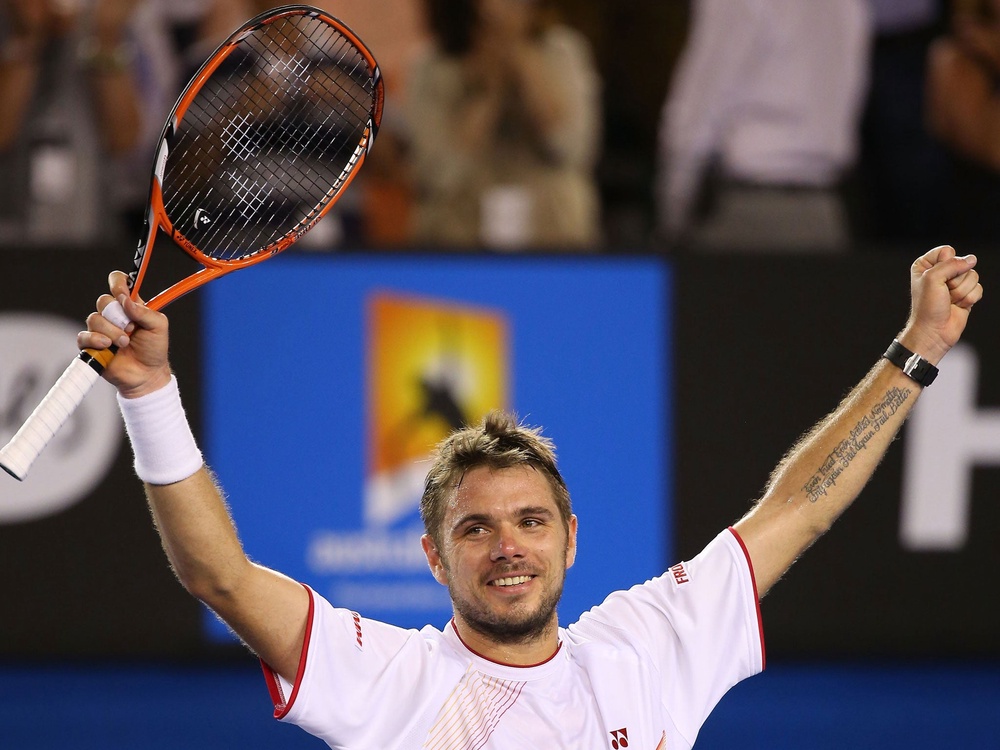
Prior to his first Grand Slam in 2014, Wawrinka was perhaps best known for being Federer’s doubles partner as the pair claimed Olympic gold at the 2008 Beijing Olympics. In fact, before the 2014 Australian Open, Wawrinka had won just five tour titles, all at the smallest 250 level. Yet that fortnight in Melbourne, a year on from a titanic five-hour defeat to Djokovic, would change his career arc. He beat Djokovic in the quarters, 9-7 in the fifth this time, before overwhelming a half-injured Rafael Nadal in the final.
Was it a flash in the pan? A one-Slam wonder? No, it was not.
His unbelievable 2015 victory against Djokovic in Paris was followed a year later by another unfancied triumph, when he beat the Serb in the final at the US Open in 2016. Strikingly, Wawrinka is just one of eight players in the history of men’s tennis to win their first three Grand Slam finals.
And yet, despite their parallel major tally, Wawrinka is not held in the same regard as Andy Murray, against whom he had a 10-13 record. On one hand, it makes sense: Murray won 46 titles and 14 Masters 1000 events; Wawrinka won 16 titles with just one Masters 1000 triumph. The Briton also reached world number one (with Wawrinka’s best coming in at three) and won two singles gold medals and an ATP Finals. Both were part of Davis Cup-winning squads.
Perhaps most important of all, in the 2010s era, it was most definitely known as the “Big Four”, even if it has since become chronicled as the “Big Three.” One thing is for sure: it was never the “Big Five”. Even last year, Wawrinka’s humility shone through when asked.
"I think I get bothered when they call it like the Big Five or they put me close to Andy Murray just because he won three Grand Slams and I have three Grand Slams,” he said. Notably, Wawrinka was never actually close to completing an unlikely Career Grand Slam. He always struggled at Wimbledon, with a best finish of the quarter-finals in 2014 and 2015.
“For me, I'm completely away from them,” he added. “I'm miles away from what they achieved and I think it's a little bit disrespectful for them and especially for Andy."
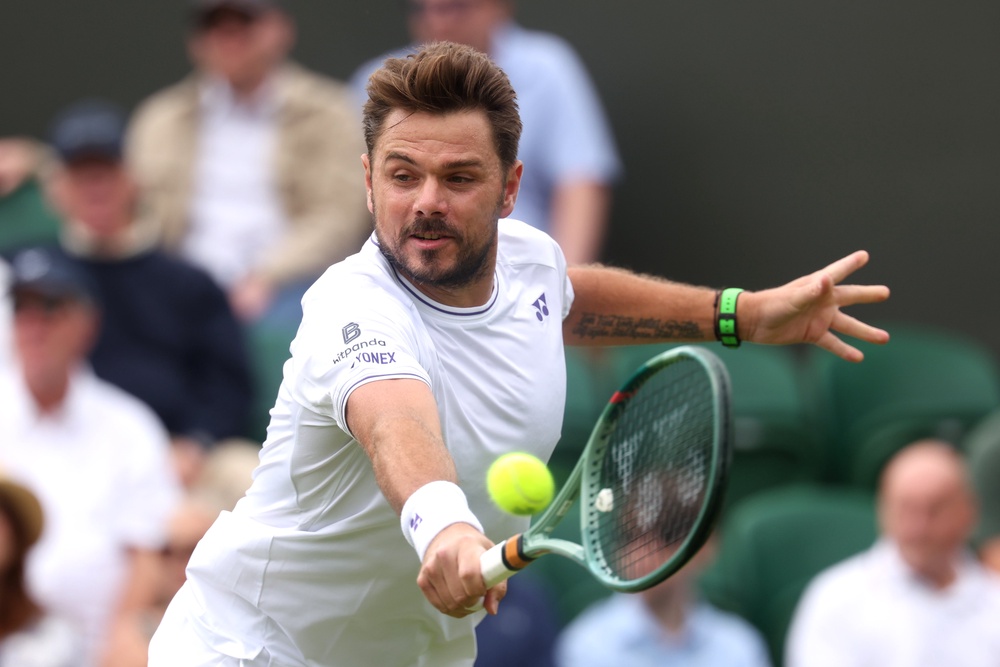
But – and it is a rather significant but – when lovers of the game delve into the Grand Slam champions archive, Murray and Wawrinka will be equals. That, in itself, says everything about Wawrinka’s knack for producing his very best in the moments where it mattered most. His destructive back-of-the-court game, with a punchy forehand to go with his glorious backhand (undoubtedly one of the most aesthetically pleasing shots of the modern era, whether it be his chipped slice or thumping drive through the ball), was proven to be a match for the game’s greats.
Every week? Perhaps not. But in those special moments? Absolutely.
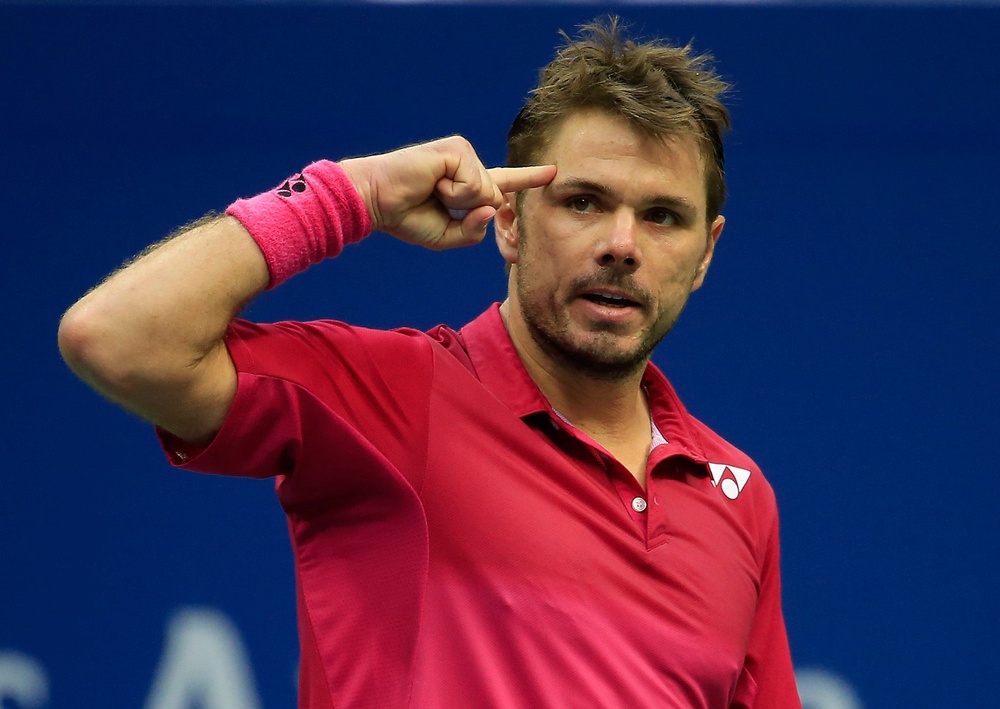
And even his career twilight, bowing at the grand old age of 41 (older than Federer, Nadal and Murray when they called time on their careers on tour), is a sign of the esteem by which Wawrinka is held. Despite an initial overlooking in New York, the understated Wawrinka was given a wild card into every Grand Slam this year and even impressed as he reached the third round in Melbourne, revving up the crowd and pointing to his temple in a gesture iconic and memorable throughout the years.
And if you needed any more proof of the high regard he is held in: Federer, Murray and the recently-retired Gael Monfils will all feature at a farewell exhibition for Wawrinka in Geneva on 19 December. The event is being billed as “One Last Backhand”; a rather apt title for one of tennis’ most underrated champions.
I stayed at Andy Murray’s five-star country house hotel – here’s what I thought
Andy Murray and Gael Monfils confirmed to feature at Stan Wawrinka farewell exhibition
Katie Boulter responds to Sonay Kartal run by backing up Japan Open win
Andy Murray and Gael Monfils confirmed to feature at Stan Wawrinka farewell
‘Six Kings Slam’ exhibition in Saudi Arabia postponed amid Houthi attacks
Jannik Sinner comeback date announced after lengthy injury layoff