Astronomers believe they may be closer than ever to finding an extra planet hiding in our own solar system.
For years, scientists have been arguing about whether there is a hidden planet beyond Neptune. If it does exist, it would explain the mystery of why some of the objects on the edge of our solar system behave unusually, with orbits that don’t appear to go as expected.
Now, astronomers have identified how the planet might look and act if it really is there. While it does not answer the question of whether the world exists, the research used computer simulations that astronomers believe could bring them closer to finding a definitive answer.
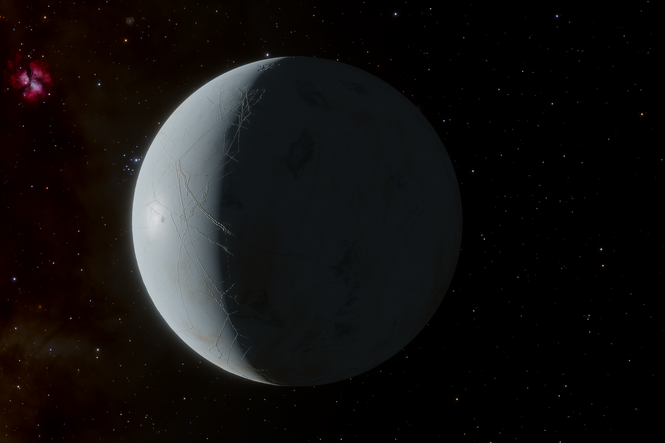
The potential hidden world, nicknamed Planet X2, is different from the long-discussed idea of a Planet Nine. Some astronomers have suggested there could be another, much more massive world that is also affecting the orbits that are seen beyond Neptune.
Planet X2 focuses on icy objects that exist far beyond Neptune and also seem to be pulled around by an unseen force. The new research would be about 1.5 to 2 times as massive as the Earth, and orbit hundreds of times from the Sun as we do.
Researchers hope that the new simulations offer a new way to investigate whether it might actually exist. And it provides ways that astronomers could actually test those investigations, using the Vera C Rubin Observatory, which is currently scanning the sky.
"Imagine discovering, after decades of mapping our Solar System, that another planet has been hiding from us all this time," said Patryk Sofia Lykawka, who led the research.
"If this planet exists, it could change how we understand the history of our Solar System and how its most distant objects came to follow such unusual orbits."
Beyond Neptune, there is a vast region made up of icy bodies that astronomers call trans-Neptunian objects. Most of them are in the Kuiper Belt, orbiting on a broad disc that is as much as 50 times as far from the Sun as we are.
Research over the past 20 years has shown that there are more distant objects that seem to be moving on orbits that are strangely tilted, such as Sedna, which has a long orbit that takes it far outside the region of the known planets of our solar system. Those orbits are difficult to explain through the gravitational influence of the solar system’s planets that we know about.
To better understand those orbits, as well as search for any planet that might be influencing them, researchers in the new study used computer simulations of the 4.5 billion years over which the solar system has evolved. They then looked at those simulations to understand whether a distant planet could explain the unusual orbits.
The work showed that a distant, unseen planet would explain orbits that otherwise are difficult to understand. "Our model reproduces several of the unusual orbital patterns observed among distant icy objects, although there are still differences between the model and observations that we need to investigate further," Professor Lykawka said.
The planet would have a wide, stretched orbit, as big as 500 times the distance between us and the Sun. Even at its closest, it would only come 200 times that distance.
Astronomers have been looking for planets beyond Neptune for a century. It was the search for a theoretical Planet X that led to the discovery of Pluto – but later research showed that it was too small to explain the strange behaviour that had prompted the search.
In more recent years, a hypothetical planet has been revived as a potential explanation for unusual movements of the Kuiper Belt. That led to the formulation of the idea of Planet X2, and understanding whether it could explain the strange behaviour of objects at the edge of the solar system more broadly.
Scientists now hope to test the ideas with future observations, including from the Vera C Rubin Observatory.
"The exciting thing is that we now have an opportunity to put this idea to the test," said Jonti Horner, a co-author of the study.
"As the Rubin Observatory surveys the sky, we will find new clues that help us understand the distant reaches of the Solar System – and whether another planet is still waiting to be discovered."
The work is reported in a new paper, ‘Signatures of an Earth-class Planet in the Distant Solar System’ published in the journal Monthly Notices of the Royal Astronomical Society.
NASA’s Voyager 1 crosses historic light-day distance from Earth
Leonid meteor shower to peak in UK skies tonight. Here’s how to watch
Scientists want to send ‘swarms’ of robots to search for life on Mars
Spacecraft arrive at Mercury after eight years – but there’s a glitch
Satellites now outnumber stars in the night sky
Giant dying star seen swallowing its companion in a first-of-its-kind cosmic merger