

I knew it was time to archive the chat when the conversation had descended to pigeon faeces. Having started innocently enough, with one neighbour asking for tips for avoiding it on her balcony, somehow 20 people were suddenly chiming in, sending photos, and making jokes about unrelated birds.
It was far from the first straw. Before this, there had been more than 80 messages complaining about how expensive the local matcha bar had become, a debate about the bin room and what to do about the homeless person who occasionally slept there, and several giveaways for used household items being flogged by someone in the building who’d apparently made quite a few enemies due to his frequent flat parties, which prompted a splinter group among said enemies.
This was a few years ago when I was living in an apartment block with hundreds of other residents. It was my first experience of a neighbourhood WhatsApp group, an increasingly common aspect of modern-day city living designed to help foster a feeling of community and give people a space to exchange vital pieces of information about their local area.
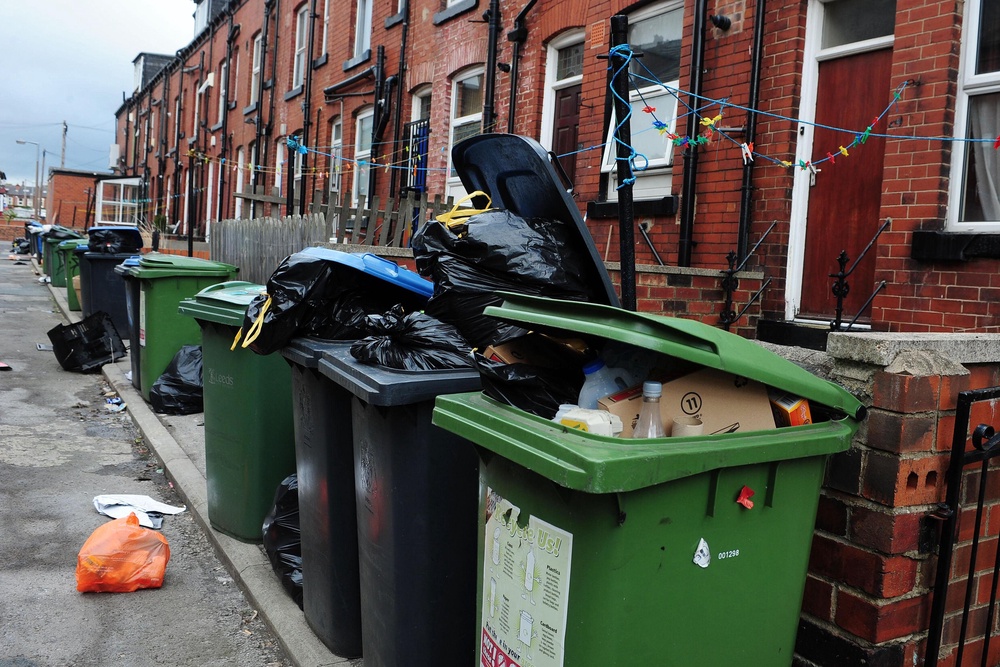
On the surface, it’s a great idea: somewhere to ask someone to sign for a package for you! A place for newbies to ask questions about the best local cafes! Maybe even an opportunity to make new friends! According to a survey conducted by premium housebuilder Redrow, 39 per cent of Britons believe neighbourhood social media groups are a vital way to stay connected with one another. They are particularly prevalent among those aged 25-34, with nearly half (45 per cent) pointing to online networks as helping them feel like part of the local community.
The reality, however, can be quite different, as I’ve discovered from being in several other neighbourhood WhatsApp groups since that one, and they’ve been even more unhinged, with passive-aggressive comments flying around about the bins (why is it always the bins?). One neighbour, who was clearly having a bit of a hard time, even replied to a very standard question about noise, informing the group out of nowhere that she’d just lost a relative.
“The strangest pattern in my WhatsApp neighbourhood group is a neighbour turning free junk into a full-blown competition,” says Jim*, 41.
“Someone posts a cracked plastic stool and writes, ‘Free to a good home. First claim gets it,’ and within minutes three people are asking if it’s still there. I mean, the condition of the item is so embarrassing that my first thought when I saw it was that the only place it belongs is in the trash.”
Strangely, somewhat arbitrary conversations like this can also descend into chaos. “People will argue for a dozen messages about a single discarded item: ‘It was never really about the stool, it was about the principle.’ Someone brought up their electric bill for no reason. One neighbour left four voice notes. I just had to set that group on mute.”
Someone brought up their electric bill for no reason. One neighbour left four voice notes. I just had to set that group on mute
For Gilly*, 59, who is in a group with 230 members in her local area in Kent, the main vexation is the amount of unnecessary chatter. “There’s so much noise on there,” she says, citing endless questions that could be answered with a quick Google search, conversations between two people who could just message each other directly, and requests to resend old photos or links that have got lost in the depths of the never-ending chat.
“It doesn’t make me anxious, often more bewildered, shaking my head in disbelief,” adds Gilly. “Also, the fact that everybody needs to add their opinion, when a simple ‘thumbs up’ or ‘thank you’ emoji could have done.”
Meanwhile, on Reddit, there are entire threads dedicated to complaining about neighbourhood WhatsApp groups, often citing deeply alarmist rhetoric: on one, a user reports how a conversation about two police cars somehow created suspicions of a kidnapping. On another, someone complains about conversations revolving around paedophile rings and aliens.
These groups have always been around, but they undoubtedly kicked into a higher gear during the pandemic, when we were all housebound and suddenly more reliant on our neighbours than ever before.

Back then, those groups became a lifeline to many of us, even if it was simply to share information about clapping for the NHS and supermarket opening times. Since then, however, it seems like they have become an emotional dumping ground for a specific facet of society: lonely, angry people in need of an outlet.
For many, they are a cesspit of negativity. The group I’m currently in (140 people and counting) is almost exclusively a place for residents to complain about foxes, broken pipes, missing Amazon packages, and suspected burglaries. It’s unpleasant reading and makes me feel uncomfortable in my own home, which is why I’ve muted it.
Occasionally, these groups can get out of hand in more dangerous ways. In January, a false gun report at a school in Portsmouth, New Hampshire, was blamed on a misunderstanding on the app Nextdoor, a social media platform designed to connect neighbours. It transpired there had been confusion with an incident in another state.
For some people, though, neighbourhood WhatsApp groups can still be the beacon of light they’re intended to be. “I work from home, and my kids are at high school now, so I no longer have the school run,” says Sapna, 41, who moved into her home three years ago.
These groups have always been around, but they undoubtedly kicked into a higher gear during the pandemic
“I could go for days without seeing or talking to another person in real life apart from my own family. I felt lonely. So in January, I sent a vulnerable message to the group of 145 people, asking if anybody wanted to do a monthly drinks to get to know our neighbours. 32 people joined my group from the link I provided. It’s become a really wonderful thing, and people said they were so grateful.”
It transpired that many people were in a similar position. For Emily, 43, the group she has been in with her neighbours in Poole since lockdown has been a similarly positive experience. “We have gotten to really know our neighbours over these past six years,” she says. “We’ve had summer garden parties, street parties during the jubilee, fish and chip quiz nights, bonfires at the neighbouring park.”
It’s this side of the groups that is the thinking behind the charity The Eden Project’s initiative, The Big Lunch, the UK’s annual celebration for neighbours and communities, with around 10 million people taking part each year.

“We know that neighbourhood WhatsApp groups can lead to all sorts of weird and wonderful interactions – and lots of notifications – but they’re also a fantastic, low-effort way of feeling more closely connected with your community,” says Lindsey Brummitt, programme director for the Eden Project’s Big Lunch initiative.
“The Big Lunch sees millions of people come together to share food and get to know their neighbours better in June each year, with many organisers using WhatsApp groups as vital tools to plan their event, ensure everyone is invited and keep in touch afterwards about everything from missing cats to sharing leftovers and raising funds for charity. Although nothing can compete with catching up on the latest street gossip over a slice of cake, we recommend using all the tools available to us to make community connections even easier!”
Not all bad, then. But as with all of these things, it probably depends on the other people in your group. And the kinds of things they’re posting. And I’m afraid as long as my group is full of complaints and photographs of animal feces, I’ll be keeping it muted.
*Names have been changed
Read MoreResearchers warn climate change could be making us lonelier
‘They drive me nuts’: How Brits forgot the art of being a good neighbour
What it will take to make Harvey Nichols absolutely fabulous again
Peugeot 308 SW: Estate of the art
Retired substitute teacher, 77, wins home and $100,000 in TV show’s sweepstake
Popular peanut butter brand gets refresh for first time in 30 years