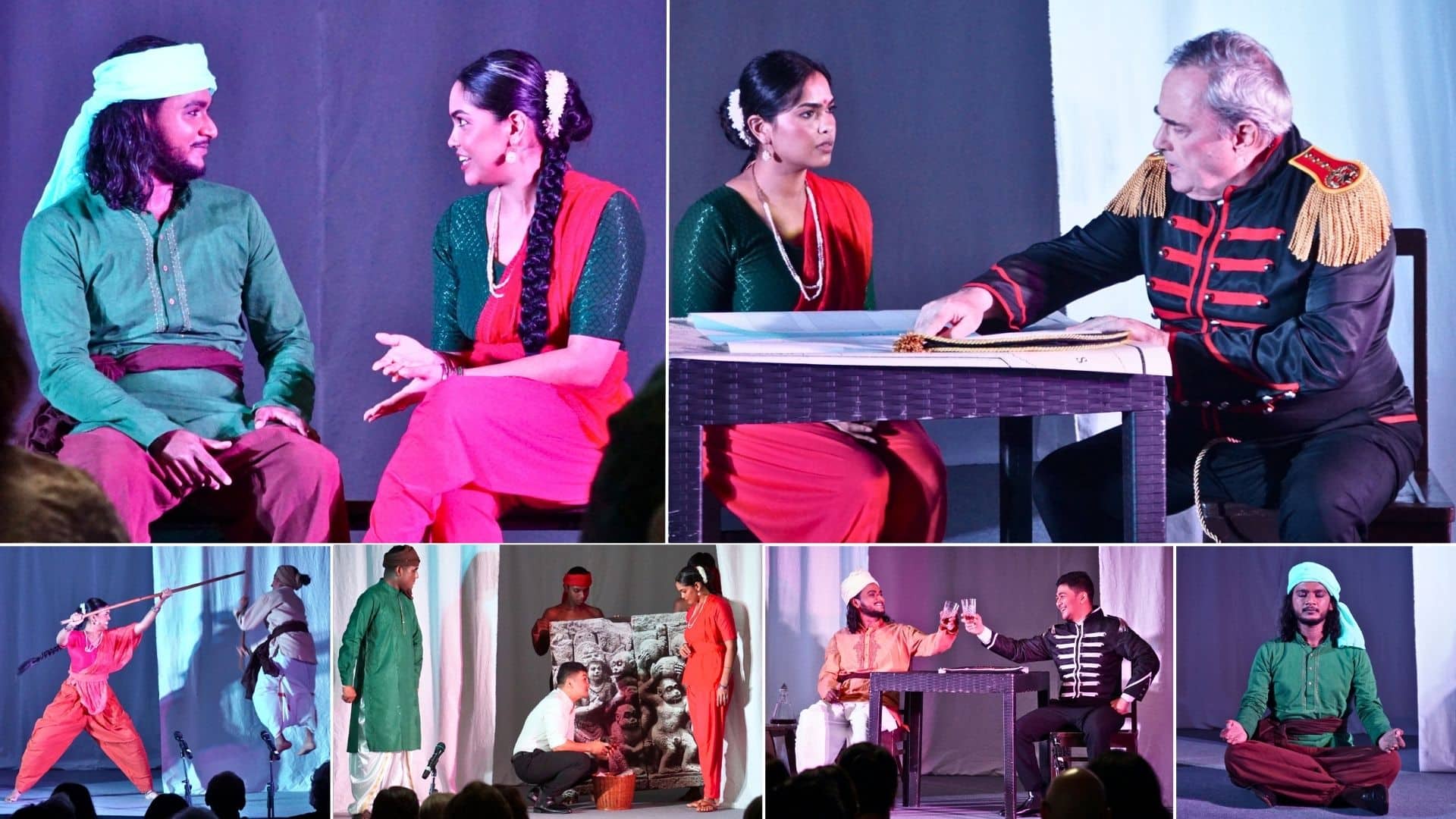
What does a washerwoman, a mercenary, a business rival, a pirate, the British East India Company (EIC), a forest shaman, and the Tamil martial art silambam have in common?
A temple.
Bear with me. I promise I’ll get there.
I watched the opening performance of The Legend of Rani Dhobi on May 9, 2026. Part of the inaugural Penang Heritage Arts Festival, Rani Dhobi is an original work by playwright-director Jayaram Menon, staged by Penang Players Music and Drama Society and supported by Yayasan Hasanah.
Publicised as historical fiction, I went in with an open mind and heart, hoping to learn more about Penang’s dhobi ghats and their intersections with the EIC around the 1800s, where the story is set.
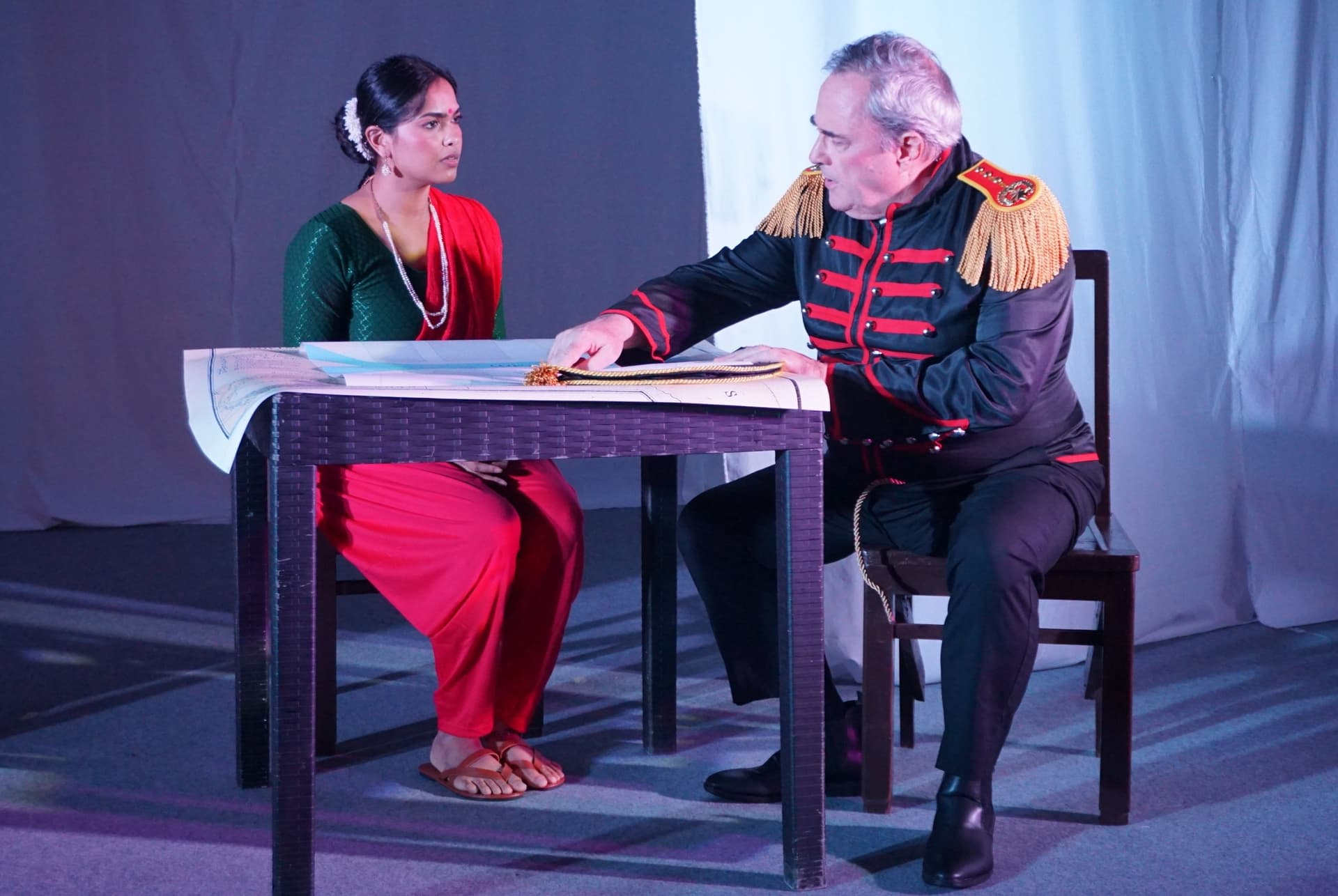
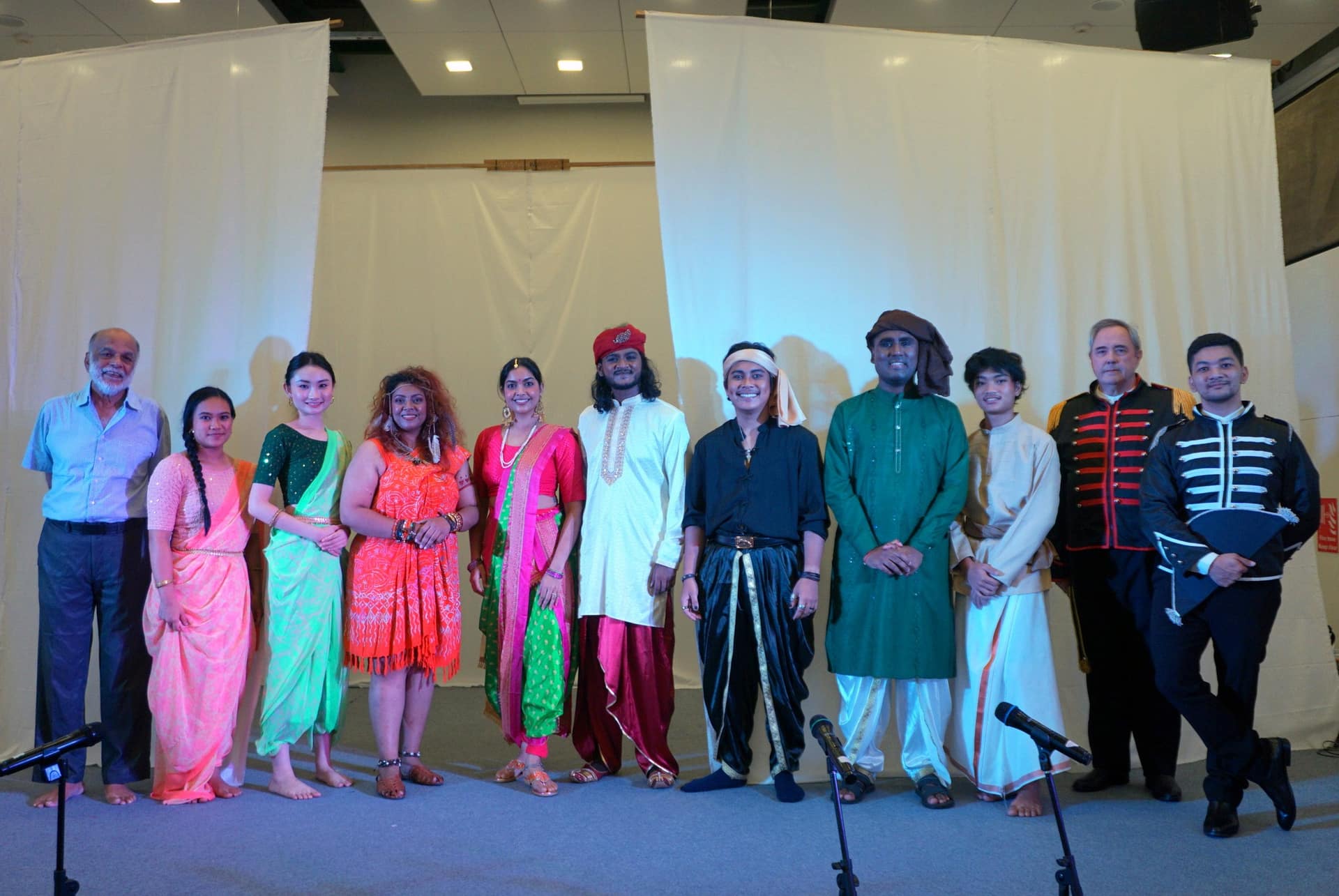
The play follows Sita (played by Swarna Naidu), known as “Rani Dhobi” — Queen of the Dhobis. Her riverside laundry business services the EIC, its main customer. When a land dispute arises with neighbouring rival Rana (Sri Kugan), Sita appeals to Lieutenant-Governor Leith (Peter Mills) to formally demarcate the land.
Her path eventually crosses with Jairam (Arunen), a spy hired by Capt. Caunter (Ronald Pereira) to combat pirate attacks led by Badang (Zylan), which threaten EIC trade routes between Penang and Kedah. Along the way, Jairam helps Sita obtain a sacred stone from Kedah that would later become the foundation stone of the temple she dreams of building.
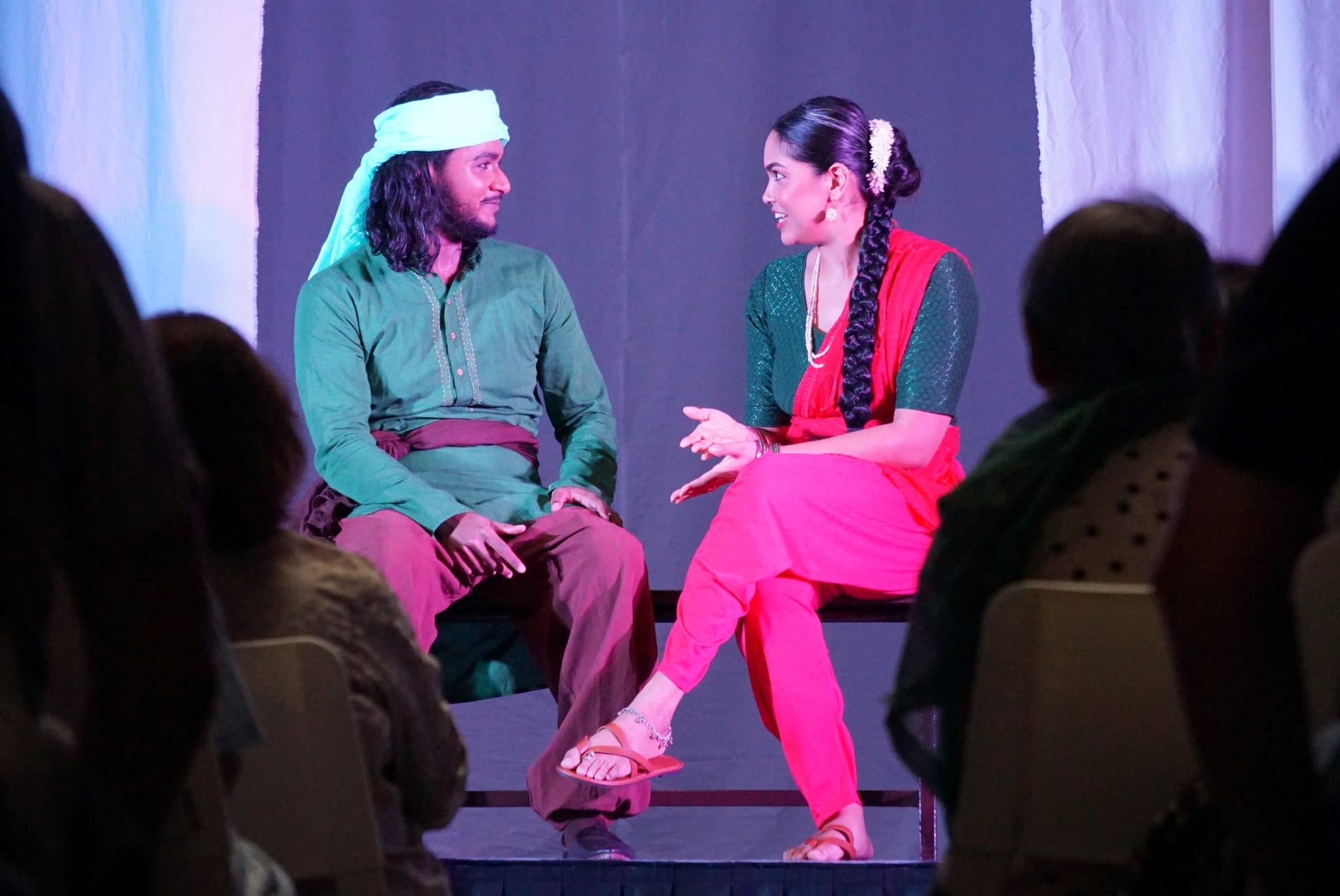
What Rani Dhobi does well is weave history, politics, economics, and power plays into a deeply personal story about survival and ambition. Alliances are transactional, favours are currency, and business becomes inseparable from politics in the play’s many “I-scratch-your-back-you-scratch-my-back” unlikely alliances. Even something as simple as sourcing cheaper coconuts to lower laundry costs leads Sita to the forest shaman Baka (Roshini).
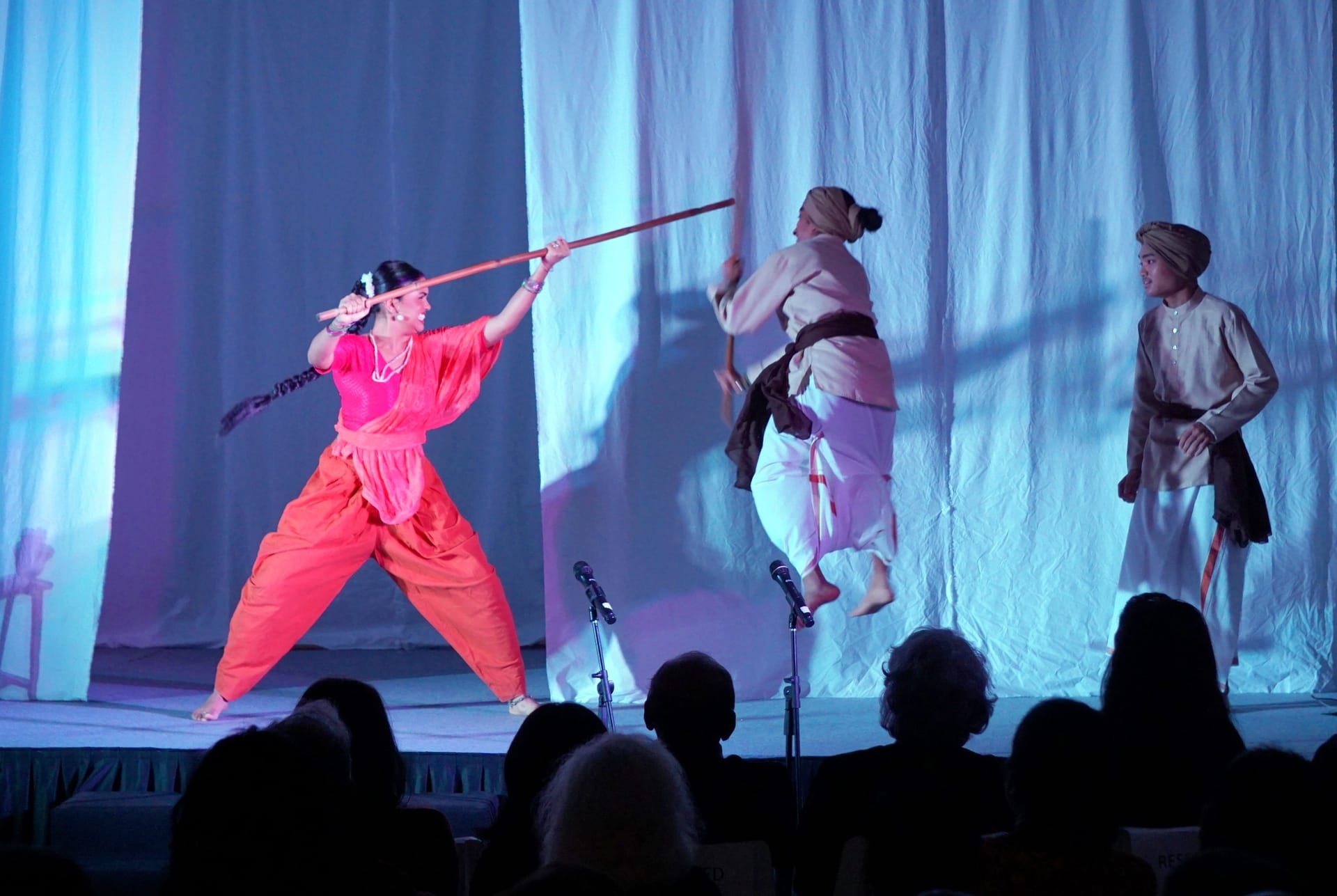
Swarna’s poised and graceful embodiment of Sita as not only worldly and resourceful, but also deeply spiritual and community-minded, was a treat to behold. Her silambam fight sequence against Rana’s men was thrilling — especially from where I was seated a few rows from the front. I genuinely gasped at how close the sticks came flying toward the audience.
Swarna’s stage presence was matched by the strong male lead Arunen. In fact, I found myself wanting more exploration of their similarities: both migrants from India, both shaped by loss, both surviving however they could in a foreign land. The play hints at emotional depth between them, but never fully settles into it before moving on to the next plot point.
And now, back to the temple.
Nearly two-thirds into the play, we finally learn Sita’s true motivation. Beneath all the bartering, fighting, strategising, and romance, Sita’s real goal was never merely business expansion — it was to build a Rama temple reminiscent of the one she left behind in India when she migrated to Malaya. In hindsight, the signs were always there. Sita frequently speaks of divine guidance, seeking meaning from Lord Muruga through people, events, and everyday encounters.
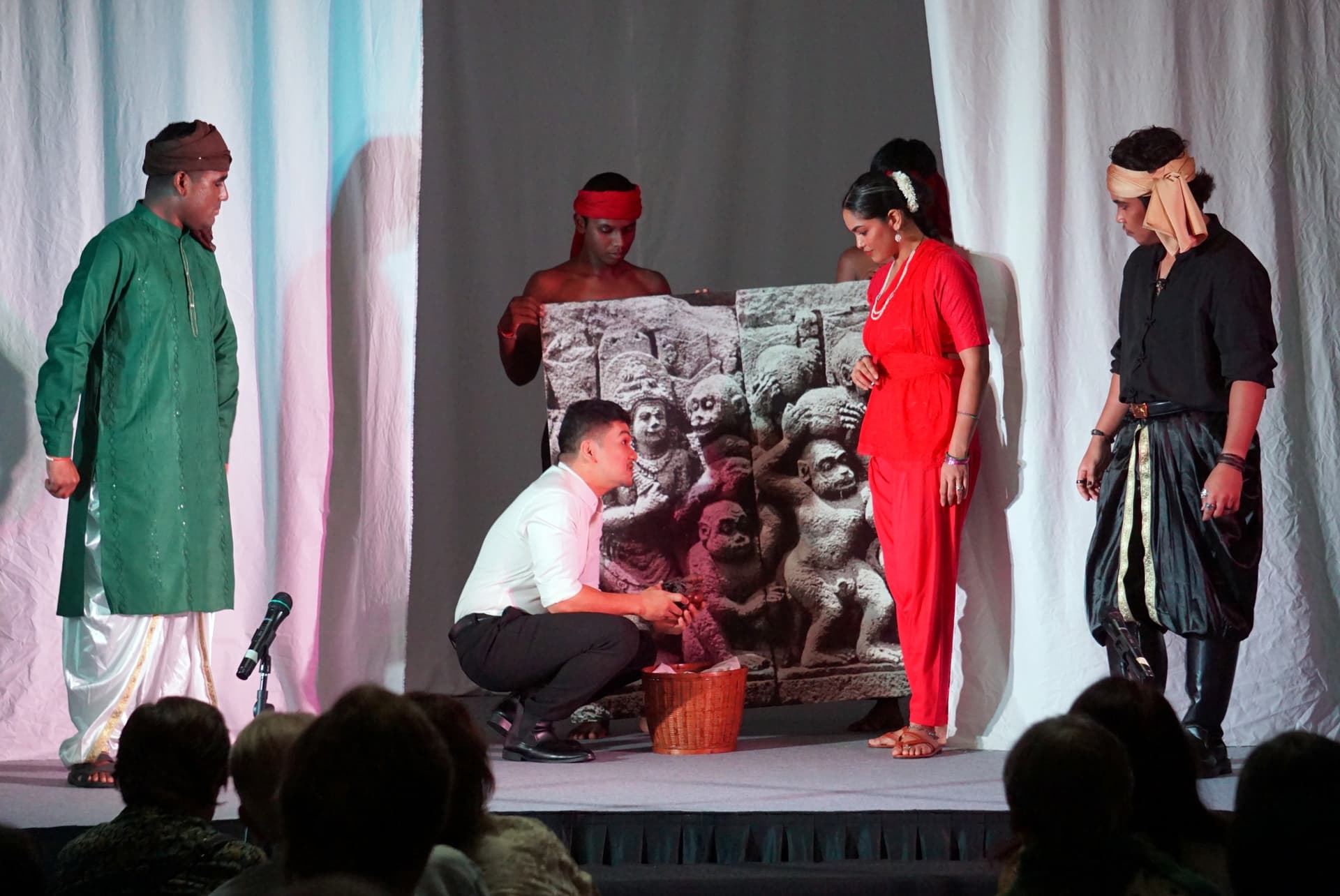
The temple was not just a structure; it represented memory, identity, faith, and belonging. In fact, it was the central motivation that led and guided Sita’s actions in the story. That is why I wished the play had spent more time developing that emotional core. Because the temple ultimately becomes the heart of Sita’s journey, I felt the production would have benefited from digging deeper into its personal and communal significance. That, I feel, would have given so much more breadth, depth, and humanness to this powerful tale of empowerment and resilience. Instead, much of the storytelling leaned toward surface-level historical exposition and occasional performativeness.
The ending, particularly Rana’s sudden transformation from foe to friend and his final “sacrifice,” felt somewhat rushed. A more gradual unfolding of the relationships and tensions between Sita, Jairam and Rana would have done more justice to the ending.
Of shadows, cloth, and constraint
The set design was minimal but functional, often relying on tables, chairs or benches, and suspended white cloth that doubled as entrances, exits and canvases for shadow-play sequences. I suppose this was space-appropriate as all the action was performed on a raised platform that served as a stage. I was surprised they even had enough room for the silambam sequences!

That said, the venue itself proved distracting at times, with sound and vibrations from another festival event downstairs bleeding into the performance.
Like the set, lighting was pretty bare and basic. I could not tell if this was an intentional creative choice, or a limitation of staging the production in Bangunan UAB’s multipurpose hall. Either way, the space lacked the atmosphere needed for a truly immersive experience.
More inventive lighting choices could have added texture, mood and emotional depth to several scenes. Perhaps the director intended the weight of the story to be carried by the strength of the cast through their storytelling.
For this, the dialogue served its purpose in presenting information to carry the story along. Nothing in particular stood out though, although the occasional sexual innuendos (“well-hung”, “washing dirty linen in public”, “forward thrusts”) certainly drew laughs from the audience. Some performances suffered from mechanical line delivery, missed cues, while others were unclear due to poor projection and diction.
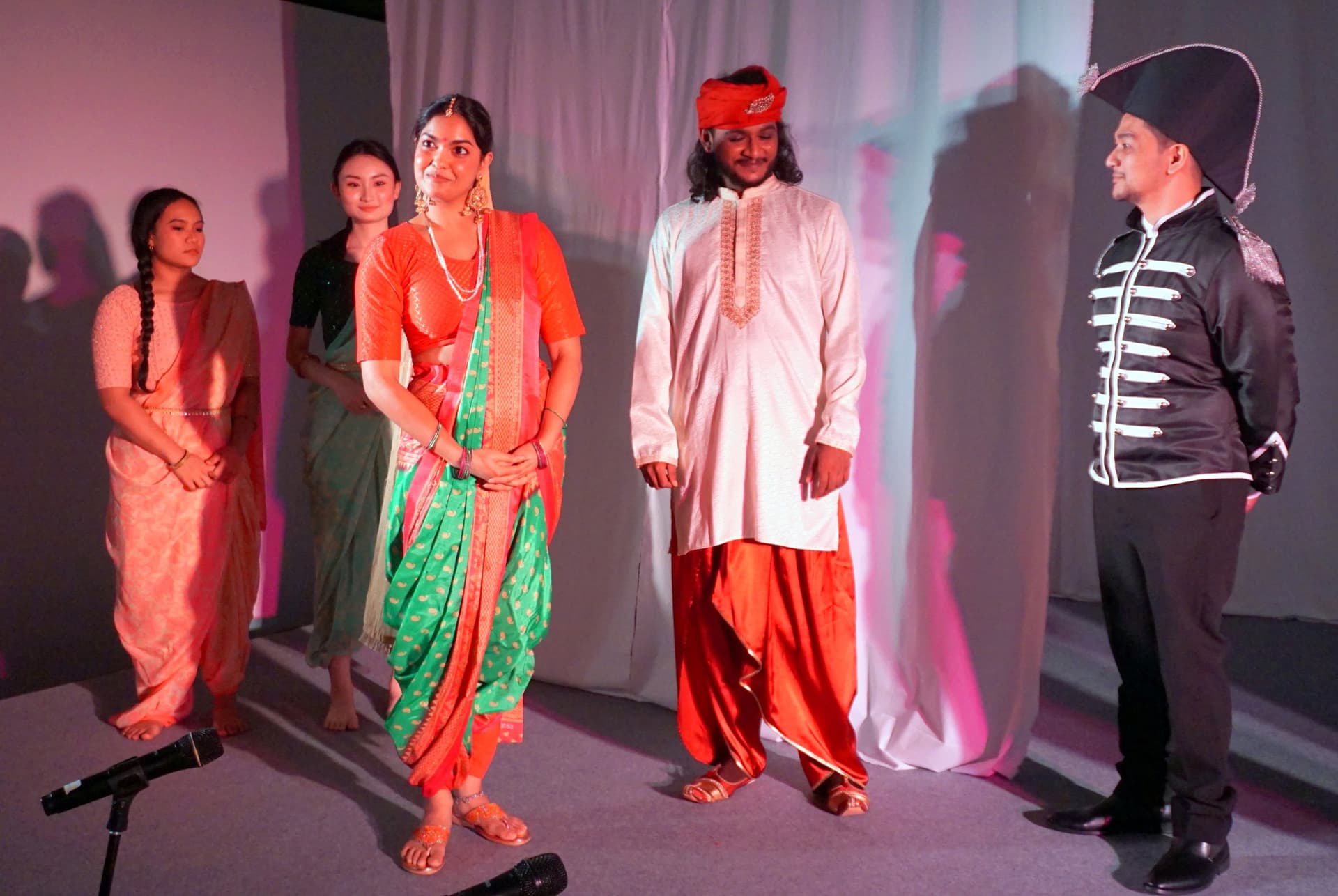
One area where the production truly shone, however, was costume design.
Though relatively simple, Sita’s costumes cleverly tracked her growth throughout the story. The progression from simple washerwoman attire to a more opulent look subtly reflected her rise from labourer to a self-made successful female entrepreneur. I especially appreciated the bright, bold colours, which reinforced Sita’s strength and independence.
After the show, I can confidently say I enjoyed myself. However, I did not feel fully satiated by what I had consumed. Like macam tak cukup rasa, lacking in flavour.
People go to the theatre for many reasons. Some want to be entertained. Some attend to support family, friends, or the local arts. Some, like me, go hoping to be moved.
And by “moved”, I mean leaving the theatre breathless. Feeling like the story reached into your chest and squeezed something out of you.
With Rani Dhobi, I was not sufficiently “moved”.
Ironically, what moved me most happened outside the story itself — learning that two descendants of the real-life “Rani Dhobi” were present in the audience that afternoon. Imagine. It must have been quite something to witness a fictionalised depiction of one’s great-great-grandmother on stage — I could not however tell from the staging itself how much was fact and how much was fiction.
Still, I appreciate the ambition behind The Legend of Rani Dhobi.
I mean, crafting a historical fiction is no easy feat. And pulling it off well, especially on a stage not meant for theatre, is a challenge indeed. While this production may not have fully swept me away, I am thankful I got a brief introduction to a fascinating figure and story I previously knew little about.
For that alone, I’m grateful. I look forward to being more moved by future productions.
About the writer:
La Ling is a writer drawn to the intersections of books, education and the arts, where stories become both mirror and map. Dreamy by nature yet pragmatic at heart, she is endlessly lit up by stories—told in books, on stages, in songs, through movement, and in the lives of people from all walks of life. Often finding herself swimming in opposite directions, she is always going somewhere, even if she’s not quite sure where she will arrive.
Seni:Kita (pentaspena.pg@gmail.com) is a content creator under the Newswav Creator programme, where you get to express yourself, be a citizen journalist, and at the same time monetize your content & reach millions of users on Newswav. Log in to creator.newswav.com and become a Newswav Creator now!
The User Content (as defined on Newswav Terms of Use) above including the views expressed and media (pictures, videos, citations etc) were submitted & posted by the author. Newswav is solely an aggregation platform that hosts the User Content. If you have any questions about the content, copyright or other issues of the work, please contact creator@newswav.com.