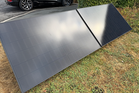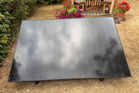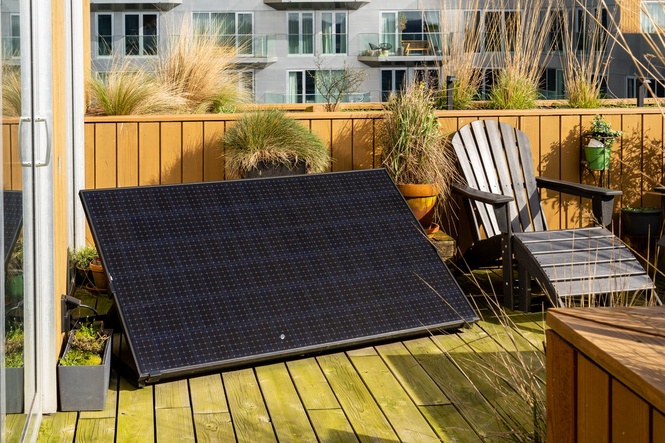
Plug-in solar panels offer households a much simpler way to generate their own electricity. New regulations allow compliant systems to connect to a standard household socket, opening up solar to people who may not have the roof space, budget or ability to install a conventional array.
But if a small solar system can simply be plugged into your home, is there still a reason to spend thousands of pounds installing panels on your roof?
The short answer is yes. Although both technologies turn sunlight into electricity for your home, plug-in and professionally installed solar panels operate on very different scales. Plug-in solar offers a cheaper, lower-commitment route into renewable energy, while a full rooftop system can generate many times more electricity.
Phil Steele, future technologies evangelist at Octopus Energy, describes plug-in solar as “very much a gateway” to the technology rather than a direct competitor to rooftop panels.
Here’s how the two compare.
Read more: Where to buy plug-in solar panels
Get a quote for solar panels for your home
Use our comparison tool to get free quotes from leading solar panel installers.
Plug-in vs installed solar panels at a glance
Plug-in solar | Rooftop solar | |
System size | Up to 800W AC output under the new framework | Typically several kilowatts, depending on the property |
Typical upfront cost | Around £500 to £800, depending on retailer | Around £6,500–£8,000 for a typical three-bedroom home |
Installation | Designed for consumer installation, subject to product instructions and suitability | Professionally surveyed, designed and installed |
Best suited to | Flats, renters, homes without suitable roof space and smaller budgets | Homeowners with a suitable roof who want to maximise generation |
Potential generation | Government modelling suggests around 378–690kWh a year for an 800W system, depending on positioning | A typical 4–5kW system can generate several thousand kWh a year |
Battery storage | Not covered by the initial plug-in solar regulatory framework | Can readily be paired with a home battery |
Portability | Potentially movable with the occupier | A permanent home installation |
The government initially estimated the cost of a typical 800W plug-in solar kit at £400 to £600 in its analytical work supporting the new rules. With plug-in solar now on sale at select retailers, this pricing seems slightly optimistic. Argos is the first UK retailer to sell plug-in solar systems, with prices ranging from £599 up to £849. Energy company Octopus is also selling plug-in solar at a lower price. Its bundles cost £450 or £650, depending on the kit you select.
By comparison, a conventional solar system for a three-bedroom home typically costs around £6,500 to £8,000, according to The Independent's solar panel cost guide.
Read more: First look at plug-in solar panels
What is the difference between plug-in and installed solar panels?
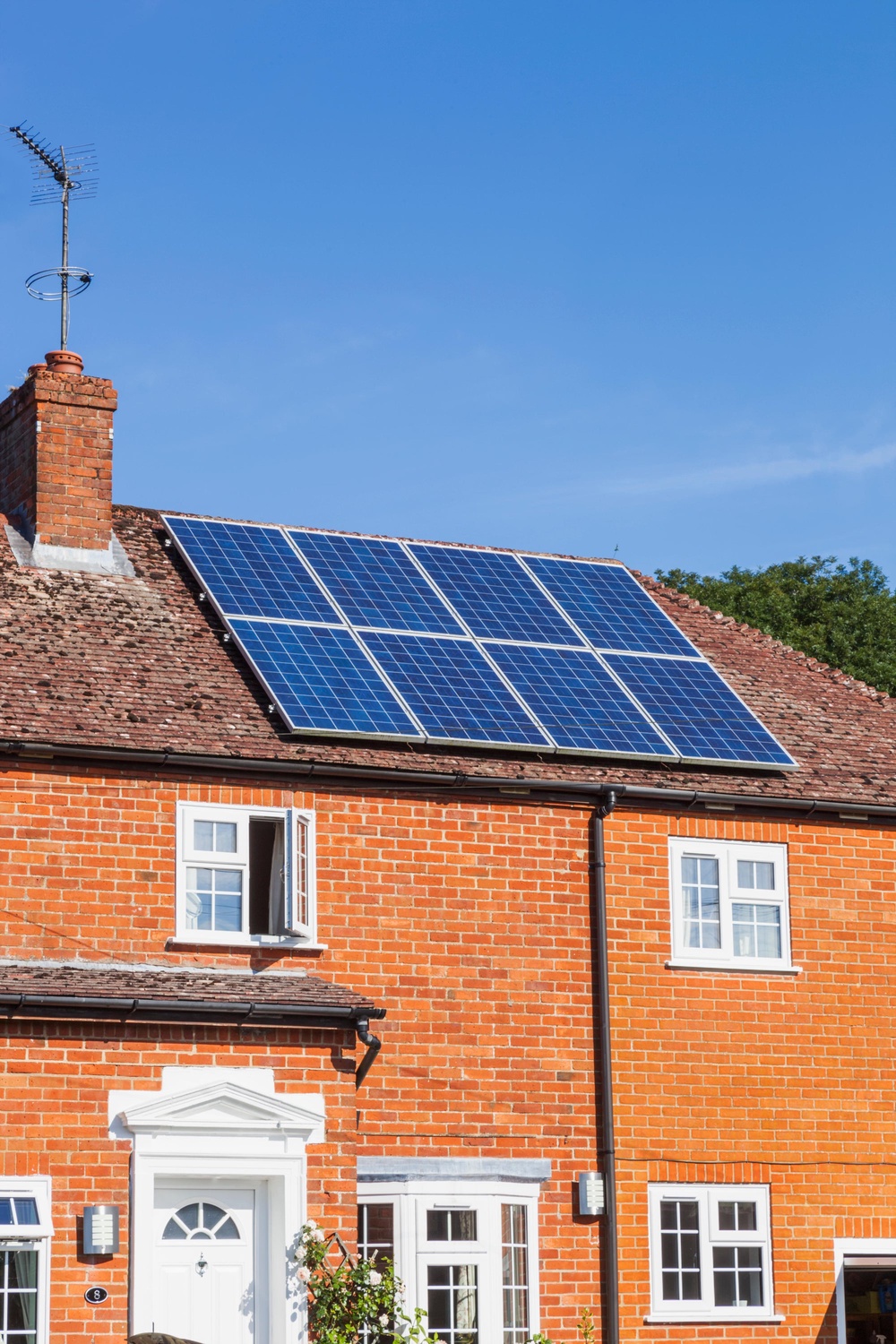
A conventional rooftop solar system is designed around your property. A professional, accredited installer will assess factors such as the available roof space, orientation, shading and household electricity consumption before deciding how many panels to install and what size inverter the system needs.
The resulting array is then permanently connected to the home's electrical system and can potentially be combined with battery storage and other technologies.
Plug-in solar takes a much smaller-scale approach. Under the government's final interim product specification, a compliant device incorporates at least one solar panel, an inverter, mounting equipment and a manufacturer-supplied plug designed to connect to a UK mains socket.
The difference in scale is pretty substantial.
“Your plug-in solar system is going to be two solar panels, so 0.8kW of generation, and your rooftop solar is going to be more like five or six kilowatts of generation,” Steele explains.
In other words, plug-in solar isn't simply conventional solar without the installer as middleman. It is a smaller home-generation system designed to meet a different need.
Kelvin Cao, Anker Solix EU CEO, says an 800W plug-in kit, consisting of panels and an inverter, works best for households whose “daily rhythm aligns with daylight.”
“For those households, the system can cover a meaningful share of daytime electricity use, from appliances and lighting to everything running quietly in the background,” he says.
He adds that a home left empty during the day will inevitably get less benefit because there is less demand when the panels are producing electricity.
Read more: Are plug-in solar panels worth it for UK homes?
How much electricity can plug-in solar panels generate?
The headline 800W figure refers to the system's maximum AC output rather than how much electricity it will generate over a day or year. Actual generation depends heavily on where the panels are set up, which direction they face, their angle and whether they are shaded.
The Department for Energy Security and Net Zero (DESNZ) modelled two possible arrangements in its final plug-in solar impact assessment. Both assume an 800W system, average UK solar irradiance, little or no shading, a household occupied during the working day and no battery.
Example 800W installation | Potential annual generation | Electricity used in the home | Indicative annual saving |
30-degree tilt, south-facing | 690kWh | 428kWh | Around £110 |
Vertical, east- or west-facing | 378kWh | 272kWh | Around £70 |
The government's calculations demonstrate just how important positioning can be. A south-facing system tilted at 30 degrees produced an estimated 690kWh annually, while a vertical east- or west-facing installation produced 378kWh.
The savings are lower than the value of all that electricity because the calculations assume that not everything generated can be used at the time it is produced. DESNZ estimates that 62 per cent of the south-facing system's electricity and 72 per cent of the vertical system's generation would be consumed in the home. Its estimated savings also exclude any value from exported electricity.
And this is where you see a major distinction from a full rooftop array. Steele says a conventional installation might have a capacity of around 5kW to 6kW, several times the maximum output of a plug-in system.
For comparison, a 4kW to 5kW conventional solar system might generate around 4,200kWh annually in a representative UK example, although the actual figure varies considerably with location, orientation and shading.
Anker's own modelling produces a higher estimate, with Cao saying a well-positioned system using two 500W panels could deliver around 850kWh annually. However, he cautions that generation does not automatically translate into equivalent bill savings.
“The fundamental challenge of a plug-in solar system is timing,” Cao says. “It produces the most electricity in the middle of the day, when many people are not at home and consumption is at its lowest.”
He adds that without storage, some of the potential saving can therefore be lost because the electricity isn't consumed when it is generated.
Which costs less?
There is no contest on upfront price.
The price for a typical 800W plug-in kit ranges from £450 to £850. A professionally installed rooftop system costs thousands of pounds because the customer is buying a much larger array as well as system design, mounting equipment, an inverter, scaffolding where necessary, electrical work, labour and certification.
That makes plug-in solar much more accessible to somebody who can’t justify spending several thousand pounds on a rooftop system.
But purchase price alone isn't a like-for-like measure of value. A rooftop system also has the potential to generate several times as much electricity every year, so those who are considering the two options should think about both the initial investment and how much of their electricity demand each system could realistically cover.
Price also isn't the only way plug-in solar reduces the barrier to entry. Cao points to the lack of professional installation and the ability to take the equipment with you when you move.
“Plug-in solar requires no roof access, no scaffolding, and no complex work. It can be installed on a balcony or a garden shed by the customer themselves, usually within an hour or two.”
Who are plug-in solar panels best for?
This is where plug-in solar potentially has its greatest advantage.
“Plug-in solar is designed for households the traditional solar industry largely left behind,” Cao says.
The technology is intended to be simpler and lower-cost than conventional rooftop solar and could be used by people who cannot install conventional panels, including some renters, flat dwellers and properties without suitable roof space.
Steele reaches much the same conclusion.
“Who benefits most is more likely to be apartments that maybe haven't got a roof to install their own solar,” he says. Smaller flats may also have lower electricity consumption, he adds, meaning a relatively small solar system could make a more noticeable contribution to their demand.
Renters could benefit from another distinction: unlike a rooftop installation, plug-in solar equipment can potentially move with you, provided it can be safely removed and reinstalled somewhere suitable.
That doesn't mean every tenant or flat owner can simply put panels on a balcony. Depending on the property and installation, you may still need permission from your landlord, freeholder or building manager, while planning and mounting requirements can also apply. The government's impact assessment specifically acknowledges that some consumers will need permission before installing a system.
When is installed rooftop solar the better choice?
If you own a house with a suitable roof and want solar to make a significant contribution to your annual electricity use, a conventional installation remains the more capable option.
Steele sees plug-in solar as something that could introduce homeowners to generating their own electricity rather than replacing a full system.
For somebody in a two- or three-bedroom house, he says plug-in solar can be a way to “try it out for the first time”, after which a properly sized rooftop system could make a much bigger difference.
A professionally installed system also gives you considerably more scope to design solar around your household's needs. The size of the array can reflect your annual consumption, available roof space and future plans, while batteries can be incorporated to store more of the electricity generated during the day.
That’s particularly important for households with high electricity demand or those considering technologies such as an EV or heat pump.
Read more: Best solar panels, compared
What are the rules for plug-in solar panels?
The legal position changed on 27 August 2026, when The Plugs and Sockets etc. (Safety) Regulations 1994 and Electricity Safety, Quality and Continuity Regulations 2002 (Amendment) Regulations 2026 came into force. The change created a route for compliant plug-in solar equipment to use a standard UK plug while introducing specific technical requirements for the devices.
Under the final product specification, the maximum power supplied to the home's electrical installation is 800VA, with current limited to 3.5A. The panels themselves can have a combined rated DC capacity of up to 2,000W, although manufacturers must advise consumers with more than 960W of panel capacity to consider having their electrical installation professionally assessed first.
There is also an important restriction on having several systems.
The product specification permits one plug-in solar device on each suitable household final circuit. However, it notes that the current Engineering Recommendation G98 network requirements restrict this to one device per household unless and until G98 is amended.
So consumers should not assume they can simply buy several 800W kits and plug each into a different socket. The position may evolve as network rules are updated, making it important to follow the manufacturer's latest instructions and connection requirements.
The initial regulatory framework also applies specifically to plug-in solar without batteries. Plug-in battery systems and solar devices integrated with plug-in batteries are excluded from the final interim product specification.
Plug-in or installed solar panels: which should you choose?
Neither system is inherently better because they address different needs.
Plug-in solar makes the strongest case where conventional solar isn't realistic. If you rent, live in a flat, lack a suitable roof or simply don't have thousands of pounds to invest, it provides a relatively inexpensive way to generate some of your own electricity and reduce the amount you buy from the grid.
If you own a house with suitable roof space and have the budget for a larger investment, installed rooftop solar offers much greater generation potential. A properly sized rooftop array can supply a substantially larger share of your annual electricity use and can form part of a wider home-energy system incorporating battery storage, an EV or a heat pump.
That is why Steele doesn't view the two technologies as direct competitors.
Plug-in solar, he says, is “very much a gateway” into generating your own electricity: “It's great. It's good. It gets you started.”
For households previously shut out of solar altogether, that may be its biggest advantage.
Read MoreBest solar panels for UK homes, compared by an expert
How do plug-in solar panels work and how are they installed?
Do plug-in solar panels save you money?
I’m an energy expert – here’s what I really think about plug-in solar panels