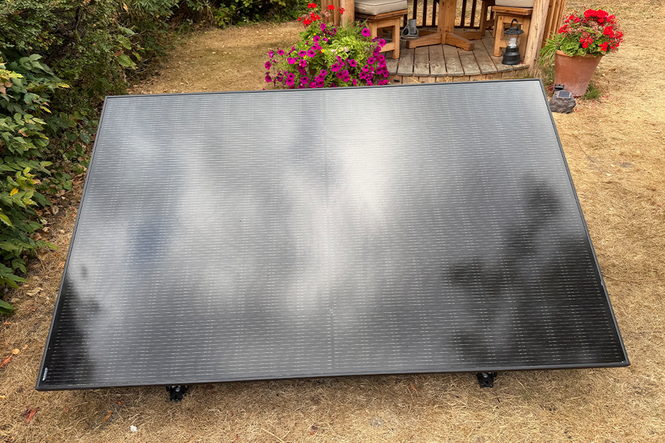
Plug-in solar panels are now available to buy and install in Great Britain, following a rule change that came into effect on 27 August 2026. These panels are sold as systems that cost around £340, are designed for DIY installation, and can help lower your energy bills by generating electricity.
The new plug-in systems are much cheaper than traditional roof-mounted solar panel systems, but are also smaller and generate less electricity. They can be mounted on the ground, on walls or on balconies (depending on the model you decide to buy), and they plug into a standard three-pin socket. The electricity they generate is fed into your home, where it contributes to the powering of domestic appliances, along with electricity drawn from the grid.
A typical plug-in solar kit includes one or more photovoltaic panels, a microinverter and mounting equipment. The panels generate DC electricity when exposed to sunlight, which the microinverter converts into AC electricity that can be used around the home. Since the output of these systems is limited to 800W, they won’t replace grid electricity entirely, but when exposed to sunlight, the panels can reduce the amount of electricity you need to buy.
The Government has highlighted the success of plug-in systems in Germany, where more than one million plug-in solar devices have been registered since 2018. UK energy secretary Miatta Fahnbulleh said: “Plug-in solar is a simple, affordable way for households to take control of their energy bills and start saving straight away...From this summer, we're giving more families the ability to power their homes with clean homegrown energy.”
But where to start? For this guide, I’ve looked at what’s been labelled as compliant, what’s coming up and some more traditional options to find the best plug-in solar kit for you and your home. I’ll be updating information and reviewing the kits as they become available.
Read more: Where to buy plug-in solar panels
How much energy do plug-in solar kits actually generate?
The energy a plug-in solar kit generates depends on the size of the panels you buy, as well as factors like their position, shading, the weather and the time of year.
Under current UK rules, plug-in solar panel systems are limited to a maximum AC (alternating current) output of 800 watts, which the Department for Energy Security and Net Zero (DESNZ) has said can save you up to £110 a year. While it generally won’t generate enough electricity to run your entire home, a plug-in system can help cover some of your basic daytime electricity needs, such as the fridge, wifi router, phone chargers and TV. It isn’t possible to use a plug-in solar panel to power a specific appliance, but the electricity generated is used alongside energy purchased from the grid to power your home.
According to Joanna O’Loan, knowledge manager for the Energy Saving Trust: “The savings will vary from home to home, [but] plug-in solar panels will give more people greater control over their energy use and costs. As these products become more widely available, access to clear and reliable information is essential to help people make informed choices”.
Read more: Best solar panels, compared
Get a free quote for solar panels for your home
Read more: Plug-in solar vs installed arrays
How do plug-in solar panels work?
Plug-in solar panels don’t require any modifications to your house's wiring and, generally, they don’t require professional installation either. Like installed arrays, plug-in systems use panels that contain photovoltaic (PV) cells. These are usually made from silicon and absorb energy from sunlight, then convert it into direct-current (DC) electricity.
This is then converted into alternating current (AC) electricity by an included microinverter. This is then fed into your home’s electrical system through a standard three-pin socket, where it can help power appliances and reduce the amount of electricity drawn from the grid. The rules currently stipulate that a plug-in solar panel system’s maximum AC output is limited to 800W, regardless of the potential power of the panels themselves.
If buying a kit with more than 960W of potential capacity (but which still has its output capped at 800W), it is advised that you speak to an electrician before purchasing and installing. This is also true if your existing electrics aren’t suitable – due to an older consumer unit, for example – or you need a weatherproof outdoor socket installed for the panels to plug into.
Using more electricity generated by solar panels – and drawing less from the grid – can reduce your electricity bills. Plug-in solar panels can’t be used to power one specific appliance, so you can’t say a panel is directly powering your television, for example, but when generating electricity they are instead contributing to your home’s total power supply.
Plug-in solar kits are now available from several UK retailers, including Argos and Screwfix, with prices starting at around £340.
When the new rules were announced in August 2026, David Boyer, director of electricity systems at the Energy Networks Association, said: “This is a major step forward for incorporating micro generation safely and efficiently onto the UK’s energy grid. Network operators will continue to work closely with government, Ofgem and manufacturers to ensure the registration process for micro generation evolves to meet consumer demands.”
If you live in a rented or leasehold property, check whether you need permission from your landlord, freeholder or building manager or owner before installing plug-in solar panels. Depending on the property and where the panels are installed, you may also need planning permission or listed-building consent.
All plug-in solar panel systems must be registered through the UK Plug-In Solar Registration website.
Read more: Do plug-in solar panels save you money?
Where can I buy plug-in solar panels?
Plug-in solar panel kits are already available from a number of UK retailers. There are currently more than 20 compliant devices on sale at 11 retailers, according to PluginSolarRegister.co.uk, a website that tracks UK availability and is updated frequently.
Retailers currently selling plug-in solar panels include Argos, Screwfix, City Plumbing and Octopus Energy, among others. Prices start at around £340 for a single-panel kit, although prices vary significantly between manufacturers and aren’t necessarily determined by the amount of power the panel can generate. More expensive plug-in systems can stretch to £900 or £1,000, with pricier models including longer warranties and more premium features, like smartphone app monitoring.
This makes plug-in systems significantly more affordable than roof-mounted installations, which can cost between £5,000 and £10,000 on average, albeit with the potential to generate more electricity.
Among the most affordable plug-in solar panels is the DMEGC Hoymiles HiFlow kit, which is a single-panel, 465W system priced at £336 from City Plumbing. If you want a more powerful system, other Hoymiles systems cost £348 for 515W, £444 for 930W and £468 for 1,030W.
Prices and availability mentioned here offer a snapshot of the UK plug-in solar panel market. The market is moving extremely quickly, with more products and retailers arriving frequently.
Here are some examples of plug-in solar panels that we’re testing and are available in the UK:
UKSOL plug-in solar pro compact 460W
The UKSOL Solar Pro Compact is a 460W single solar panel system that can be secured with a ground stand and ballast (the latter not included) to weigh it down. At present, this system is only offered as a ground-mounted system, and it’s not suitable for balcony mounting.
The panel plugs into the included 800W microinverter, which can connect via wifi or Bluetooth to the smartphone monitoring app. Then all you need is to plug the system into a three-pin wall socket.
The small microinverter is IP67-rated, so you can leave it outside and run the supplied 4m cable into the property to plug in. Ballast is not included, so you’ll have to source that yourself. If you don’t have an outdoor power socket, you’ll have to get one installed by a qualified electrician.
Once everything is connected, you can refer to the app to see how much electricity the panel is generating and feeding into your home electrical system.
Key specifications
- Type: Plug-in solar kit; single-panel ground-mount system
- Dimensions: 1762 x 1134 x 30mm
- Weight: 25.5kg
- Power: 460W DC panel; 799VA maximum
- Connectivity: Built-in wifi and Bluetooth; smartphone monitoring app
- Warranty: 10-year British warranty
Buy now £849, Argos.co.uk
UKSOL plug-in solar pro duo 890W
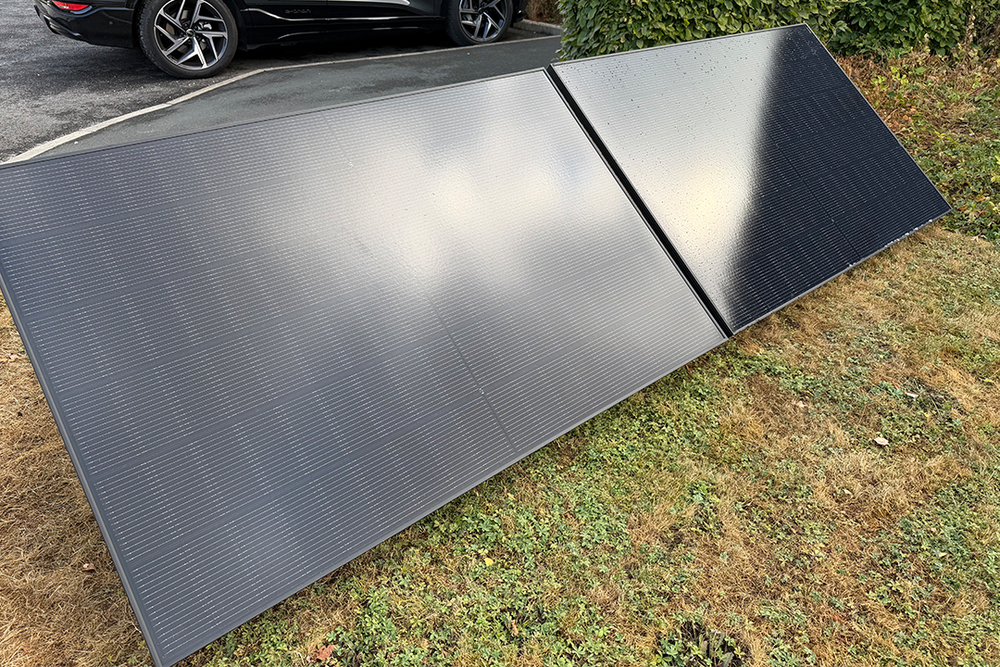
The UKSOL Solar Pro Duo 890W is the larger of the two plug-in solar options I’ve been testing. It includes two 445W panels and again utilises a ground-mounted system and can’t be used on a balcony. You can secure this mount to the ground using a ballast of your choice – such as paving slabs or concrete blocks.
An 800W microinverter with full wifi and Bluetooth connectivity lets you monitor energy generation live on the companion phone app. The panel and microinverter are both IP67-certified, meaning they can be left outdoors in the rain. Ballast is not included, and the two 25.5kg panels require careful handling.
The system should be plugged into a properly weatherproofed external three-pin socket.
Key specifications
- Type: Plug-in solar kit; twin-panel ground-mount system
- Dimensions: 1724mm x 1134mm x 30mm
- Weight: 25.5kg per panel / 51kg total panel weight
- Power: 890W DC total (2 x 445W panels); 799VA maximum continuous AC inverter output
- Connectivity: Built-in wifi and Bluetooth; smartphone monitoring app
- Warranty: 10-year British warranty
Buy now £849, Argos.co.uk
Read more: How plug-in solar panels work, from setup to saving on energy bills
Battery storage for plug-in solar panels
Like installed roof arrays, plug-in solar panels can be connected to a battery, where surplus electricity is stored, ready to be used later. Instead of using the electricity as soon as it is generated, or exporting surplus power to the grid, a battery can store energy generated during the day for use later – such as in the evening or overnight when the panels are no longer producing electricity.
There are several ways to combine solar panels with battery storage, and compatibility depends on your existing setup. Some storage units connect your solar panels directly to a combined inverter and battery, while others can work alongside a separate solar system. These units are generally more substantial and expensive setups than the simple plug-in solar panels mentioned above, and you may need to arrange professional installation.
Products available in the UK include the Zendure SolarFlow 2400 Pro, which combines an inverter with a 2.4kWh battery, and connects to solar panels directly. There’s also the Marstek Venus E 3.0, which has a larger 5.12kWh battery that is AC-coupled and designed to work alongside an existing solar panel installation, if you already have one.
Adding compatible battery storage unlocks the ability to store electricity generated during the day, then use it to help power your home in the evening, potentially meaning less electricity is needed from the grid during peak times.
Zendure solarflow 2400 pro
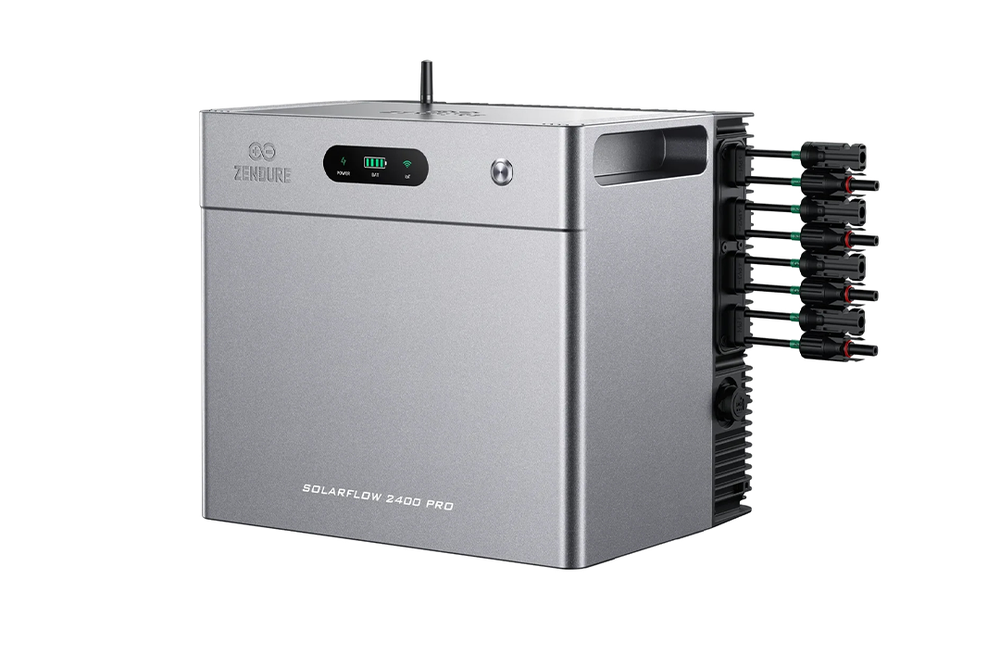
The Zendure SolarFlow 2400 Pro adds battery storage and support for a larger array of solar panels. The unit has four inputs for additional panels, up to a total of 3,000W of power generation. The integrated battery has a capacity of 2.4kWh, allowing electricity generated during the day to be stored and used later, such as in the evening or overnight.
This system supports up to 2,400W of AC output, but be aware that installation and grid-connection requirements apply when using the SolarFlow 2400 Pro at higher outputs. You should speak to a qualified electrician before purchasing this battery storage system.
Key specifications
- Type: All-in-one plug-in solar energy storage system with integrated inverter and LFP battery
- Dimensions: 326 x 294 x 251mm
- Weight: 27.8kg
- Power: 2.4kWh battery; 2,400W maximum charge/discharge power; 800W default / up to 2,400W grid AC output; four MPPT inputs providing up to 3,000W DC solar input; up to 4,800W combined solar input using AC coupling
- Connectivity: Wifi 4, Bluetooth 5.0 and Zendure app; supports smart-meter/HEMS integrations
- Warranty: 10 years; Zendure quotes up to a 15-year lifespan
Buy now £1519, Certusenergy.co.uk
Marstek Venus E 3.0
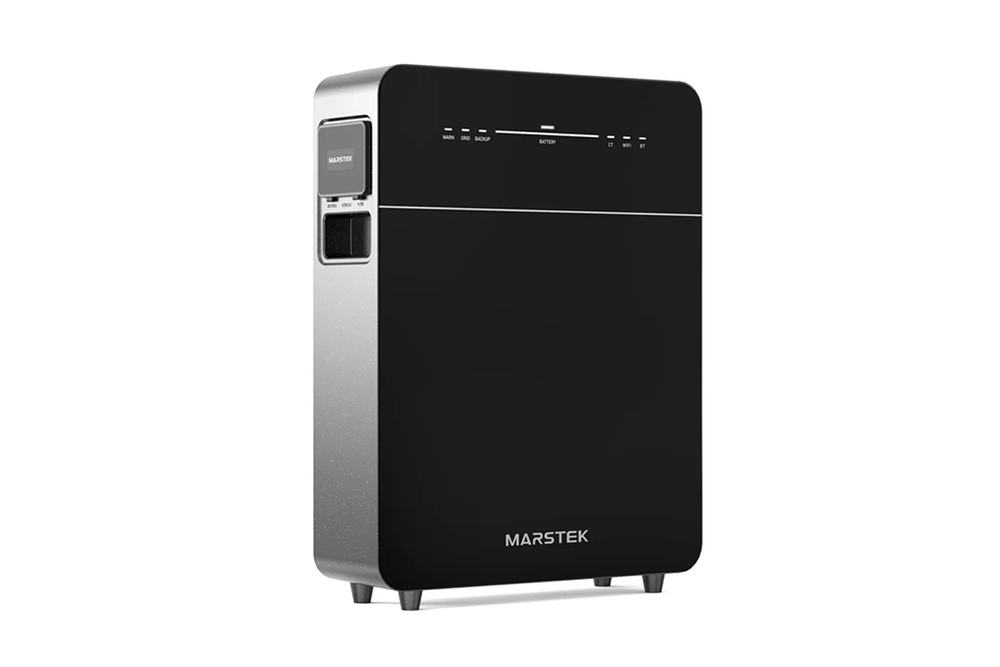
The Marstek Venus E 3.0 takes a different approach to the Zendure shown above. Rather than connecting directly to your solar panels, this storage unit has an AC-coupled battery designed to work alongside an existing solar installation. This makes it an option for households looking to add a battery to their solar setup.
This unit has a relatively large 5.12kWh battery capacity for storing surplus energy that can be used later in the day or overnight. This could be especially useful during warmer months, when energy generated and stored during the day can be used in the evening and overnight to lower the cost of running air conditioning units on a warm summer’s night. That power can be used to help charge an electric car overnight, too.
Being a more substantial appliance, you’ll need to check compatibility and installation requirements before purchasing.
Key specifications
- Type: Plug-in home energy storage battery with integrated inverter
- Dimensions: 620 x 480 x 160mm
- Weight: 63kg
- Power: 5.12kWh LiFePO4 battery; Certus describes four MPPT inputs and expandable storage up to 15.36kWh, with larger multi-unit configurations possible
- Connectivity: Marstek app with smart-meter integration; official technical material lists Wi-Fi and RS-485, with some current retailer documentation additionally listing Bluetooth and Ethernet
- Warranty: 10 years; 6,000+ charge cycles; quoted 15-year design lifespan
Buy now £1499, Certusenergy.co.uk
Your questions on plug-in solar panels, answered
What are plug-in solar panels?
Plug-in solar panels are small solar photovoltaic systems designed to connect to your home through a standard domestic socket, rather than being wired into your property by a professional installer.
A typical kit includes one or two solar panels, a microinverter and mounting equipment. The panel generates direct current electricity, the microinverter converts it into alternating current, and the power is then fed into your home’s electrical system. For more about this process, see our guide to how solar panels work.
Plug-in solar panels are sometimes referred to as balcony solar panels, plug-and-play solar panels, mini solar systems or balcony power plants. The concept is already popular in parts of Europe, particularly among people living in flats or rented homes.
Unlike a full rooftop solar installation, plug-in solar panels are not designed to generate a large share of a household’s annual electricity. Instead, they are intended to offset some of the electricity being used in the home at the time the panels are generating it.
That might mean helping to power a fridge, router, laptop, television, washing machine or other appliances running during daylight hours.
What am I buying?
In short, a kit that includes one (sometimes two) solar panels, a microinverter that converts the AC electricity generated by the panels into DC electricity used by your home’s power supply, and a plug for connecting the system to a standard three-pin socket. Ground fixings are also included, and some plug-in solar panels can be mounted to balconies and walls too. Ballast to weigh down ground-mounted panels (like paving slabs) is usually not included, so you’ll have to source that yourself.
What makes a plug-in solar system compliant?
In total, five things make a plug-in solar system compliant: the inverter's continuous output does not exceed 800VA and 3.5A. The solar panel capacity is less than 2,000W, and the system has no battery. The inverter’s plug is a factory-fitted British Standard BS 1363 type with a 5A fuse. Finally, the complete kit must appear on the ENA Type Test Register and be marked as compliant.
How do I check a kit is actually certified?
There’s a full list of plug-in solar panels that meet the requirements on the ENA Type Register. Once you’re on the page, click the type drop-down and select plug-in solar.
Is plug-in solar legal across the whole UK?
Not at the moment; the new legislation only covers Great Britain – England, Wales, and Scotland – from 27 August 2026. Northern Ireland is under separate legislation and plug-in panels are not currently permitted there. The legislation updates BS 7671 wiring regulations.
Do I need permission to install one?
Unlike traditional, hard-wired solar panels usually installed on roofs, this new generation of plug-in panels generally do not require planning permission. However, current guidance states that renters, leaseholders and people in managed buildings may still need permission. Planning permission and listed-building consent can also apply.
All new plug-in solar panel systems must be registered through the UK Plug-In Solar Registration website. This is a legal requirement.
What's the maximum panel wattage I can use?
You can connect up to 2000W of panels across a maximum of four panels. However, the microinverter is capped at 800VA, which applies to the amount of power you're actually feeding into your electrical system.
Can I add more panels or a battery later?
No, current guidance says the kit must be used as purchased, and you cannot link multiple kits together. It is usually possible to install plug-in solar if you also already have a rooftop solar panel system, and if you have battery storage too, but it is worth having an electrician check your existing system first. Integrated battery storage is not currently covered by plug-in solar regulations.
Do I get paid for the electricity I don't use?
Not normally, no. The Energy Saving Trust states: “Most energy suppliers say your solar panels must have a valid MCS [Microgeneration Certification Scheme] certificate to prove it’s installed to a certain standard. Without it, you can’t normally sell electricity under the Smart Export Guarantee (SEG).
“However, some energy suppliers may let you sell electricity on one of their tariffs without an MCS certificate. Get in touch with your energy supplier to see what they offer.”
Do I need MCS certification or an electrician?
No, the idea here is that they are DIY; you simply install and plug in. That said, the Energy Saving Trust says you should speak to a qualified electrician if your wiring or consumer unit is unsuitable, or you are uncertain about its suitability. You should also consult a professional if a plug socket needs installing or moving to accommodate the panels, or if total panel capacity exceeds 960W. If you choose to have a new weatherproof outdoor socket installed, it must be fitted by an electrician.
What should you check before buying plug-in solar panels?
Before buying a plug-in solar panel, ask:
- Is the kit compliant with UK safety rules?
- Is it designed for a standard UK domestic socket?
- What is the panel’s rated output?
- What annual generation estimate is realistic for your location?
- Does it include a certified microinverter?
- How will the panel be mounted safely?
- Do I have a suitable socket?
- Is the mounting suitable for wind and weather?
- Do you need landlord, freeholder or managing agent permission?
- Will your home insurer need to know?
- What happens to electricity you don't use?
- What warranty is included?
- Can you take the system with you if you move?
The cheapest kit will not always be the best value. A safer, better-supported product with clear instructions, a good warranty and proper mounting hardware may be worth paying more for.
What are the safety and legal issues around plug-in solar panels?
This is the area where buyers need to be careful. Plug-in solar panels may sound simple, but they still interact with a home’s electrical system. That means safety standards are critical.
You should avoid buying grey-market kits designed for other countries unless they clearly meet UK safety and connection requirements.
There are also property issues to consider. Renters may need landlord permission. Flat owners may need freeholder or managing agent approval. Anyone installing panels on a balcony, wall, fence or shed should make sure the mounting system is secure and suitable for wind, rain and the weight of the kit. You must not use an extension lead when plugging in your panels.
Home insurance is another consideration. Before buying, it is worth checking whether installing a plug-in solar system affects your policy or needs to be declared.
Read more: Best solar panel installers, explained