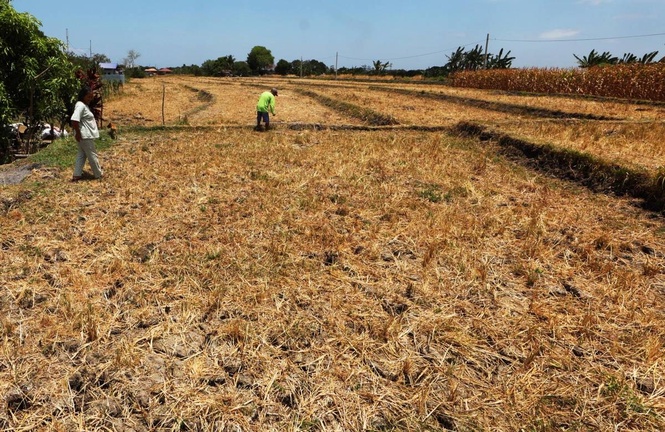
MONETARY authorities are factoring in the possibility of a severe El Niño in policy decisions given its impact on inflation.
“These days, the scenario that we care about the most is El Niño,” Bangko Sentral ng Pilipinas (BSP) Governor Eli Remolona Jr. said during a Financial Executives Institute of the Philippines conference on Friday.
He said the central bank was assessing different economic scenarios, including the possibility of another increase in global oil prices and the effects of the weather pattern, which is expected to lead to drought conditions in the country.
“There’s a regular El Niño, a kind of benign El Niño, which is bad news. But there’s a bad El Niño, which is really, really bad news,” Remolona said.
“So we have to worry about both scenarios and decide on monetary policy based on that.”
The central bank, in its August policy report, said inflation was likely to peak in the fourth quarter, largely due to the impact of El Niño and base effects.
The inflation outlook for this year was trimmed to 6.1 percent from the previous 6.4 percent but that for next year was raised to 5.4 percent from 4.5 percent.
Inflation will remain above the 2.0- to 4.0-percent target until the third quarter of 2027, it added.
A severe El Niño episode could push domestic rice prices up by about 40 percent and corn prices by 25 percent over 12 months.
Strong typhoons linked to the weather pattern could further disrupt local rice production, potentially raising rice prices by about 22 percent from December 2026 to the first quarter of 2027.
Moreover, Remolona said monetary authorities were also taking into account inflation expectations among market analysts, households and businesses.
“We also now worry about inflation expectations more than before,” he said.
“It turns out that when things are very uncertain, expectations matter.”
If households and businesses anticipate persistently higher inflation, the central bank chief stressed that their spending decisions could make it more difficult for the central bank to bring price growth back towards target.
“What we worry about is expectations that don’t seem anchored enough,” Remolona said.
“It makes our life much more difficult when expectations are not well anchored.”
The BSP’s policymaking Monetary Board has raised key interest three times this year in a bid to temper inflation, which hit a three-year high of 7.2 percent in April due to the impact of the war in the Middle East.
The rate then eased over the next four months but then surged back to 7.2 percent in September.
This could lead to another rate hike when the Monetary Board meets on Oct. 22.