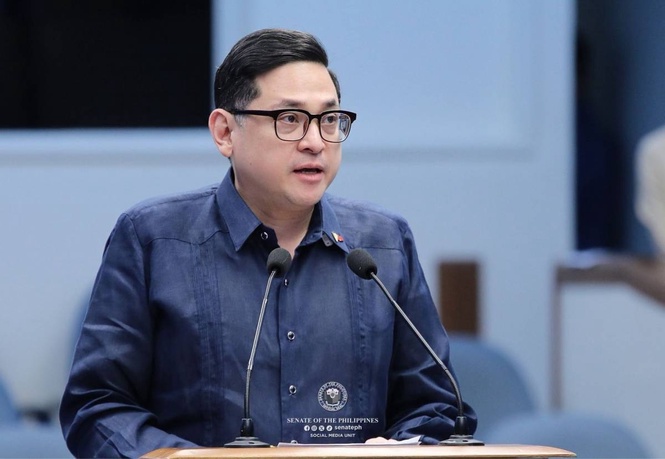
CITING the heavy economic toll of soaring electricity and fuel prices on small entrepreneurs, Senate Committee on Trade, Commerce and Entrepreneurship Chairman Bam Aquino called on the Bureau of Internal Revenue (BIR) to immediately suspend its new Registration Seal Badge requirement for online businesses, or waive noncompliance fines until the end of the year.
Aquino pressed the tax bureau to halt the impending Oct. 31 deadline mandated under Revenue Regulations (RR) 15-2024 and restated through Revenue Memorandum Circular (RMC) 99-2026. He warned that enforcing additional compliance hurdles during an ongoing energy and oil crisis unfairly penalizes micro, small and medium enterprises (MSMEs), online merchants and digital content creators.
“Our online businesses, online sellers and even online creators are already struggling with the high costs of electricity and fuel; why should we burden them further with a process that offers them no benefit? This isn’t right,” Aquino said.
“Given the persistent confusion and the lack of clear explanations regarding this policy, it would be best to suspend it — or at the very least, refrain from imposing fines on online businesses until the end of the year — to ease their concerns while they work on their compliance,” the senator added.
Strict penalties and privacy concerns
Under RR 15-2024, digital businesses face administrative compromise penalties for registration-related violations. These include a P1,000 fine for late voluntary registration, P1,000 for failure to register a store or business name, and P1,000 per violation for failing to display the Certificate of Registration or official Registration Seal Badge on relevant marketplace storefronts and digital platforms.
While the BIR introduced the digital badge via RMC 38-2026 to replace full online document disclosures, Aquino noted that online sellers remain widely confused about compliance steps, platform integration and data privacy safeguards.
He urged the BIR to conduct in-person public consultations with online sellers, social media merchants and content creators to clarify implementation of the rules and resolve security concerns about personal information on digital channels.
“It would be best for all stakeholders to meet in person so that the BIR can provide answers to their numerous questions regarding this new requirement,” Aquino said.
Protecting microentrepreneurs
While emphasizing that businesses have a legal responsibility to comply with tax laws, Aquino said that government procedures must remain simple, clear and accessible — especially following statutory reforms like Republic Act 11976, or the Ease of Paying Taxes Act, which aimed to remove administrative friction for taxpayers.
The call aligns with Aquino’s five-point trade agenda as Senate committee chairman, which focuses on cutting regulatory red tape for MSMEs, expanding access to capital, supporting high-growth industries, establishing voucher programs for local producers and nurturing the creative economy.
A longtime advocate for small businesses, Aquino previously authored and sponsored the landmark Republic Act 10644, or the Go Negosyo Act, which established Negosyo Centers across the country to simplify business registration, provide market access and offer financial guidance to emerging Filipino entrepreneurs.