
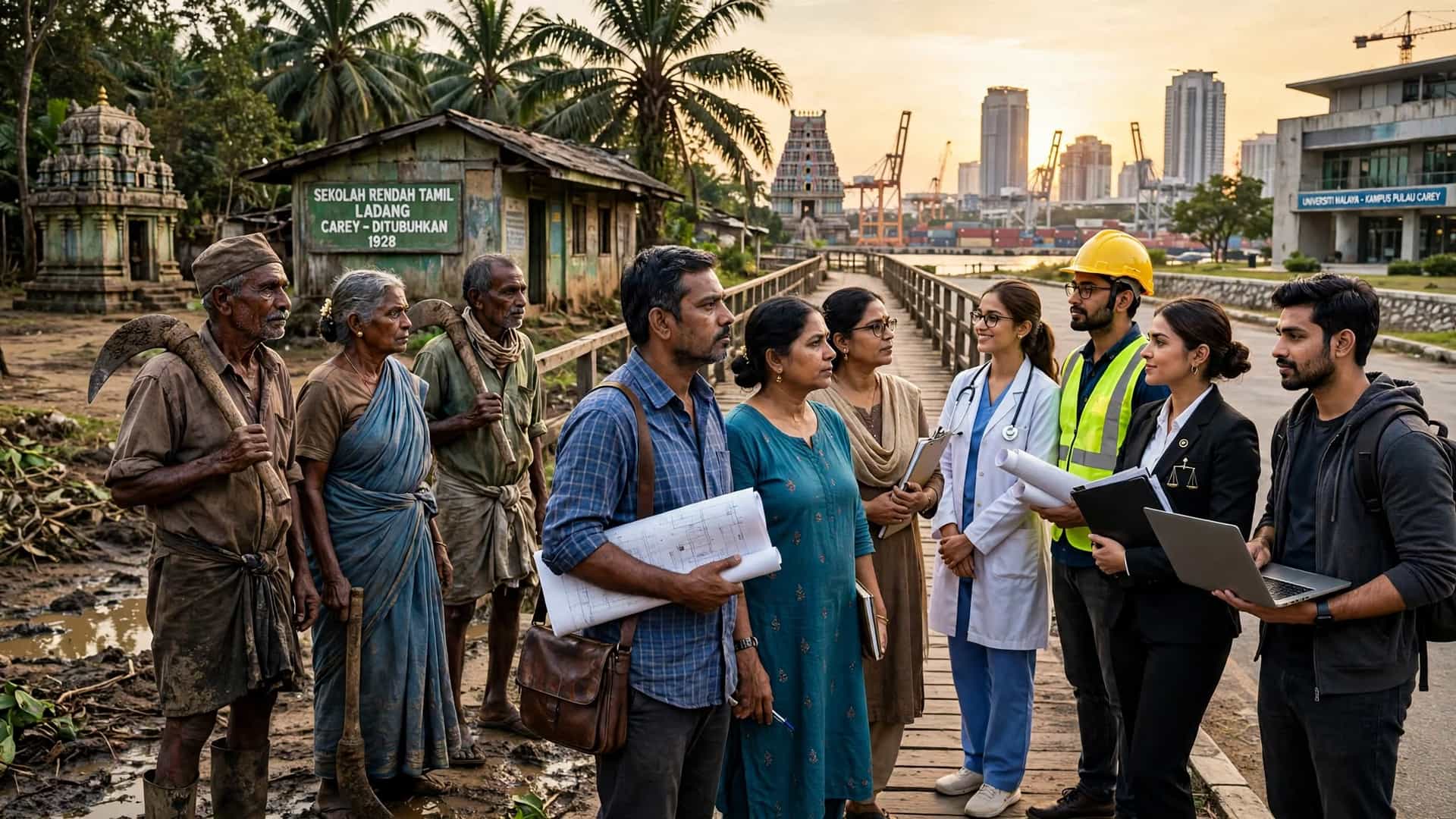
In my previous column on Pulau Carey, I examined the stark reality facing the island today: as SD Guthrie, Menteri Besar Selangor Incorporated (MBI), and federal planners advance multi-billion-ringgit industrial zones and Port Klang’s third terminal, the Indian pioneers who first drained its mangrove swamps have been largely reduced to a memory leaving descendants with neither title deeds nor a stake in the island’s coming prosperity.
Yet, to look at Carey Island purely through the lens of what was lost misses an even deeper truth. The tragedy was never that the Indian community lacked civilization, discipline, or capability. In fact, it was the exact opposite: the British recruited South Indians precisely because of their extraordinary work ethic and resilience and then trapped that strength inside a system designed to profit from their labour while denying them ownership.
A Civilization That Never Lacked Depth: How Ancient Wisdom Shaped Modern Success
There is a lazy colonial myth that estate workers were merely "unskilled hands." Anyone who truly understands Tamil civilization knows how false that is. Even inside the isolated, mud-floored estate lines of Pulau Carey, our forefathers carried forward an ancient, holistic architecture of living one that the modern world is only now rediscovering and validating as cutting-edge science:
- Food as Medicine and Circadian Discipline: Long before Western wellness influencers began marketing intermittent fasting, gut microbiomes, and superfoods, Tamil households lived by the principle of unave marunthu food is medicine. Every ingredient in a humble estate kitchen turmeric for inflammation, cumin and fenugreek for metabolism, black pepper for immunity was applied with generational precision. Even the rhythm of eating followed strict biological wisdom: consuming energy-dense rice meals during active daylight hours and keeping supper light after 6:00 PM to honour digestion and longevity. Today’s global health industry is simply repackaging what Tamil grandmothers practiced daily without a textbook.
- Education Beyond the Classroom Walls: While colonial estate schools deliberately capped formal instruction at Standard Six to keep workers on the land, true education never stopped at the school gate. Every evening, inside cramped quarters and simple estate temples, elders gathered children for Thevaram and bhajan classes. Those sessions were far more than spiritual ritual they trained young minds in memory retention, phonetic precision,moral accountability, and communal solidarity. In total geographic isolation, culture became their compass and discipline became their classroom.
- Relentless Grit as a Launchpad: The British Empire did not cross the Bay of Bengal out of charity; they recruited Tamil labourers because few others possessed the mental fortitude and physical endurance to clear impenetrable mangrove swamps and sustain a global rubber economy.
That quiet, disciplined foundation is precisely why the colonial plan to keep them permanently on the margins ultimately failed. Those very estate workers who tapped rubber before dawn so their children could study under kerosene lamps turned ancestral discipline into modern upward mobility. Today, the sons and daughters of Pulau Carey’s "unskilled labourers" stand in operating theatres as doctors, design infrastructure as engineers, argue justice in courtrooms as lawyers, and build the digital future as computer programmers and tech innovators. The world did not lift them up; the ancient culture, work ethic, and values carried across the ocean gave them the wings to rise.
From "Abolition" to a New Form of Bondage
When Britain formally abolished slavery in 1833, colonial administrators congratulated themselves on ushering in an era of "free labour." In practice, the indenture and kangany systems that populated estates like Pulau Carey replaced chains with debt, isolation, and tied housing. Today, historians and human rights scholars openly recognize that system as an early blueprint for modern slavery where workers generated immense wealth for distant shareholders while remaining wholly dependent on their employer for a roof over their heads.
The painful question we must confront today is this: When the estates shrunk and the community moved to the mainland, did we truly escape that cycle or did we simply trade agricultural labour for industrial labour?
When oil palm replaced rubber and tens of thousands of Indian workers migrated off Pulau Carey into Banting, Teluk Panglima Garang, and Klang, there was no coordinated transition plan. While many families sacrificed everything to put their children through university producing doctors, engineers, teachers, and professionals who broke the generational ceiling far too many others, lacking capital, guidance, or institutional support, simply moved from estate lines into low-cost flats and factory assembly lines. They became the urban working class of Klang Valley’s industrial zones:hardworking, indispensable, yet still paid by the hour rather than owning the enterprise.
Where Leadership Failed and What We Must Never Repeat
If the community possessed rich culture, strong values, and unmatched work ethic, why did Pulau Carey never become a self-sustaining hub of Indian prosperity?
Because hard work without collective strategy and committed leadership will always enrich someone else.
For decades, estate-level leaders and national political representatives failed to unite the community around a long-term vision of land ownership, cooperative capital, and higher education. Instead of organizing thousands of workers on Carey Island into a collective economic force buying mainland land together, building cooperative businesses, or demanding settlement schemes while the plantations still needed them leadership remained fragmented,reactive, and focused on short-term survival. Had leadership and community worked together with foresight, Pulau Carey could have anchored a thriving, self-owned community today.
As Malaysia enters an era of mega-ports, artificial intelligence, and green industrial corridors, the Indian community cannot afford to repeat that mistake. Three lessons must guide the next generation:
- Never Confuse Employment With Ownership: Being a loyal, hardworking employee is honourable, but generational security comes from equity owning land, businesses, intellectual property, and shares in the industries we build.
- Guard Holistic Education Fiercely: Academic degrees and technical qualifications are non-negotiable in the modern economy, yet they must remain paired with the cultural confidence, discipline, and community solidarity that Thevaram halls and temple networks once nurtured.
- Demand Accountability Over Tokenism: Whether from political parties, corporate giants like SD Guthrie, or state planners, the community must stop settling for ceremonial recognition. Support must be measured by tangible outcomes: scholarships, vendor contracts, business financing, and seats at decision-making tables.
Our ancestors brought civilization, discipline, and indomitable effort to the shores of Pulau Carey. Honouring them means ensuring their grandchildren are no longer merely the labour that builds Malaysia’s next industrial wave but the leaders,innovators, and owners who shape it.
“Hard work without ownership only builds someone else’s empire. Our ancestors carried the discipline, culture, and grit to build a nation now it is our duty to ensure their descendants own a share of the future.” - Annan Vaithegi
Untold histories and hard questions about our community’s future deserve a voice and keeping independent commentary like this alive relies entirely on reader support. If this perspective resonated with you, consider supporting this work via the Buy Me a Coffee (Touch 'n Go QR code) waiting in the comments section below. ☕
Following the overwhelming response to our recent stories on Pulau Carey, we are organizing a grand book launch dedicated to the history, resilience, and legacy of the Indian community on the island happening this mid-December!
Readers, friends, and supporters we'd love for you to be part of this meaningful gathering! If you'd like to join us, just drop "I'm coming" in the comments below. I'll personally message you with the details, reserve your spot, and share the official invitation soon!
Annan Vaithegi (annanvaithegi@icloud.com) is a content creator under the Newswav Creator programme, where you get to express yourself, be a citizen journalist, and at the same time monetize your content & reach millions of users on Newswav. Log in to creator.newswav.com and become a Newswav Creator now!
The User Content (as defined on Newswav Terms of Use) above including the views expressed and media (pictures, videos, citations etc) were submitted & posted by the author. Newswav is solely an aggregation platform that hosts the User Content. If you have any questions about the content, copyright or other issues of the work, please contact creator@newswav.com.