Anwar’s Budget 2027 lifts minimum wage to RM2,000, trims tax rates and raises SARA aid for millions.
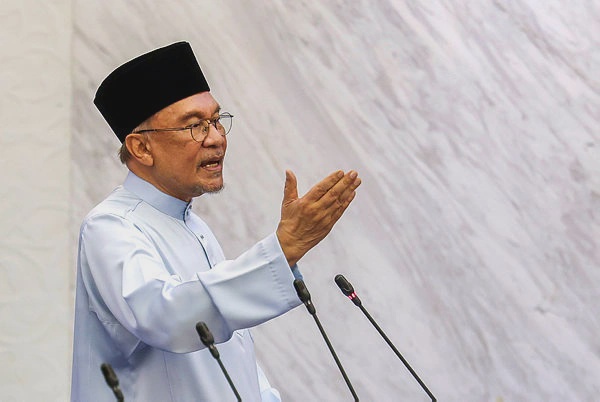
FINANCE MINISTER Datuk Seri Anwar Ibrahim tabled the fifth MADANI Budget in the Dewan Rakyat on 9 October 2026 under the theme “Reaching for the Sky, Rooted in the Earth”. He framed it as a national covenant, a promise that the state will protect the vulnerable and that every child can reach their potential, wherever they come from. In return, he said, citizens are expected to contribute through skills, hard work and enterprise.
The budget is built on eight pillars. The sections below cover the first three, up to the start of the Bumiputera economy section.
Easing the cost of living
Anwar called living costs the main burden on households. Last month the government raised the electricity rebate threshold from 600kWh to 800kWh a month, which he said covers more than 8 million households, or up to 90% of domestic users. It also lifted the monthly BUDI95 petrol quota to 300 litres and gave jeep and pickup owners a 400-litre diesel quota. He said September data showed only about 100,000 petrol users, under 1%, drew the full quota.
Next year, total subsidies, aid and incentives will exceed RM80 billion. Fuel subsidies stay at about RM40 billion, and Social Welfare Department assistance is close to RM3.3 billion.
STR and SARA funding rises to RM16 billion from RM15 billion. Every STR recipient will get up to RM150 a month in SARA, or RM1,800 a year, benefiting up to 9 million people. Adults aged 18 and above who do not receive STR will get RM100 of SARA MADANI twice: once before Aidilfitri and once ahead of Merdeka’s 70th anniversary. This reaches up to 13 million people, including the M40.
SARA can now also be used for fresh produce at 216 FAMA farmers’ markets nationwide. The government will expand the SARA network, now 15,000 outlets including 6,800 small shops and cooperatives. It aims to have 10,000 small shops by year-end.
Funding for Jualan RAHMAH MADANI and Jualan Agro MADANI rises from RM630 million to RM750 million, targeting 35,000 events. Of these, 30,000 are RAHMAH sales covering every state constituency, with extra focus on rural areas, low-cost flats and urban People’s Housing Projects (PPR), including vending machines and wholesale sales for small traders. The 5,000 Agro MADANI sales offer fish, chicken, vegetables and fruit up to 30% cheaper. A further RM250 million will take essential goods to remote areas, including six new locations such as Kampung Terian in Penampang, Sabah, and Kampung Dato’ Godam in Pusa, Sarawak.
Tax relief for the middle class
Responding to M40 concerns, the government will raise the individual tax relief that has gone unrevised since 2010, from RM9,000 to RM12,000. Resident tax rates drop by one percentage point in two bands: RM70,000–RM100,000 falls to 18%, and RM100,000–RM150,000 falls to 24%.
Several reliefs are broadened:
- Medical: postnatal care is now covered.
- Parents and grandparents: all care expenses qualify, not just health costs.
- Sports: sports shoes are added.
- Education: all fields of study and children’s tuition qualify.
- Lifestyle: AI subscriptions, pet vaccination and adoption from registered centres are included.
At the top end, the rate for income above RM1 million is set at 30%. The government says the relief and rate changes will leave up to RM1,600 more disposable income for roughly 5 million taxpayers.
Wages, gig workers and retirement savings
Anwar noted that employee compensation is only 33.9% of GDP and said the productivity-wage gap must close. The minimum wage goes from RM1,700 to RM2,000 from June 2027, covering more than 4 million workers. Small and medium enterprises with annual sales below RM50 million are exempt, to give them room to adjust. A new minimum wage of RM2,500 a month will apply to semi-skilled and graduate jobs. GLICs and GLCs are lifting their living-wage benchmark from RM3,100 to RM3,400, helping 230,000 workers, and private employers are urged to follow.
To discourage hiring undocumented foreign workers, companies other than SMEs can claim a tax deduction for salaries only if paid through bank accounts, as the Employment Act 1955 allows.
About 600,000 Malaysians work as e-hailing drivers or p-hailing riders. While the Gig Consultative Council finalises minimum earnings, an income formula and minimum social protection by early 2027, the government and Grab will co-fund a RM160 million package from 2027. It covers higher minimum earnings, help with vehicle maintenance and insurance, and PERKESO contributions. Median e-hailing drivers could earn up to RM227 more a month, and p-hailing riders up to RM100 more.
Other gig support:
- PERKESO: matching contributions of 35% for e-hailing and p-hailing workers, rising to 50% if platforms also contribute.
- Self-employed: 70% matching for more than 200,000 people in 17 non-mandatory sectors, plus broader tax relief on PERKESO contributions.
- EPF: matching contributions of up to RM600 a year, or RM6,000 over a lifetime.
- Financing: RM270 million from BSN and Agrobank for gig workers starting businesses or buying a first home.
- Regulation: p-hailing will be regulated under APAD and LPKP.
Every citizen will also be registered automatically with the EPF at 18.
Development across the states
The government says “equal” does not mean “identical”, and it cites John Rawls’s idea of fairness to justify tailoring allocations to each state’s needs. Key announcements:
Selangor: Federal and state governments agreed five measures against flash floods, including a 30-year capacity review of the Batu and Klang Gate dams. RM100 million is set aside immediately for retention ponds and river maintenance.
Kelantan: Planning begins for the Lebir Dam, while the Machang water treatment plant and pipe replacement continue.
Penang: Khazanah and InvestPenang will set up a RM100 million strategic fund for early-stage semiconductor and advanced manufacturing firms.
Johor: The e-ART autonomous transit system will tackle Johor Bahru congestion. Before the RTS Link opens, bus routes, KTM Komuter frequency and Grab Shuttle services will be boosted.
Perak: LuMIC at Lumut and the Automotive Hi-Tech Valley at Tanjong Malim are being built up. Wholly local automotive vendors that relocate there can claim up to RM5 million in relocation costs incurred between 2027 and 2030.
Melaka: Melaka Centre of Excellence offers high-tech TVET training, and river rehabilitation aims to cut flood risk.
Negeri Sembilan: Malaysia Vision Valley 2.0 gets new roads, upgrades and the Klang Valley Dual Track 2 project.
Pahang: Support goes to development along the ECRL, including heavy industry in Bentong and affordable housing near KotaSAS station.
Perlis: Infrastructure is being built at Chuping Valley and the NCER Agribio Economic Zone, and the Perlis inland port gets scanners.
Kedah: Kulim Hi-Tech Park and the five-seasons-in-two-years paddy project in the MADA area remain priorities.
Terengganu: Eco-tourism sites such as Setiu Wetlands, Lake Kenyir, Pulau Tenggol and Pulau Bidong are upgraded, along with a regional sewage plant in Kuala Terengganu.
Sabah and Sarawak
The government treats the Malaysia Agreement 1963 (MA63) as part of the national covenant. It has tripled the Special Grant, now an interim RM1.5 billion, payable before year-end while a fair annual formula is negotiated. Twelve MA63 matters have been settled, including a Sabah and Sarawak representative at the Inland Revenue Board, the handover of Bintulu Port to Sarawak, MASwings becoming Sarawak’s AirBorneo (with RM209 million in rural air subsidies), and Sabah taking over electricity regulation (with RM600 million to secure supply).
Federal allocations stay the highest ever: Sabah receives RM18.7 billion (up from RM17.6 billion) and Sarawak RM16.2 billion (up from RM15.1 billion). JPA scholarships for Sabahans and Sarawakians double, giving 4,200 students a year places at university. Other items:
- Sibu: Talks begin on the Sibu Special Economic Zone.
- Sabah power: RM204 million goes to Statcom systems at Dam Road and Segaliud, and the Southern Link transmission line continues.
- Roads: RM3.3 billion for road projects, plus RM350 million in federal road maintenance reserved for G1–G4 contractors in the two states.
- Kuala Lumpur: a capital for its people
The government wants KL to be known for safe, pleasant street-food spots, humane housing and living heritage. The restoration of the Sultan Abdul Samad Building drew half a million visitors, and Khazanah will next restore Menara Dayabumi, the old railway station and the KTMB headquarters. Entertainment duty is waived for arts, culture, entertainment and sports events at Stadium Merdeka and Stadium Negara.
DBKL will spend RM400 million on 120 acres of new green space, park upgrades and public housing. About 100 acres of leased land at Bukit Kiara will be gazetted as a federal park. A 22km covered walkway will link Masjid Negara, Dataran Merdeka and Pasar Seni, with buggies for senior citizens. Two DBKL buildings become day centres for the elderly. More than 10,000 small traders renting DBKL premises get a 50% rental discount throughout 2027.
Rural infrastructure and housing
Rural road funding rises to RM2.3 billion (from RM1.3 billion in 2022), within RM3.3 billion for basic rural infrastructure such as streetlights, water and electricity. Other infrastructure items:
- Water: The RM2.5 billion national non-revenue water programme replaces 1,900km of ageing critical pipes. Perak and Penang also signed a 40-year bulk water agreement.
- Connectivity: Under JENDELA, all public university campuses have Wi-Fi and all FELDA settlements have 4G. Next year the focus is 4G for all Orang Asli villages, coverage along 7,000km of highways and 1,700km of rail, and the SALAM undersea cable.
For housing:
Bandar MADANI Bukit Jalil: Phase 1 registration opens on Monday (12 October).
- Funding: Nearly RM1 billion goes to Rumah Mesra Rakyat and the People’s Residency Programme. Four new projects are planned in Kulai, Nilai, Paya Rumput and Lembah Pertang.
- Guarantee: SJKP offers up to RM20 billion in housing loan guarantees for about 80,000 first-time buyers, mainly the self-employed.
- Stamp duty: Full exemption for first homes up to RM500,000. For homes up to RM750,000, the first RM500,000 is fully exempt and 50% of the rest. This applies to agreements signed from 1 January 2027 to 31 December 2030.
- Abandoned projects: The same period brings full stamp duty exemption for rescue developers and original buyers, aiming at zero abandoned projects by 2030.
Community programmes
Kampung Angkat MADANI and Sekolah Angkat MADANI have reached nearly 500 villages and 1,700 schools since 2024. In 2027, RM50 million funds Komuniti Angkat MADANI for urban PPR residents, with shared kitchens, business equipment and training. Smaller allocations:
- New Villages: more than RM100 million.
- Registered non-Islamic places of worship: RM80 million.
- Yayasan GLIC GLC childcare grant: RM100 million, training 6,000 carers.
- Local authority minor projects: nearly RM700 million for parks, toilets and hawker stalls.
A new tokenised retail sukuk will let ordinary citizens invest in government sukuk and choose whether the money goes to education, health or social protection.
Bumiputera economy
The government says it has not wavered on strengthening the Bumiputera economy under PuTERA35. It has gazetted 50 acres in Kuala Lumpur as Malay Reserve Land, and Petronas has started on the first 10 acres of affordable housing. The first endowment to Yayasan Pelaburan Bumiputra was RM200 million in 1978, and none followed after 1981. The government now agrees to give it 50 acres of strategic land around Kuala Lumpur, valued at RM1 billion, as a new endowment.
Community programmes and the Bumiputera economy
Kampung Angkat MADANI and Sekolah Angkat MADANI have reached nearly 500 villages and 1,700 schools since 2024. In 2027, RM50 million funds Komuniti Angkat MADANI for urban PPR residents, with shared kitchens, business equipment and training. Smaller allocations:
- New Villages: more than RM100 million.
- Registered non-Islamic places of worship: RM80 million.
- Yayasan GLIC GLC childcare grant: RM100 million, training 6,000 carers.
- Local authority minor projects: nearly RM700 million for parks, toilets and hawker stalls.
A new tokenised retail sukuk will let ordinary citizens invest in government sukuk and choose whether the money goes to education, health or social protection.
On the Bumiputera economy, the government says it has not wavered on strengthening it under PuTERA35. It has gazetted 50 acres in Kuala Lumpur as Malay Reserve Land, and Petronas has started on the first 10 acres of affordable housing. The first endowment to Yayasan Pelaburan Bumiputra was RM200 million in 1978, and none followed after 1981. The government now agrees to give it 50 acres of strategic land around Kuala Lumpur, valued at RM1 billion, as a new endowment.
PNB is expected to develop that land with affordable housing and Bumiputera interests in mind. Separately, nearly 11 acres of government land in Belfield, Kuala Lumpur, will be used to build at least 2,500 MADANI homes, with 70% set aside for Bumiputera buyers.
Bumiputera contractors and enterprises
After meeting Bumiputera contractor associations, Anwar announced several changes:
- Procurement: Government contracts reserved for G1–G4 Bumiputera contractors rise to RM7.5 billion from RM4 billion this year.
- Direct appointment: For maintenance, repair and upgrading work, direct appointments are allowed up to RM200,000 and quotation-based awards up to RM3 million.
- Financing: TERAJU provides up to RM1 billion in financing and will monitor Bumiputera projects across departments, agencies and companies more closely. National Entrepreneurs Corporation (PUNB) funding rises to RM500 million from RM350 million.
- Stamp duty: Loan and financing agreements under the CAKNA II scheme, running from 1 January 2027 to 31 December 2030, attract only RM10 in stamp duty. CAKNA I gets the same concession until 31 December 2030.
- GLC and Petronas targets: They aim to buy RM58 billion of goods and services from Bumiputera firms. GLC procurement guidelines, unrevised since 2006, will be updated from 2027, and vendor success will be judged by company growth, innovation and new markets.
- GLIC investment: GLICs will invest RM2 billion in Bumiputera companies. Ekuinas and PHB will help firms prepare for listing and build strategic property holdings, while Khazanah and TERAJU set up a RM250 million Ciptawan fund for mid-sized Bumiputera firms.
- Solar: RM1.5 billion goes into centralised solar parks for government buildings, creating construction and maintenance work for Bumiputera firms. The 150-megawatt LSS6 solar project is reserved for them.
- 10 Juara Bumiputera: RM40 million continues the programme, aiming to develop 15 high-potential firms by 2027.
Islamic economy
The government wants Malaysia to remain the world’s Islamic economy leader:
- Fund management: Shariah-compliant fund managers get a 40% income tax exemption for assessment years 2028 to 2030, to build Malaysia as an Islamic fund management hub.
- Sukuk: Prisma Sukuk issuers can deduct issuance costs approved by the Securities Commission for 2027 to 2030. Grants under the Sukuk SRI scheme and Bond Grant are exempt from income tax from 1 January 2027.
- Halal certification: A matching grant of up to RM5,000 helps SMEs get halal certification for the first time, plus RM25,000 for halal SMEs in areas such as cosmetics and pharmaceuticals.
- Zakat: EPF members in the Shariah savings option can pay zakat directly from their dividends, with PNB and Tabung Haji facilities.
- Welfare: seniors, disabilities, Orang Asli and bankruptcy
To prepare for an ageing society, the government will draft a Senior Citizens Bill to deal with neglect and build a fuller care ecosystem. From 1 January 2027, service tax on elderly care falls from 8% to 6%, and care fees of up to RM96,000 a year are fully exempt. HRD Corp will spend more than RM40 million to train 8,000 carers, and two NICE integrated care centres of excellence will be built in Penang and Sarawak. Senior citizen assistance rises to RM1.3 billion next year, benefiting nearly 200,000 people. EPF members aged 55 and 60 can also choose the i-Emas scheme for monthly withdrawals, so the rest of their savings keeps earning dividends.
For people with disabilities (OKU), total aid rises to RM1.5 billion for more than 300,000 people. Key changes:
Care allowance: For bedridden and chronically ill people, it goes from RM500 to RM600 a month.
Income threshold: The limit for the OKU Worker Allowance rises from RM1,700 to RM2,000.
Special needs pupils: Their allowance goes from RM150 to RM200 a month, helping 150,000 pupils including those with autism. Teaching incentives for 20,000 special education teachers rise from RM250 to RM300.
Autism support: Two Permata Kurnia centres will be built in Melaka and Pahang, and more than 130 new Tabika Tunas Istimewa classes open in rural areas.
Therapy and carers: Fifteen community rehabilitation premises become Special Therapy Centres for 20,000 registered people with Down syndrome, and 3,000 new OKU carers get specialist skills training.
The Orang Asli Development Department (JAKOA) gets RM445 million, including replanting at Pos Poi in Sungai Siput, Perak, and Orang Asli kindergartens at Kampung Angkek and Pos Belatim, Gua Musang, Kelantan. For Orang Asli children in Kinta, Perak, who live far from school, the government will build a special hostel with 100 places.
More than 250,000 people have been freed from bankruptcy since 2023. From 2027, the bankruptcy threshold rises from RM100,000 to RM150,000. The Second Chance Policy now covers main caregivers of family members with disabilities or chronic illness, senior citizens, gig workers and people with irregular income, and automatic discharge after as early as three years under Section 33C of the Insolvency Act will be strengthened.
Healthcare: pillar four begins
The fourth pillar is about improving public services. The Health Ministry’s allocation rises to RM47.7 billion from RM46.5 billion.
Doctors and frontliners
The contract doctor issue is to be settled. Since 2023, more than 15,000 contract doctors have been made permanent, including 4,000 this year. In 2027, more than 9,000 more will be offered permanent posts, and from then on doctors who complete housemanship will be offered permanent medical officer positions. For 47,000 paramedics and nurses, the basic post incentive doubles from RM100 to RM200 a month. After a helicopter crash involving the Air Doctor Service at Long Lellang that killed frontline officers, the air medical service incentive rises from RM30 to RM100.
Shorter waits and fairer private care
Outsourcing: Funding to send patients to other hospitals rises to RM200 million. Cooperation widens to private facilities, including operating theatres run by the public sector. Sessional rules for experienced government specialists and part-time private specialists will allow longer maximum terms, and the programme extends to expanded newborn screening, prenatal genetic testing and rehabilitation.
Electronic records: A RM1 billion investment keeps the electronic medical records project moving across facilities nationwide. Records will follow a one person, one record principle.
MediAsas Plan: From January 2027, an affordable plan will pay hospitals by diagnosis and treatment type so costs are predictable. EPF members under 55 can pay premiums from their Akaun Sejahtera. For firms with fewer than 75 workers, the government subsidises the first-year premium at RM200 per worker, capped at 50 workers per firm, for up to 200,000 workers.
Private hospital bills: From 2027, bills use uniform and transparent charge categories. An e-CKAPS portal will make private facility licensing fully online, cutting processing time by up to 65%.
Support for patients
Medical Assistance Fund: It rises to RM60 million from RM40 million.
PeKa B40: RM80 million funds free screening, medical device aid and cancer treatment incentives for STR recipients and spouses aged 40 and above.
MySalam: The scheme has helped 1.6 million people with RM1.3 billion in claims and continues in 2027.
BuAi: The programme offers affordable fertility treatment to 2,000 couples and men’s wellness services to 42,000 people.
Thalassaemia: Free screening extends to husbands and to children who are carriers, to reduce the risk of babies born with thalassaemia major.
Hospitals and equipment
Nine new facilities will be built. The four named include a Specialist Clinic Complex and Day Treatment Centre at Hospital Sultanah Aminah in Johor, a Dental Specialist Centre in Kuching, and integrated health complexes in Gerik, Perak, and Rembau, Negeri Sembilan. RM1.2 billion goes to maintaining and repairing public hospitals and clinics, including dilapidated rural clinics. A further RM770 million buys advanced equipment: upgraded haemodialysis facilities, 400 new ambulances, robotic surgery technology at the USM specialist hospital, and simulation equipment for 18 Health Ministry training institutes serving more than 20,000 trainees.
Education for all
The speech opens this part with the Tamil poet Thiruvalluvar’s Tirukkural couplet 731. Its message is that a great country has fertile land, learned and virtuous people, and wealth that does not abandon morals.
The Education Ministry gets the largest allocation, nearly RM69 billion, up from RM66.2 billion this year.
Schools
Maintenance: Funding to repair and maintain all school types doubles from RM1 billion to RM2 billion. National schools get RM900 million, Chinese-type schools RM100 million and Tamil-type schools RM50 million. The Tamil-school increase reflects dilapidated buildings despite smaller enrolment. People’s religious schools, tahfiz institutions and pondok schools registered under JAKIM get RM200 million, now including operating grants.
Dilapidated schools: Nearly RM1.3 billion upgrades 682 schools, mainly in Sabah and Sarawak.
New classrooms: Nearly 500,000 pupils, including more than 70,000 six-year-olds, will enter Year 1 next year. About 3,500 extra classrooms are due by year-end through the industrialised building system.
New builds: They include SK Seri Chemor in Ipoh; a school complex at Bandar Serenia, Sepang; a full replacement of SJK(T) Ladang Pamol in Kluang; SJK(C) Bandar Mahkota Cheras; and a preschool building at SK Bulu Silou, Keningau. A new matriculation college is being built in Marang, Terengganu.
Donations: Cash donations to the School Public Donation Fund qualify for a tax deduction of up to 10% of aggregate income.
Support for families and teachers
Initial schooling aid rises from RM150 to RM200 per pupil, so a family with four children gets RM800. It covers 5.3 million pupils at a cost of RM1 billion and will be paid at school so parents can meet teachers in person. Sixth-form students get a RM2,500 living allowance, matching the matriculation allowance, benefiting 90,000 students. RM870 million funds the Supplementary Food Plan for more than 800,000 pupils. To free teachers from clerical work, teacher assistants extend to 200 high-density primary schools, with more added in phases after an effectiveness review.
Higher education
Law reform: The Higher Education Ministry is preparing a comprehensive legal framework to replace the Universities and University Colleges Act (AUKU). It covers university autonomy, academic freedom and student rights. With immediate effect, disciplinary proceedings at public universities over free speech, expressing views, public criticism and peaceful assembly have been halted.
Funding: The ministry gets RM19.1 billion. RM800 million goes to lecture halls, hostels and worn equipment. Donations to public universities qualify for the same 10% tax deduction.
PTPTN: For 2027, repayments are suspended for borrowers earning up to RM2,500 a month, and borrowers earning RM2,500–3,000 pay a minimum of RM50. This benefits more than 400,000 borrowers. Those with no arrears who repay regularly get a 10% discount. Employers who repay PTPTN loans for staff between 1 January 2027 and 31 December 2028 get a tax deduction.
Student housing: UM’s student residence Phase 1, due in 2031, will house 10,000 students. KWAP will invest RM750 million in Vista Kampus hostels at six universities including UniSZA and UiTM.
Student meals and travel: Dapur Siswa MADANI extends to polytechnics and teacher training institutes with RM20 million, with a RM5 Kasih Siswa menu. Donors of food and equipment get tax deductions from 1 January 2027 to 31 December 2030. FlySiswa MADANI flight aid rises from RM400 to RM500 for more than 60,000 public university students.
Transport, road safety and public service delivery
Public transport
The My50 concession continues for 300,000 Prasarana bus and rail users in the Klang Valley. A new MyKomuter50 concession will help 40,000 KTM Komuter users, saving them an average of RM160 a month, and free passes go to 360,000 school pupils, people with disabilities and children under six.
With commuters hit by train breakdowns and service disruptions, Prasarana and KTMB have been told to act quickly. Prasarana will invest more than RM3.4 billion to restore its rail services overall, and the government will buy 42 new train sets for ETS and KTM Komuter services.
ECRL Phase 1, from Kota Bharu to the Gombak Integrated Terminal, is expected to start operating this December. Malaysia and China also agreed to extend the line to Rantau Panjang, and a bus station will be built at the ECRL Kota Bharu station. RM270 million upgrades stage-bus services in major towns, including links to 15 East Coast stations before ECRL operations begin. The government and MAHB will also spend RM1.1 billion on roads around ports and airports in Kota Kinabalu, Miri, Tawau, Sandakan and Penang, plus the Long Banga and Ba’Kelalan STOLports in Sarawak.
Tougher road safety rules
Anwar cited a crash at LPT1 near Temerloh on the night of National Day that killed four people, including a couple and their small child, and said 28 deaths to August were linked to drunk or drugged drivers. His response:
Compensation: The Road Transport Act will be amended so drivers under the influence of alcohol or drugs must pay compensation to victims.
Telematics: Commercial vehicles must install telematics systems that track speed, location and risky driving patterns, including a link to breathalyser devices before a trip starts. Adoption is voluntary until 2027 while the government builds a driver database for enforcement.
Health checks: PERKESO will provide health screening vouchers for commercial vehicle drivers.
Roads and public service delivery
Small road projects: District Engineers get RM40 million to speed up work such as fixing potholes.
Federal and state roads: RM2.5 billion goes to maintaining federal roads, including nearly RM800 million reserved for G1–G4 contractors. State roads are repaired from the RM5.7 billion MARRIS fund.
Highways: Malaysian Highway Authority will build 15 motorcycle shelters, install 70 CCTV cameras on PLUS highways and add 50 EV charging facilities.
Cutting red tape: The STAR task force led by the Chief Secretary has reviewed bureaucratic hurdles and cut compliance costs. Nearly RM25 million is set aside to speed up government dealings with citizens and businesses, and the Government Service Efficiency Pledge programme will improve counter services.
Contractors: The Variation of Price clause is reintroduced for diesel and bitumen cost increases. Projects with a JKR pre-approved plan worth up to RM5 million, such as quarters, schools, hostels, clinics and halls, can be awarded by quotation.
Energy, food security and national readiness
Energy transition
Anwar said Malaysia has withstood the impact of the West Asia conflict but must step up the energy transition. TNB will invest RM15 billion to strengthen the national grid. UEM Lestra will invest RM1 billion, including energy storage at KLIA and a 1-gigawatt hybrid energy project in Johor, and the KWAP Climate Fund of RM1 billion backs green projects such as renewables and decarbonisation. Under NUR MADANI, buyers of energy-efficient air conditioners and fridges get rebates of up to RM200.
Green technology tax incentives are extended to 31 December 2030. Companies running green technology projects and EV charging stations can claim an Investment Tax Allowance of up to 100%, and so can companies buying green technology assets for their own use.
Rice, farmers and fishermen
The five-seasons-in-two-years paddy project is key to rice supply. Irrigation upgrades in 15 paddy blocks are on schedule, and the Pedu Dam restoration is due for completion at the end of 2027. A further RM300 million goes to federal-state agrofood projects, such as red tilapia farming in Batang Ai, Sarawak (7.2 million fingerlings a year, helping 200 small farmers) and a dairy project in Mersing, Johor, aiming to supply 50% of Johor’s milk by 2030.
Paddy farmers: Aid totals RM2.62 billion, about RM4,300 per hectare in seed, fertiliser, pesticide, tillage and price support. The paddy planting incentive doubles from RM50 to RM100 per hectare per season. The RM300 fertiliser incentive continues and extends to Sabah and Sarawak farmers. RM20 million supplies foliar fertiliser for more than 10,000 hectares.
Fishermen: Special trawler licences rise from 17,000 to 20,000 holders with RM30 million, plus aquaculture grants including biofloc systems for tilapia. Agrobank adds RM40 million in aquaculture financing. Eligible fishermen keep subsidised diesel at RM1.65 a litre, and RM178 million funds catch incentives and a living allowance of up to RM300 a month.
Agro-entrepreneurs: More than RM1 billion in financing flows through Agrobank, Bank Rakyat and the Malaysia Co-operative Commission. More than RM40 million supports high-value products such as bean-to-bar chocolate, palm oil extracts and agarwood aromatherapy.
Smallholders and FELDA
Estate roads: Funding doubles to RM100 million from RM50 million.
Oil palm replanting: RM100 million in hybrid financing helps 4,500 smallholders, who repay only half. A further RM200 million in easy financing covers replanting of up to 40 hectares, with repayment deferred four years and farmers paying only a 2% profit rate.
Rubber: The production incentive rises for a third time, from RM3.00 to RM3.30 a kilogram, helping more than 300,000 smallholders. It was RM2.50 in 2022.
Monthly aid and pests: As of September, 290,000 smallholders receive RM400 a month in subsidy. RM30 million fights plant diseases and pests, including Ganoderma and bagworm.
FELDA: 109,000 settlers now hold land titles, and average net settler income rose from RM2,272 a month in 2023 to RM3,800 this year. FGV’s listing strengthens FELDA’s finances, and RM1.26 billion goes to financial strengthening, road maintenance and housing for second-generation settlers in 2027.
Security, scams and disaster readiness
The Home Affairs and Defence ministries each get RM22 billion, with RM7.1 billion earmarked for buying and maintaining assets of the armed forces, police and uniformed bodies.
New facilities: They include the Maritime Enforcement Agency state headquarters at Tanjung Kupang, Johor; the Battalion 19 PGA complex in Cheras; an immigration office in Keningau; and police stations at Sungai Rambai, Tanjung Malim and Batu Lintang.
Borders and aviation: The border control agency gets RM490 million. Drug and alcohol tests become mandatory for pilots and flight crew, and 48 new body and baggage scanners are installed at KLIA, Penang and Kota Kinabalu airports.
Scams: MCMC has blocked more than 5.7 billion scam calls and SMSes. A National Scam Response Centre AI app will let people check phone numbers, bank accounts or suspicious links before transacting.
Child protection: Police D11 is upgrading its Malaysia Internet Crime Against Children system, and MCMC will expand its Safer Internet Campaign in all schools to tackle cyberbullying and child exploitation.
Floods: Six flood mitigation projects worth RM336 million are done and 82 are under way. New 2027 projects include Kuching city, Sungai Golok Phase 2 in Kelantan and Sungai Kemaman in Terengganu. Nearly RM320 million repairs drains and culverts in local authority areas.
Disaster response: NADMA gets RM260 million, house repair aid for disaster victims doubles from RM5,000 to RM10,000, 17 amphibious boats join Civil Defence rescue work, and the GLIC GLC Foundation adds a RM20 million matching grant.
Growth outlook and support for small businesses
The sixth pillar is about breaking the ceiling on the economy’s capacity. Anwar said second-quarter GDP growth reached 6%, a result not even government agencies expected. The 2026 growth forecast is now 4.8% to 5.3%, and 2027 growth is projected at 4.2% to 5.2%.
Almost every business in Malaysia is an SME. SMEs contribute about 40% of the economy and employ around 8 million people, half the workforce. In response to rising operating costs, SME income tax rates fall by one percentage point:
First RM150,000 of chargeable income: 14%.
RM150,000 to RM600,000: 16%.
Impact: Up to RM6,000 in extra income for 300,000 SMEs.
Other tax and stamp duty measures
Capital allowance: The value limit per small asset rises to RM3,000, and for non-SME companies the overall claim limit rises to RM30,000. Accelerated capital allowances for local lorries, vehicles and ICT equipment and facilities extend to 31 December 2030.
Sales tax: Manufacturers can reclaim sales tax on machinery, spare parts and equipment bought from local traders or distributors, including raw materials for pharmaceuticals, animal feed, fertiliser and pesticides.
Stamp duty: Only RM10 applies to agreements for credit facilities used by mid-tier companies beyond their limit, executed from 1 January 2027 to 31 December 2030, and to peer-to-peer financing loan agreements over the same period. Stamp duty on opening savings and current accounts is fully exempt from 1 January 2027.
Grants, microfinancing and credit
Sejahtera MADANI grant: RM200 million provides equipment and training for 40,000 recipients, especially women, such as a seamstress who needs a sewing machine.
Microfinancing: It rises to RM6.6 billion in 2027. Kelantan records the highest financing and Sabah the most recipients, and AIM will have RM3 billion in funds next year for 360,000 entrepreneurs.
Tekun: Its financing fund rises to RM1.3 billion to support Bumiputera entrepreneurs. For the Indian community, financing under Tekun and AIM rises to RM150 million.
BSN: It offers RM1.7 billion in microfinancing, with special packages for youth, gig workers, hawkers and vulnerable groups.
Basic credit card: Banking institutions will offer a basic credit card with a profit rate of no more than 14% a year. Alliance Bank, Maybank and CIMB are thanked for offering it.
West Asia conflict support: Bank Negara has provided up to RM5 billion in financing for affected SMEs. After a strong response, it will add another RM5 billion.
BPMB: The group is allocating RM7 billion under seven strategic sectors. The PDF ends mid-sentence at this point, so the remaining detail is not covered here.