Soaring prices for memory chips and solid-state drives (SSDs) are pushing Taiwan's entry-level laptop, long sold for around NT$10,000 (about US$310), out of the mainstream market. The same cost squeeze sent global PC shipments down 22.4% year on year in the third quarter of 2026, according to Gartner, leaving shipments at their lowest level since early 2023.
Taiwanese computer retailers say a practical Windows setup today calls for 16GB of memory and a 500GB SSD. At current retail prices, those two components alone can cost more than NT$10,000, before a buyer pays for a processor, motherboard, screen, or anything else.
Research firms expect the pain to last. Omdia forecasts that worldwide PC shipments could fall another 7% in 2027, a sign that the memory price surge driven by artificial intelligence (AI) data centers may weigh on the computer market well into next year.
Memory And Storage Now Eat Up Nearly 40% Of A PC's Cost
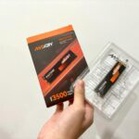
Retail price data from Taiwan show how quickly the math has changed. A 16GB DDR5 memory module that sold for about NT$1,700 in early 2026 was quoted at NT$8,200 on October 20. A mainstream 16GB module from Kingston has since climbed to around NT$9,400, more than five times its price at the start of the year. A 1TB internal SSD rose from about NT$2,000 to NT$5,500 over the same period, an increase of 175%.
Omdia estimates that DRAM and SSDs now account for close to 40% of a PC's bill of materials (BOM), up from a typical share of about 15%. Ben Yeh, a principal analyst at Omdia, said memory and SSD prices have risen more than fourfold, and that repeated price increases by PC brands over the past several quarters have not been enough to offset the higher component costs. He warned that the pressure is likely to persist and that the current downturn may only mark the start of a new down cycle.
TrendForce has tracked a similar squeeze. In research published on October 8, the Taipei-based firm said the processor, DRAM, and SSD together made up about 68% of the BOM of a mainstream laptop with a suggested retail price of US$900 in the third quarter of 2026, up from about 45% in the first quarter of 2025.
That leaves brands with little room to balance costs across processors, panels, and other parts, as they once did to keep prices competitive. For entry-level and midrange laptops, where margins were thin to begin with, the options have narrowed to three: raise prices, absorb the costs, or ship machines with less memory and storage.
Cutting specifications carries its own risk. Buyers who have grown used to 16GB of memory and at least 500GB of storage may see little reason to buy a new model that offers less, even if the price stays the same.
The 16GB and 500GB benchmark reflects what retailers consider comfortable for everyday multitasking, not a technical requirement. Microsoft's minimum hardware specification for Windows 11 is just 4GB of memory and 64GB of storage. Retail and upgrade prices also differ from what PC makers pay when they buy components in bulk, though the steep climb clearly shows the pressure building on consumers.
Gartner warned as early as February that rising memory costs could wipe out the market for entry-level PCs priced under US$500 by 2028. That threshold is not the same as Taiwan's NT$10,000 laptop, but both point to the same problem: low-cost computers are struggling to stay viable on price and profit.
HP Hit Hardest As ASUS And Acer Gain Share
Gartner's preliminary figures, released on October 12, put third-quarter 2026 global PC shipments at about 55.35 million units, down from 71.3 million a year earlier. That returned the market to roughly where it stood in the first quarter of 2023.
Namrata Banerjee, a principal researcher at Gartner, said rising memory and storage costs are now fully reflected in PC prices. DRAM costs in the second quarter were five times higher than a year earlier, she noted, forcing PC brands to pass part of the increase on to buyers and triggering the sharp drop in third-quarter shipments.
Banerjee said this downturn differs from the one in early 2023, which was driven mainly by excess inventory. This time, higher prices, vendors steering scarce components toward premium models, and a shift in product mix toward high-end configurations have reduced the supply of affordable PCs and made it harder for consumers to pay for an upgrade.
Lenovo remained the world's largest PC vendor, shipping about 14.99 million units, down 22.4%. HP shipped about 10.37 million units, down 30.9%, the steepest decline among the six largest brands. Dell shipped about 7.58 million units, down 25.4%, while Apple held up better with about 5.84 million units, down 7.1%.
Taiwan's two PC brands fared better than the market as a whole. ASUS shipped about 4.68 million units, down 13%, and Acer shipped about 3.87 million units, down 11.2%. Both declined less than the global average and gained market share from a year earlier.
Gartner attributed HP's sharper drop to its heavier exposure to price-sensitive consumer and mainstream business PCs. Apple's product positioning and customer base, by contrast, limited its decline.
Other research firms reached similar conclusions. Omdia estimated third-quarter shipments at about 58.1 million units, down 21.2%, with notebooks falling 20.6% to about 46.4 million. Counterpoint Research put the total at about 57 million, down 21%. Their methods differ, but all three point to a decline of more than 20%.
Memory prices are not the only factor. Shipments in the third quarter of 2025 were inflated by upgrades ahead of the end of Windows 10 support, early purchasing by businesses, and tariff-related inventory adjustments, creating a high base that magnified this year's drop.
Faced with higher prices, many consumers are delaying upgrades or holding on to the machines they already have. Companies, meanwhile, are focusing their budgets on essential system upgrades, workstations, and AI PCs, so consumer and commercial demand are increasingly moving in different directions.
Analysts See The Slump Deepening Into 2027
Counterpoint Research said on October 22 that it expects fourth-quarter 2026 shipments to fall 27% year on year, a steeper drop than in the third quarter. It said ongoing price increases for memory and other components are keeping PC prices high, consumers are postponing purchases, and brands are prioritizing configurations that can better absorb the higher costs.
Omdia forecasts a 24% decline in the fourth quarter and a further 7% drop for all of 2027. Counterpoint is less pessimistic and expects 2027 shipments to be roughly flat, though that would signal stabilization rather than a return to growth.
TrendForce currently projects a low single digit decline in global laptop shipments in 2027. If DRAM and CPU prices stay high and brands are forced to raise prices further, it said, consumers could stretch out their replacement cycles and the decline could widen to the high single digits.
As brands work through inventories of components bought at lower prices, they will face rising CPU, DRAM, and SSD costs more directly. TrendForce said it may be difficult for PC makers to hold prices, specifications, and margins all at once in 2027, and whether they absorb the costs or pass them on to buyers will be a key factor for demand.
Supply is unlikely to ease quickly. AI servers continue to absorb advanced memory capacity, limiting growth in DRAM supply for PCs. NAND flash supply may improve as new capacity comes online in the second half of 2027, but consumer PCs are unlikely to shake off high component costs in the near term.
That creates a paradox at the heart of the tech industry. The expansion of AI data centers is fueling demand for high-bandwidth memory (HBM), server DRAM, and enterprise SSDs, lifting prices for memory makers. Consumer PCs compete for the same supply chain resources and are left with higher costs, higher prices, and weaker demand.
In Taiwan, where a basic laptop once cost about NT$10,000, a single 16GB memory stick now sells for close to that amount. For PC brands, the biggest challenge in 2027 may be less about securing enough components than about whether consumers are still willing, or able, to pay for their next computer.
You've read it. Now join the conversation — follow us on X, Facebook and IG. Editor: Penny Wang