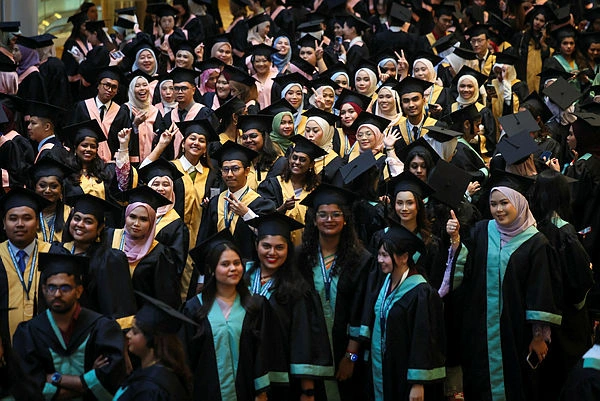
Every graduation season, thousands of hopeful young Malaysians toss their scrolls into the air, stepping out of university lecture halls into an increasingly competitive and high-cost job market. For years, degree holders entering the corporate workforce faced a demoralizing financial reality: entry-level job offers stubbornly hovering between RM1,800 and RM2,100 figures virtually unchanged from a decade prior, despite skyrocketing living expenses across urban centers like the Klang Valley, Penang, and Johor Bahru. For young professionals trying to rent basic rooms, manage PTPTN student loans, and commute to work, these stagnant starting salaries created a severe mismatch between academic achievement and financial independence. The issue went beyond individual frustration, contributing directly to domestic brain drain as talented graduates routinely sought higher-paying opportunities across the Causeway or abroad. Recognizing this structural wage compression, Prime Minister Datuk Seri Anwar Ibrahim introduced a bold policy guideline during the presentation of Budget 2027: establishing a minimum starting salary baseline of RM2,500 per month for university graduates and semi-skilled workers. This announcement was met with widespread celebration among students and parents, who saw it as a long-overdue validation of higher education investments. However, across corporate boardrooms, human resource departments, and small-business associations, the proposed RM2,500 threshold triggered immediate concern and intense debate. Employers, particularly those running micro, small, and medium enterprises (MSMEs), question whether market conditions, current talent readiness, and razor-thin operational margins can absorb this elevated entry-level cost without causing unintended consequences such as reduced entry-level hiring or increased workplace automation.
Structural Wage Stagnation, Talent Preparedness, and Corporate Capacity
To understand the institutional push behind setting a RM2,500 starting wage floor, one must examine the decade-long stagnation of graduate earnings in Malaysia. According to labor market studies, the median entry-level salary for degree holders failed to keep pace with cumulative inflation, effectively eroding the economic return on higher education. By establishing a explicit RM2,500 baseline guideline alongside raising the national general minimum wage to RM2,000, Putrajaya aims to fix the compressed salary structure where degree holders earned barely more than non-degree holders, as reported by Rnggt.
Simultaneously, the administration is leveraging Government-Linked Companies (GLCs) and Government-Linked Investment Companies (GLICs) to lead by example, setting their baseline living wage at RM3,400 per month, as highlighted by Newswav. The strategy relies on public sector enterprise leadership to drive up wage expectations across the wider private sector, creating healthy competition for skilled young talent.
However, business associations and industrial economists emphasize that imposing uniform wage expectations without considering industry-specific margins risks creating market friction. While multinational corporations, financial institutions, and tech firms can easily accommodate a RM2,500 entry-level floor, traditional manufacturing sectors and smaller service enterprises operate under severe cash flow constraints, as detailed in coverage by Human Resources Online. Employers argue that forced salary hikes without a corresponding increase in immediate workplace productivity could compel firms to slow down graduate recruitment, opting instead for experienced hires or digital automation to keep headcount low.
Another critical dimension in this debate centers on skill readiness and the alignment between university curricula and industry demands. Many employers cite significant gaps in practical technical capabilities, problem-solving skills, and English proficiency among fresh graduates, arguing that onboarding new degree holders requires months of costly internal training, as tracked by SAYS. To make the RM2,500 baseline viable, employers advocate for closer collaboration between higher education institutions and industry leaders to ensure fresh graduates enter the job market with ready-to-use skills.
Ultimately, achieving a sustainable RM2,500 starting salary standard requires a balanced approach rather than rigid enforcement. Coupling salary benchmarks with targeted tax incentives for employers who hire and train local graduates alongside continuous upskilling programs under HRD Corp can help bridge the transition. When wage increases are supported by genuine productivity growth and strong corporate backing, Malaysia can elevate living standards for its youth without compromising business competitiveness.
What Do You Think? I’d Love to Hear Your Opinion in The Comments Section.
The proposal for a RM2,500 starting salary for fresh graduates represents a pivotal step toward restoring the value of higher education and securing a dignified future for Malaysia’s young workforce. While the transition presents real operational challenges for employers especially smaller enterprises it also provides a powerful opportunity to modernize business models, invest in human capital, and boost overall productivity. As policymakers, industry leaders, and academic institutions work together to refine this framework, finding the right balance will be essential to keeping Malaysia’s youth motivated, employed, and empowered at home.

Have a take on #Budget2027? Turn your perspective into content, join the conversation, and stand a chance to win exciting cash prizes! Find out how to join here. T&Cs apply.
AM World (tameer.work88@gmail.com) is a content creator under the Newswav Creator programme, where you get to express yourself, be a citizen journalist, and at the same time monetize your content & reach millions of users on Newswav. Log in to creator.newswav.com and become a Newswav Creator now!
The User Content (as defined on Newswav Terms of Use) above including the views expressed and media (pictures, videos, citations etc) were submitted & posted by the author. Newswav is solely an aggregation platform that hosts the User Content. If you have any questions about the content, copyright or other issues of the work, please contact creator@newswav.com.