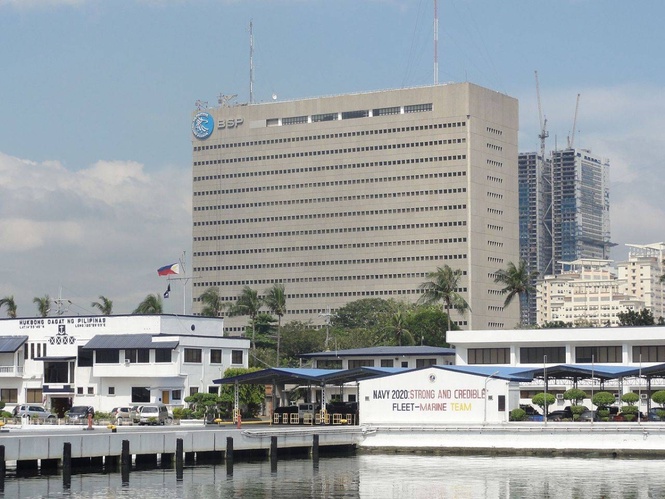
COMPANIES and households have become less pessimistic amid the continued fallout from the war in the Middle East, the Bangko Sentral ng Pilipinas (BSP) reported late on Friday.
Following steep plunges in prior polls, the central bank’s latest surveys saw the confidence indices (CIs) for businesses and consumers rising to -10.9 percent in August and -29.8 percent for the third quarter (Q3), respectively, from -20.3 percent and -42.0 percent a month and a quarter earlier.
The negative CIs mean there were more pessimists than optimists. Still, the results improved from July’s steep plunge from a neutral zero percent for business confidence while consumer sentiment — in the red for more than three years — was also markedly less negative at -15.8 in the first quarter.
The BSP this year shifted to monthly monitoring of business expectations, saying this would allow it to react faster to domestic and global developments, but retained the quarterly format for the consumer survey.
“The improved sentiment of firms in August 2026 was attributed to higher demand for goods and services,” the central bank said in a statement.
Consumers, meanwhile, “became less pessimistic in Q3 2026 amid expectations of higher earnings, additional sources of income and more stable employment.”
Sentiment moving forward also improved, with the CIs for three months and 12 months ahead surging to 24.6 percent and 36.4 percent for businesses, from 3.7 percent and 29.4 percent previously.
Those for consumers rose to -0.8 percent for the next quarter from -16.3 percent and 9.1 percent from 0.2 percent for the next 12 months.
“[F]irms were more optimistic about the business outlook over the next 12 months,” the central bank said. “Respondents expected stronger economic activity, although inflation was anticipated to remain above the BSP’s four-percent tolerance ceiling.”
As for consumers, the current- and next-quarter CIs were said to have “moved closer to zero,” while the positive outlook for the next 12 months was described as “indicating greater optimism among consumers about future economic conditions and household finances.”
“The BSP continues to monitor developments in the Middle East and their potential effects on business and consumer sentiment, spending and investment,” the central bank said.
“These indicators are among those considered in the BSP’s monetary policy decisions,” it added.
Business outlooks
The improved business sentiment for November 2026, the BSP said, was driven by expectations of stronger demand (52.9 percent) and increased business activities during the September-December rice harvest season and ahead of the year-end holidays (23.5 percent).
For August 2027, the responding companies said they were optimistic about improved consumer spending (41.7 percent), lower inflation (25.0 percent), an end to the Middle East war (13.9 percent), business operation enhancements (13.9 percent) and increased investor confidence (11.1 percent).
Companies also said that financial conditions were less tight as of August, with the CI improving to -24.9 percent from -31.4 percent, but credit conditions worsened a bit with the corresponding CI at -7.2 percent from -7.0 percent in July.
Capacity utilization on average marginally improved to 69.0 percent from 68.6 percent, and businesses said the top constraints were stiff local competition, a lack of demand and high interest rates.
More companies said they planned to increase hiring over the next 12 months (30.7 percent from 9.0 percent), but expansion intentions slipped to 17.1 percent from 20.8 percent among industry firms for the same period.
Inflation is still expected to accelerate but at a rate lower than that seen in July (5.4 percent from 5.6 percent, still above the BSP’s 2.0- to 4.0-percent target).
Businesses tagged continued fuel price hikes, uncertainty over the Middle East war and a weakening peso as their top inflation concerns.
Consumer views
Higher earnings (27.2 percent), new income sources (23.8 percent) and more job opportunities (10.8 percent), meanwhile, drove the less pessimistic consumer outlook for the fourth quarter. Higher earnings (24.2 percent) and new income sources (19.3 percent), plus improvements and governance, accountability and leadership (16.5 percent), were the factors cited for the positive year-ahead view.
Consumers remained negative about spending, with the CI for the next 12 months marginally improving to -71.3 percent from -75.9 percent in the second quarter. Sentiment for the quarter ahead was positive at 45.7 percent, but this fell from 54.7 percent three months earlier.
Saving intentions turned positive with a CI of 1.3 percent for the current quarter, from -0.7 previously, while the borrowing outlook worsened to -65.3 percent from -63.8 percent for the next 12 months.
Consumers also expect inflation to keep rising, although a slower rate of 4.0 percent (up from 3.3 percent in the second quarter) compared to the 5.4 percent for businesses.
Respondents said they were seeing limited efforts to lower prices (38.7 percent), higher food and utility costs (37.0 percent), and tighter supply conditions (22.0 percent).
The BSP’s latest Business Expectations Survey, conducted from Aug. 5 to 31, involved a sample size of 501 companies nationwide. The response rate was low, however, at 45.7 percent.
The Q3 Consumer Expectations Survey, meanwhile, ran for the whole month of July. It targeted 5,476 households across the country and generated a high response rate of 98.9 percent.