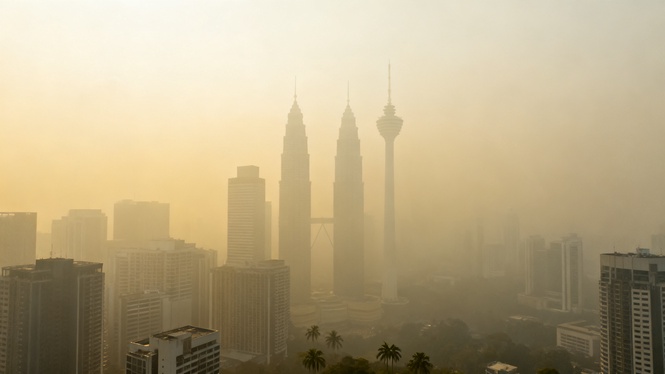
Haze contains fine particulate matter, especially PM2.5, which can travel deep into the lungs and contribute to respiratory and cardiovascular stress. This has prompted interest in supplements such as fish oil, vitamin C, vitamin E, vitamin D, and zinc.
The short answer is that some supplements may offer limited or indirect support, but no supplement has been proven to protect people from haze.
Reducing exposure, improving indoor air quality, and wearing a properly fitted respirator remain much more reliable.
What the research shows
A 2024 systematic review examined clinical trials on dietary supplements and the cardiopulmonary effects of air pollution. After screening 4,681 records, the researchers included 18 studies. The review found limited and inconsistent evidence.
Fish oil showed possible benefits for some pollution-related lung effects, but findings on cardiovascular outcomes were contradictory.
Most studies measured short-term biomarkers, inflammation, or changes in lung function. They did not establish that supplements prevent asthma attacks, hospitalisation, heart attacks, or long-term diseases caused by haze.
The results should therefore be viewed as preliminary rather than proof that supplements protect against polluted air.
Fish oil and omega-3
Fish oil has some of the more promising evidence. In a randomized, double-blind, placebo-controlled study, 65 healthy young adults in Shanghai received either 2.5 g of fish oil daily or a placebo. The researchers observed favourable changes in several biomarkers related to inflammation, blood clotting, blood-vessel function, oxidative stress, and stress responses among participants who took fish oil.
A related study suggested that fish oil could reduce some PM2.5-related inflammatory responses by influencing fatty-acid metabolism. However, the study was small, involved healthy young adults, and did not show that fish oil prevents clinically important respiratory or cardiovascular disease.
Fish oil should therefore be regarded as a possible general health supplement that provides indirect health benefits, not as a reliable shield against haze.
People taking anticoagulants or those with bleeding disorders should consult a healthcare professional before using high doses.
Vitamin C and vitamin E
Vitamin C and vitamin E are antioxidants, which has led researchers to investigate whether they can reduce oxidative stress caused by air pollution. However, the evidence remains mixed.
One randomized trial involving 158 children with asthma in Mexico City tested daily vitamin E and vitamin C supplementation. The overall findings did not show a clear improvement in lung function. A secondary analysis suggested a possible benefit in one measure of small-airway function among children with more severe asthma, but the main lung-function measurement did not improve.
The 2024 systematic review also found that most vitamin C studies did not demonstrate protective cardiovascular effects. Combinations of vitamins C and E showed possible benefits for pollution-related lung dysfunction in some studies, but the results were inconsistent.
Vitamin C may be useful when someone has a poor diet or a deficiency, but high-dose supplementation cannot currently be recommended specifically for haze. Excessive intake can cause diarrhoea, nausea, abdominal cramps, and, in susceptible people, kidney stones.
Vitamin D and zinc
Vitamin D and zinc may provide indirect support by helping maintain normal immune function, particularly in people who are deficient. This is different from protecting the lungs against PM2.5.
Research on vitamin D has mainly focused on respiratory infections rather than haze. Some evidence suggests that vitamin D may modestly reduce acute respiratory infections, especially among people with low vitamin D levels, but findings are mixed. There is no strong evidence that vitamin D prevents haze-related airway irritation or inflammation.
Zinc is essential for normal immune function, but taking additional zinc when dietary intake is already adequate is unlikely to improve resistance to haze.
Long-term excessive intake can cause nausea, copper deficiency, and impaired immune function. The adult upper limit is 40 mg per day from all sources.
Be careful with advertisements and unproven online claims
People should be cautious when advertisements, social-media posts, websites, or online sellers claim that a particular supplement can “detox” the lungs, remove haze particles, prevent PM2.5 damage, or guarantee protection during haze.
Such claims maybe fake or may just rely on laboratory studies, animal research, testimonials, or small studies measuring biomarkers rather than meaningful health outcomes.
A supplement company’s marketing is not the same as independent clinical evidence. Words such as “detox,” “immune booster,” “clinically proven,” or “protects against pollution” should not automatically be taken as proof that the product works.
Before buying a product, consider:
- Whether the claim is supported by a randomized human clinical trial.
- Whether the study tested the exact product and dose being advertised.
- Whether the research measured meaningful outcomes, rather than only laboratory markers.
- Whether the evidence came from an independent, peer-reviewed source.
- Whether the product has clear ingredients, dosage information, and appropriate regulatory approval.
- Whether it may interact with medicines or cause harm at high doses.
- whether it has been reviewed by evidenced-based health media
Be especially cautious about products that promise immediate protection, claim to replace masks or medical treatment, or sell expensive combinations of many supplements without clear evidence.
Diet may be more useful than pills
A balanced diet containing fruits, vegetables, legumes, nuts, whole grains, and fish provides a range of antioxidant and anti-inflammatory nutrients.
Reviews suggest that healthier dietary patterns may be associated with better resilience to air pollution, although much of this evidence is observational and cannot prove that diet prevents haze-related disease.
Correcting a genuine nutritional deficiency may indirectly support general health. However, it is usually better to take a supplement for a clear medical reason—such as confirmed vitamin D deficiency or inadequate dietary intake—rather than starting several high-dose products during a haze episode.
What actually works better than these supplements?
Supplements cannot filter PM2.5 from the air or stop particles from entering the lungs. More effective measures are like those practical steps published in our previous PP Health Malaysia (PPHM) article, including:
- Checking the local Air Pollutant Index and reducing outdoor exposure when levels are unhealthy.
- Wearing a well-fitted N95 or equivalent respirator outdoors.
- Avoiding strenuous outdoor exercise during haze.
- Keeping windows and doors closed when outdoor air quality is poor.
- Using appropriately maintained air conditioning or a HEPA air purifier indoors.
- Continuing prescribed asthma or chronic lung-disease medication.
- Seeking medical care for wheezing, chest tightness, breathlessness, chest pain, or worsening asthma symptoms.
Practical Health Insights
Fish oil may modestly reduce some biological responses to PM2.5, while vitamins C and E have shown limited and inconsistent effects in selected groups. Vitamin D and zinc may support general health when a person is deficient, but they have not been proven to protect against haze.
Therefore, supplements should not be marketed or treated as a substitute for reducing exposure. Be particularly careful with advertisements and online information claiming that a supplement can detoxify the lungs or guarantee protection from haze.
At present, exposure reduction, clean indoor air, respiratory protection, and appropriate medical care remain much more reliable.
The post Can Health Supplements Help with Haze? first appeared on PP Health Malaysia.