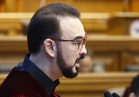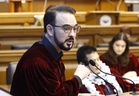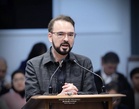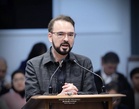
ALAN Peter Cayetano has a formidable adversary in the impeachment trial of Sara Duterte: Alan Peter Cayetano. The senator who once made accountability sound beautifully simple now makes it sound impossibly complicated. His own words from Renato Corona’s impeachment return as an indictment of the political convenience masquerading as principle in his present conduct.
During Corona’s impeachment, Cayetano asked: “Why do we complicate what is so simple?”
Indeed, senator. Why?
When Corona stood accused, Cayetano understood that public office carried obligations beyond the clever deployment of legal defenses. Today, watching him rationalize restrictions and procedural detours favorable to Duterte, one wonders whether his celebrated conscience came with an expiration date.
Explaining his vote to convict Corona, he acknowledged: “Technicalities should protect the rights of people, and I don’t blame this court for sticking to technicalities because this is supposed to protect the rights of people.”
That acknowledgment matters. Cayetano did not reject due process. He recognized its purpose. Rights deserve protection, and an impeachment respondent deserves a fair hearing. But fairness requires a tribunal willing to examine evidence, not senator-judges behaving as though their assignment were to discover increasingly ingenious reasons why evidence should remain unexplored.
Cayetano warned the Corona impeachment court: “Pero somehow in this country, it is being used to protect people who plunder this country.”
Those were his words. They are not finding that Duterte has plundered anything. Her liability must be determined from the evidence. They are, however, a devastating standard against which to measure a senator’s conduct when procedural solicitude repeatedly benefits the powerful official whose accountability he is supposed to judge.
In July, Cayetano questioned whether impeachment could reach acts preceding Duterte’s current term, raising the issue as the prosecution sought bank and tax records. But a limitation on the acts charged does not automatically render earlier records irrelevant to proving a present omission, tracing assets or assessing an explanation. Evidence and impeachable conduct are distinct questions.
A senator-judge should insist that distinction be addressed. A defense advocate benefits when it disappears. Cayetano increasingly invites the latter description because his interventions appear directed toward narrowing the prosecution’s path while expanding the respondent’s protection. That is a criticism of observable conduct, not a claim to know his private intentions.
His verdict on Corona came with this ringing declaration: “If your client cannot explain, I cannot abstain. If you did not disclose, we have to depose. And if you are not fit, you cannot sit.”
Explanation mattered then. Disclosure mattered then. Fitness mattered then. Now the public deserves to ask why the same senator seems more animated by obstacles to examination than by the imperative that an official satisfactorily account for what the evidence reveals.
The contradiction became particularly embarrassing in September. Cayetano sought to defer the conviction threshold issue to the Supreme Court. Pia Cayetano, Imee Marcos, Bong Go, Robinhood Padilla and Camille Villar supported that move. After its rejection, those six did not participate in the threshold vote. The senator whose refrain was that he could not abstain now belongs to a bloc that declined to vote.
The threshold dispute has constitutional substance. Disagreement alone proves neither dishonesty nor partiality. But Cayetano cannot demand that the public forget his earlier moral absolutism while he retreats into procedural positioning. He marketed refusal to abstain as courage. He should explain why withholding participation now deserves a nobler label.
His sister Pia also expressed reservations about the subpoenas for Duterte’s financial records, as did Imee Marcos and Camille Villar. Padilla opposed their issuance. The cumulative impression is disgraceful: Senator-judges supplying a protective chorus around a respondent who already has lawyers paid or appointed to defend her.
Bong Go’s participation in Cayetano’s threshold maneuver strengthens that impression. Each intervention must be judged on its merits, but the Senate loses credibility when its members seem eager to anticipate the defense’s needs instead of testing both sides with equal rigor.
Camille Villar may be less conspicuous than the others. That makes proportional criticism appropriate, not exemption. A quieter contribution to the protective bloc remains a contribution. Judicial responsibility does not diminish with speaking time, family pedigree or the relative intensity of one’s political performance.
Before a similar tribunal in Corona, Cayetano also offered a personal commitment: “For myself, gagawin ko po ito. Pag ako inimbestigahan ng Ombudsman, papayag po ako na buksan ang aking account. OK po ako sa waiver. Wala dapat ikatakot pag walang itinatago.”
Cayetano offered openness as the answer to suspicion. Where is that insistence now? Why does the confidence that once celebrated opening accounts now coexist with such anxiety over the reach of financial scrutiny?
A waiver is voluntary; legal rights do not vanish because an official refuses one. Nor does refusal establish guilt. But Cayetano chose to make willingness to disclose a badge of integrity. Political honesty requires him to explain whether he still believes his maxim, or whether it applied only when somebody else’s removal was politically convenient.
The most offensive spectacle is his invocation of impartiality while inviting doubts about his own. In September, he emphasized that an impartial tribunal is essential to accountability. Correct. He should begin by applying that insight to himself. Impartiality demands discipline when loyalty urges intervention, and restraint when a defense argument tempts a judge to become its salesman.
Sara Duterte is entitled to counsel. She is not entitled to senators who effectively supplement counsel while retaining the authority to decide her case. The public is entitled to judges who hear explanations, examine disclosure and assess fitness without treating political friendship as an unwritten exemption.
Cayetano’s old speech supplies the standard. His present conduct supplies the embarrassment. Nobody forced him to proclaim those principles; nobody should let him discard them now. He can still choose consistency: facilitate scrutiny, weigh evidence fairly and stop making accountability sound like an attack that the powerful must be rescued from.
Otherwise, his famous rhymes will survive as evidence of something uglier than inconsistency: a conscience eloquent against Renato Corona, unabashedly partisan for Vice President Sara.
The author is a professor at the University of the Philippines Los Baños and vice chairman of the board of PTVNI.