
This was my third trip to Changsha, the capital of central China's Hunan province, and once again it coincided with Taiwan's local elections, held every four years. In the 2026 Taiwan local elections, the "China factor," from cross strait relations and Beijing's unification narrative to debates over its soft power and its grip on storytelling, has again taken center stage. Seen against that backdrop, a conversation in Changsha about how Chinese independent content creators find room to speak in a tightly controlled society felt especially pointed.
My interviewee goes by Fei Er (費爾). He used to work at Xinhua, China's state news agency, but for reasons he did not elaborate on was unable to stay, and returned to his home province to become a new resident and observer of Changsha. He stumbled upon a book on the art of city walking by Hong Kong writer Wong Yu-hin (黃宇軒), and went on to explore similar practices in Japan, France and Britain. To him, city walking means looking at a city afresh by stripping it of its functions.
Why City Walking Appeals To Young Chinese
For many young Chinese who shuttle between the office and home, this is a new way of living. The point is not to tick off sights for social media, but to see the city with fresh eyes and build a sense of the neighborhood around them.
"Changsha puts emphasis on being a creative city, and city walking is a way to discover its living environment," Fei Er said. "Unlike a city walk, it focuses more on finding beauty in everyday life. What should you do while walking? You don't need a goal. It's a way of emptying your mind."
From Weibo Trends To Short Videos
Over the past decade or so, China's online public discussion has shifted from Weibo and forums to short video platforms. Weibo's trending topics were once the place where public events quickly drew attention. Today, Douyin, Kuaishou, Xiaohongshu and Bilibili together form a more diverse and far more commercial content ecosystem.
A public event that once might have begun with a text post and then been picked up by news outlets can now draw nationwide attention within hours through a short video, a photo or a livestream. Video has lowered the barrier to expression and given ordinary people without media resources a way to put their lives before the public, giving rise to the popular saying that "everyone is a microphone." But the fact that everyone can speak does not mean everyone gets to decide what deserves to be heard.
Fei Er's advice is to "watch fewer low quality videos, read and think more, and start from problems in your own life and around you, such as healthcare, jobs and social security. Even if you cannot fully win those rights in the short term, you should work toward them in your mind," he said. "You can take your own channel seriously, not just sharing your life but writing and expressing yourself with care. Even if it has an element of promotion, it is still an understanding of the life around you."
That is how he runs his own channel: sharing his walks, writing about how the city feels, reinterpreting historical figures and turning his reading and daily observations into public content.
In China, public expression always sits at the intersection of several forces. Platform algorithms decide what gets seen, commercial pressures shape what creators choose to cover, and content controls define the limits of what can be said. Popularity does not necessarily mean importance, and silence does not necessarily mean the absence of opinion.
Must Chinese Creators Become A Political Force
As China has moved from state media's version of public opinion oversight to a boom in independent content, Fei Er believes Chinese people have already stepped outside the official template of public discourse. Even trying to break free of a given framework or way of thinking, he argues, is itself a form of expression.
He thinks it is neither realistic nor necessarily desirable to expect the public to abandon the official narrative entirely. "We should spend some time thinking about why the authorities tell the story the way they do," he said.
City officials may well be happy to see content like his about streets, buildings and history, he said, but that does not mean creators must cater to the authorities. Likewise, content that does not directly confront the government is not necessarily devoid of public meaning. He cited Andy Warhol's line that everyone will be famous for 15 minutes, and noted that the authorities themselves are promoting what they call "new mass arts and culture."
"For me, it's about sharing my life, connecting with the people, events and things around me and getting to know the city I live in," Fei Er said. "I'm just expressing the thoughts that come from my experiences, looking for kindred spirits, and I don't shy away from controversy."
A New Form Of Public Discourse Or Just A Traffic Business
In the content ecosystem he observes, most Chinese creators still need to make money. Whether they set out to earn from the start or only consider brand deals after building an audience, traffic and income are unavoidable. A creator might start an account to make money or simply to record their life, and over time develop their own values and bring those into their content.
For city focused creators, street scenes, food and travel guides to trendy cities easily attract views. Discussions of historical context, neighborhood change and public space take more time and do not necessarily bring the same commercial reward.
Fei Er says what sets him apart is not offering the most complete travel guides or piling up expert information, but leaving traces of his own experience in his content. Every route he shares, he has walked himself, and the stories he tells come from his own observations or reading.
I asked how he views his competitors. With youth unemployment in China stubbornly high, influencers and livestreamers seem to be everywhere. Fei Er does not see a simple, direct link between the two, pointing also to the way phones and the internet have democratized technology. To him, his channel is like a diary that can be made public, both an attempt to speak to the public and a record of his own life, which he hopes will grow into something more.
Changsha's Hidden Links To Taiwan's History
Because my visit coincided with Taiwan's elections, our conversation about Changsha's history took on another dimension: how the China factor enters Taiwan's local politics and is reinterpreted by different political forces.
When the conversation turned to Changsha's historical ties with Taiwan, Fei Er mentioned the Zhongshan Pavilion, a memorial hall dedicated to Sun Yat-sen, the founding father of the Republic of China, and memorials to fallen soldiers on Yuelu Mountain.
"Given the current state of cross strait relations, these histories are all the more worth tracing," he said. "How did we get here? How did the changes happen? How does the grand narrative show up in individual lives? We need to talk with the elderly who are still with us and dig through the archives for spiritual nourishment."
For him, the real question is not how to slot history into a political camp, but how historical change happened and how it shapes people's lives today.
Changsha carries two opposing temperaments at once: extremism and tolerance, progress and conservatism. In some ways it is a microcosm of many Chinese cities, and of a city with a modern sense of public space. That makes for an interesting contrast with the "China issue" that keeps surfacing in Taiwan's elections, from unification narratives to soft power and the battle over storytelling. On one side, individuals in a controlled society use walking and their own channels to find room to express themselves. On the other, the China factor is constantly politicized and mobilized at the ballot box.
Beyond The Influencer City Label
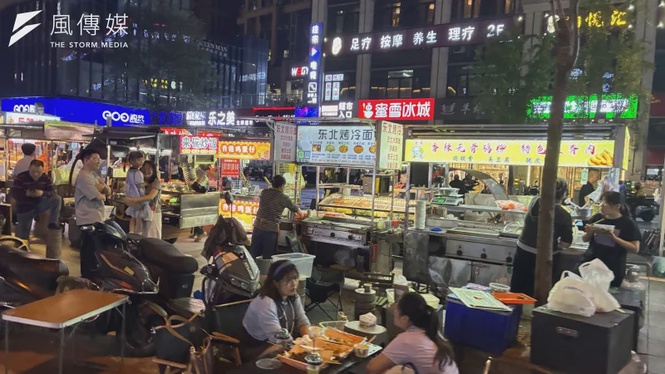
In recent years, Changsha has become known for its food, entertainment, nightlife and youth culture, emerging as one of China's signature "influencer cities." But Fei Er feels the label fails to capture the depth of its culture.
Changsha suffered large scale destruction in the past, he noted, and the city people see today is only a limited slice of its long history. Many old buildings and historic sites have disappeared, and understanding the earlier city from the streets and buildings that remain is a question he keeps returning to.
He does not want to turn history into dry data, nor reduce historical figures to purely positive or negative images. "Showing more of the richness of an event or a person" is what he hopes to achieve. That approach differs from simple tourism promotion and is not quite the same as the official historical narrative. It tries to help readers understand people and events from different angles, and through them, Changsha and the wider culture of Hunan.
The Next Step For Chinese Creators
In an age of ubiquitous short video, Chinese independent creators face a contradiction. Technology lets more people make content, but whether that content is seen, how it is understood and whether it can last are still shaped by platforms, commerce and the political system.
For Fei Er, his channel is more than a diary to be edited at will. It is his way of speaking to the public, recording his life and building connections. He simply hopes to retell the stories of Changsha's historical figures and the city itself from a young person's perspective, so that readers can see more of its many sides.