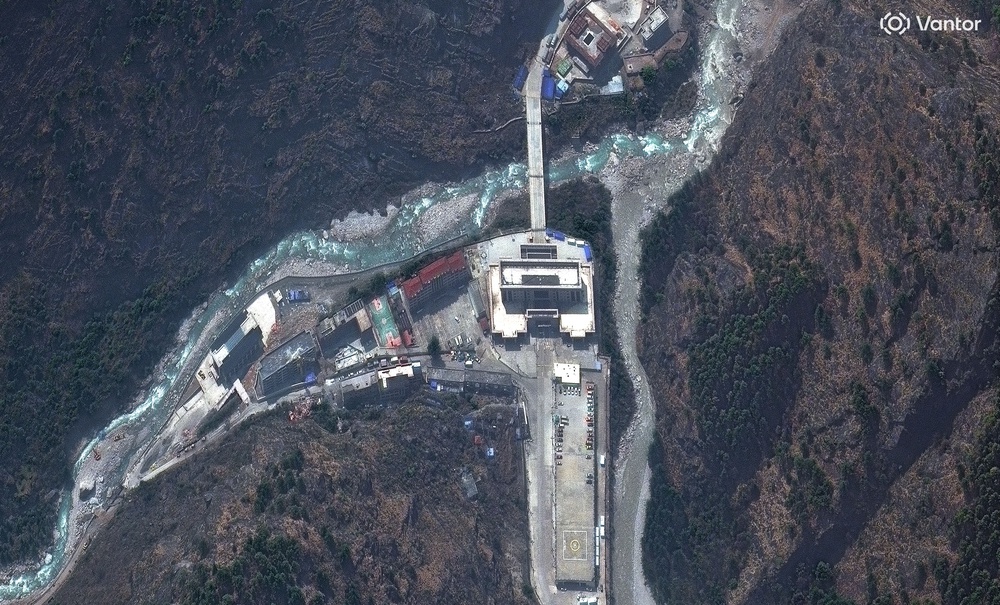
The road leading to the Gyirong border crossing between China and Nepal has been fully restored, just a week after it was destroyed in catastrophic flash floods.
The border crossing was torn apart when a glacier collapsed above the Nepal-Tibet border last week, sending a surge of ice, rock and mud through the valley below.
It is the main trade and transport link between China and Nepal in this part of the Himalayas, used for carrying goods and travellers over the mountains to the Nepali border town of Rasuwagadhi. Its destruction had left rescue teams struggling to reach some of the worst-affected areas on the Chinese side.
The last stretch of the route reopened on Wednesday, Chinese state broadcaster CCTV said, with multiple rescue teams now on site to speed up the search for those still missing.

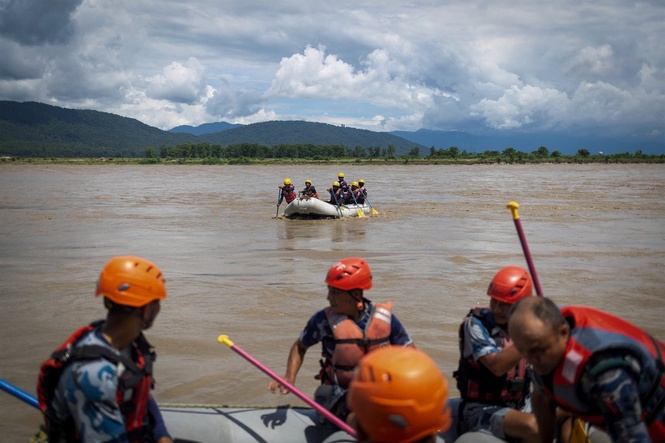
It comes as Nepalese rescuers pulled 118 more people to safety with the help of helicopters and other air assets.
A Nepalese Army statement referred to 119 people – 118 Nepalese citizens and one Briton. However, the British national, identified as Alastair Chambers, 45, later clarified he was not a rescued tourist. The former Gloucester councillor said he had travelled to Nepal as a volunteer.
He was distributing aid to communities cut off by collapsed bridges, and was mistaken for a flood survivor when he returned to Kathmandu on a humanitarian aid helicopter and gave his details to a police officer at the army barracks.
"They presumed that I'd been rescued," he said. "I gave them my details, just abiding by the rules, and they obviously thought that I'd been rescued." He said he had since had to correct multiple journalists who had contacted him believing he was a survivor.
Meanwhile, more than 600 workers are believed to be trapped in a network of mud-filled tunnels at hydropower sites along the Trishuli river, among thousands still unaccounted for.
Nepal's prime minister, Balendra Shah, said on Monday that 279 people had been rescued from hydropower sites specifically, with joint rescue teams from Nepal, India and China working to reach those still trapped, alongside experts from South Korea and Australia.
Ferrin Cole, a member of the US crisis response team in Nepal, told ANI news agency: "The plan today is to get on a helicopter and go to the hydro tunnels where they believe there's still life. We have high-technology listening equipment to listen for sounds of life, and then the safety teams to go in and check."
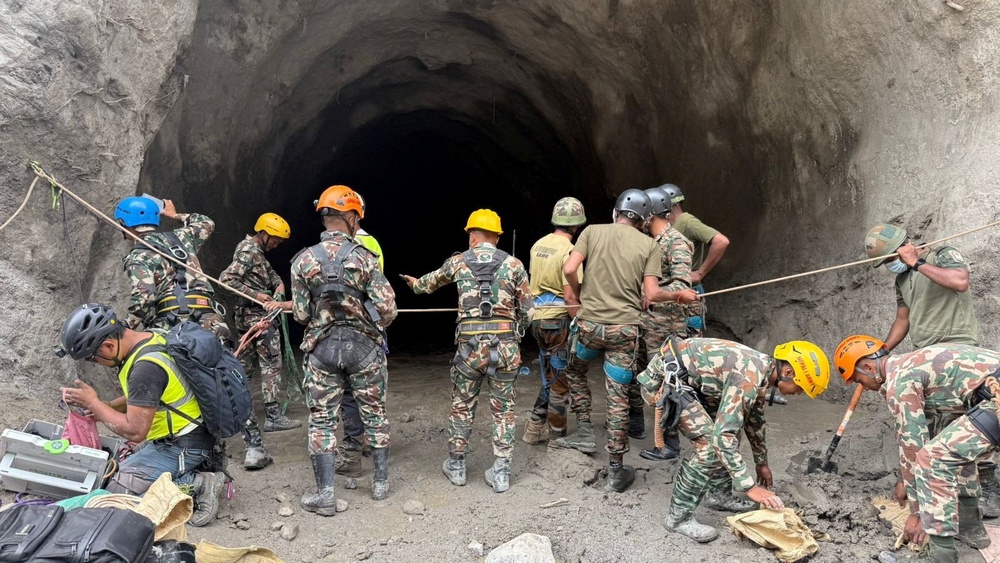
Asish Gurung, a mountain guide assisting the tunnel rescue effort, told Reuters from Haku village in Rasuwa district that reaching some sites was proving extremely difficult.
"Our first rescue observation at Trishuli hydropower plant shows that it is not humanly possible to go into the tunnel," he said. "We need machines like bulldozers and excavators. There may be about 500 people trapped inside."
The overall death toll passed 1,000 on Tuesday, with around 4,000 people still missing, including 583 foreign nationals, Nepal's disaster management authority said.
Hopes of finding more survivors were fading a week after the disaster, officials said.
"The hope of finding survivors is decreasing," said Phanindra Paudel, a senior official at Nepal's National Emergency Operation Center.
"We pray and are hopeful. Hope is hope!" Binoj Basnet, a retired senior army general who oversaw the search and rescue operation after Nepal's 2015 earthquake, said the nature of the terrain meant chances of finding survivors alive fell with each passing day.
More than 11,000 people have been rescued in total since the disaster struck, according to Mr Shah. Some tourists previously reported missing have since made contact with authorities. Nepal's foreign ministry said 324 foreign nationals had been rescued, with around 590 from 39 countries still missing.
Australian prime minister Anthony Albanese said the number of Australians unaccounted for had fallen from 43 to 38 after five were confirmed safe overnight.
"Amidst all of this tragedy, we are seeing some positive news," he told reporters in Palau, where he is attending a regional summit.
Sunil Sharma, a spokesperson for the Nepal Tourism Board, said at least five other previously missing foreign tourists had since contacted authorities by phone or email.
In Britain, 36 nationals remained unaccounted for as of Tuesday, up from 33 previously reported, a Foreign Office minister said, and a UK rapid development team arrived in Nepal on Saturday to support British nationals and their families alongside the embassy and local authorities.
South Korea, nine of whose nationals are missing after working at a hydropower project, said it would send a 44-person emergency relief team to support the search in Rasuwa.
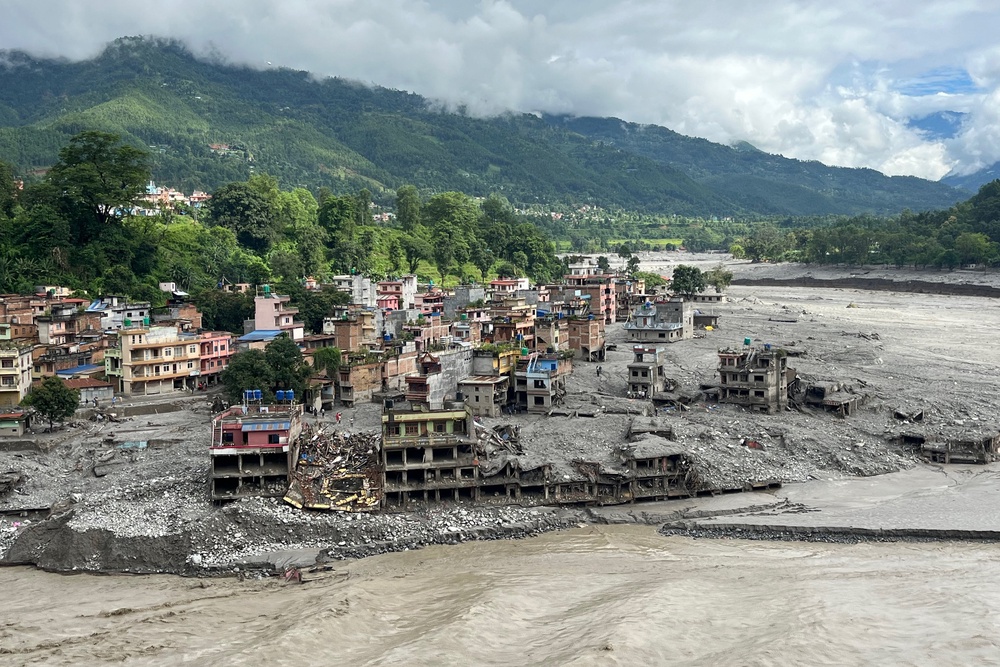
The UN said aid agencies were "very concerned" about the growing public health risk in overcrowded shelters, citing contaminated water and damaged health facilities, particularly for women and children during the monsoon season, according to UN spokesperson Stephane Dujarric.
Nearly 3,500 people were living across 27 displacement sites in the hardest-hit districts of Nuwakot and Rasuwa, he said.
Mr Shah said the government's focus was shifting from search and rescue towards rehabilitation and reconstruction.
"The government is now focusing on rehabilitation while working to protect the lives of people in the affected areas and providing necessary medical treatment and psychological counselling," he said.
The disaster left at least 2.2 million tonnes of debris, according to a preliminary UN estimate, roughly equivalent to six Empire State Buildings.
China's foreign ministry said it would send DNA testing experts and a further batch of relief supplies, including drones and water purification equipment. Aid worth more than $42m has flowed into Nepal since the disaster, Mr Shah said, with further contributions expected.
On Wednesday, it thanked Nepal and said it hoped the country would continue rescue efforts for Chinese citizens still unaccounted for.
The ministry said it had briefed foreign embassies on missing nationals the previous day, and that border residents and pilgrims stranded in the disaster area were now passing through Nepal's land and air ports.
Police in Kathmandu have urged relatives of missing tourists to provide DNA samples to assist identification efforts.
In a statement posted to social media, Nepal police on Monday asked relatives of those missing to “provide a fresh blood sample for DNA profiling and two passport-sized photographs” to the pathology laboratory at the Nepal police hospital in Kathmandu, or the nearest district police office.
Mr Shah said the scale of the disaster underlined the risks a warming climate now poses to the Himalayan region.
"The time has come for us to strongly raise before the international community the disasters we are experiencing as a consequence of climate change," he said.
Kanni Wignaraja, a UN assistant secretary-general, said Nepal, which depends heavily on its glaciers for both income and water supplies, now faced "some very, very hard choices".
China's state broadcaster said on Monday that the flood had been "caused by glacier instability under the long-term effects of global warming".
While China insisted on Wednesday it has continued to communicate with relevant ministries, the disaster has also renewed pressure on Beijing over access to information from the Tibetan side of the border.
Students for a Free Tibet-India and the International Tibet Network said in a joint statement that China exercises tight control over media and information in Tibet, restricting outside access to the region and limiting what is reported about the disaster's toll there.
Chinese state media has reported 16 deaths and around 550 people missing in Tibet.
Videos, pictures, and news from Nepal have revealed the scale of the devastation, but little information has emerged from the Tibetan side reportedly due to China's stringent censorship.
Dhondup Wangmo, research fellow, Tibet Policy Institute, said, “This unfortunate disaster underscores what Tibetans have been saying for decades - Tibet is geologically unstable and dangerously vulnerable to global warming, permafrost melt and glacial retreat”.
In spite of these fragile conditions, China rarely shares environmental impact reports on their infrastructure and hydropower projects in Tibet. China has a moral responsibility to share transparent data on their ongoing projects, and during disasters, they must proactively share early warnings.”
Read MoreBritish aid worker says Nepal authorities mistook him for floods survivor
Rights groups accuse China of intensifying censorship in Tibet after mudslide
This Nepal principal evacuated 900 students before flooding swept away their school
Pakistani nurse who saved baby from hospital fire says she ‘acted as a mother’
‘Miracle house’ that stood firm as floods wrecked Nepal becomes symbol of survival
Nepal faces fresh glacier collapse threat as death toll rises above 1,000