Climate action for the most vulnerable countries cannot be effective without also factoring in agriculture. It is the backbone of many economies and the foundation of food and nutrition security.
The sector is simultaneously among the most important and the most exposed for those on the frontlines of rising temperatures.
And yet many of the most climate-vulnerable countries are also following a similar path set by high-income countries, using public support to inadvertently perpetuate environmentally damaging agricultural practices and inputs, while not supporting smallholder farmers nor guaranteeing nutritious food for people.
As climate negotiators seek to advance the Belem-Antalya Mechanism (BAM) for a just transition at the UN’s Cop31 talks amid a challenging economic context, climate-vulnerable countries must be supported to rethink agricultural subsidies and support to build long-term resilience.
The challenge is not to cut subsidies, but to redirect them without undermining farmers' livelihoods or food security, or in other words, bringing about a just rural transition.
Subsidy reform makes both economic and environmental sense but is missing the ingredient that makes it compelling, especially in the context of the impact of ongoing wars on food security. Cop31 in Antalya is the moment to start to recast the political economy and allow governments to seize this opportunity without fear of backlash.
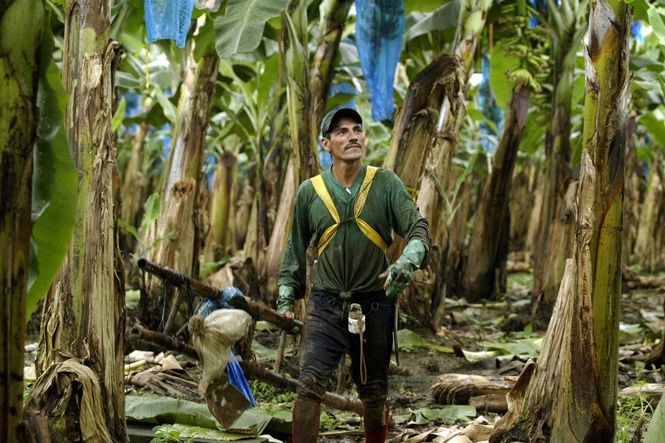
Some countries in Africa, for example, have spent more than half of their already modest public agriculture budget on input subsidies in recent years, much of which supports the use of synthetic fertiliser. This creates a dependence on a high-emitting product that is liable to being misused and overused, eroding soil health and fertility.
With decreasing overseas development assistance, this disproportionate support for farm inputs leaves public resources stretched even further while farmers remain exposed to shocks like the fertiliser crisis.
Meanwhile, agricultural subsidies worldwide amount to a staggering $800 billion, most of which is spent in high-income countries and is environmentally and socially damaging, according to recent UN figures.
And yet vested interests, institutional inertia, and the prospect of severe political backlash routinely derail reform.
Cop31 offers the chance for likeminded governments to act courageously and finally do the right thing, uniting around a policy action agenda from Antalya to Addis Ababa at COP32 and taking steps to reshape the political economy.
One opportunity to shift the political discourse is to build coalitions of the willing around shared goals. A critical mass, rather than consensus, is enough to start to change the trajectory of agricultural subsidies.
This has been applied in Malawi, where alliances among farmer organisations, development partners, research organisations, and government ministries promote a narrative of fertiliser-plus. The approach involves combining more targeted input support with investments in soil health, extension, legume integration, irrigation and climate-resilient farming with positive early results.
This simple narrative helped galvanise support for rethinking subsidies in the interests of ensuring sustainable, nutritious and affordable food for everyone.
Food and agriculture will be the first thematic day at COP31, providing a valuable opportunity to bring together those working towards climate-resilient food systems in similar alliances.
Another factor in enabling the repurposing of existing subsidies is the development of a predictable and fair transition. Farmers, especially in climate-vulnerable countries, need something concrete to transition to so that they are not left feeling as though they are losing out.
Innovative mechanisms like the “subsidy transition bonds” proposed for India’s subsidy repurposing scheme to reduce overuse of inorganic fertilisers offer a way to assist in the near-term by sharing financial risk. In a pilot, national and state governments supported farmers to reduce fertiliser use, promising to split the savings achieved by reducing the need for fertiliser subsidies.
These kinds of financing mechanisms should be considered by negotiators at Cop31 within the broader climate finance architecture.
At the same time, those who do stand to lose out from a just rural transition should be compensated.
In Mexico, PROCAMPO and its subsequent iteration, PROAGRO Productivo, was designed to compensate farmers for the liberalisation effects of the North American Free Trade Agreement (NAFTA) by replacing price supports with direct payments.
The High-Level Panel for a Just Rural Transition, backed by the UK and also Cop32 hosts Ethiopia, is working to support governments to consider how to redirect farm subsidies and other public support towards more sustainable practices. A policy action agenda for repurposing public support will link Cop31 in Antalya with Cop32 in Addis Ababa next year.
A just transition requires political courage and a great deal of patience and legwork, especially in today’s context, in which heightened geopolitical tension is complicating the energy transition in particular.
This only makes a just rural transition all the more important. Repurposing public support for agriculture is the defining opportunity to transform the sector into a driver of shared global resilience, supporting sustainable food systems, stronger food security and dignified rural livelihoods.
With enough momentum, Cop31 could mark the turning point for a fair, fast and funded rural transition.
Carlos Alvarado is chair of the High-Level Panel for a Just Rural Transition and a former president of Costa Rico
This article has been produced as part of The Independent’s Rethinking Global Aid project
Read MoreHow a year of extreme heat around the world is reshaping conversations at Cop31
Greta Thunberg hits out at Cop31 leaders as nations plead for help
Billions for forest fund a ‘powerful signal’ over climate aid, says Ed Miliband
Burnham hails £12bn wind farm investment as he prepares for Cop31 climate talks
‘Climate change is no longer a warning about the future. It is here in Britain now’