
The post Cloud Country: What Malaysia’s Data Centre Boom Costs on the Ground appeared first on In Real Life.
For the latest stories, follow us on Facebook and Instagram.
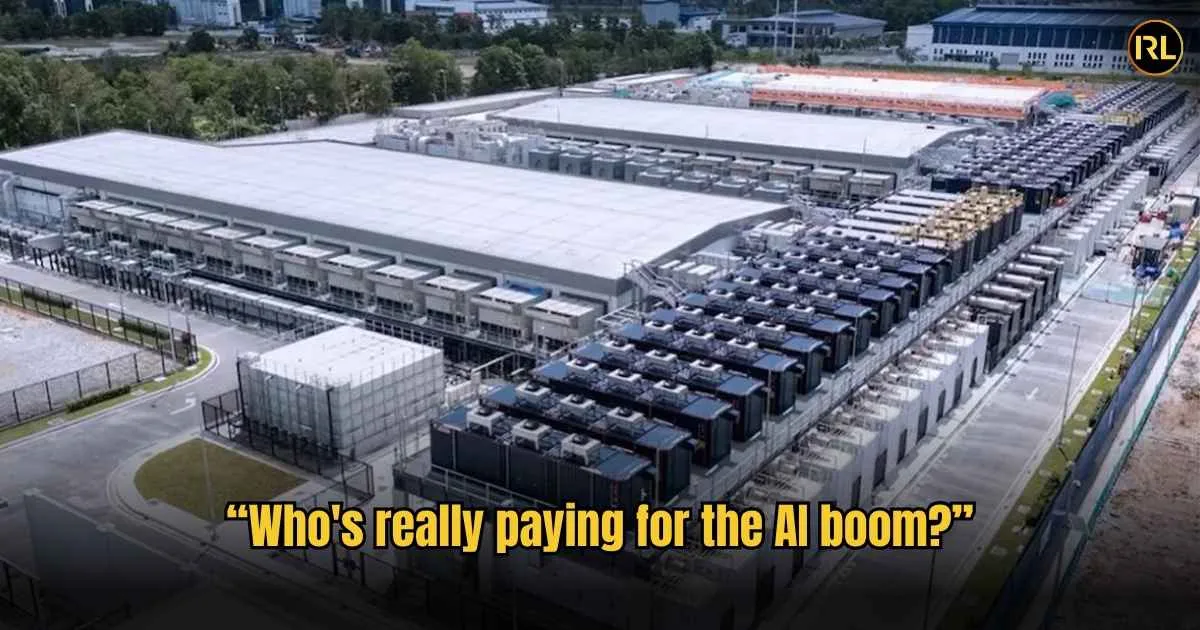
In February 2026, Malaysia saw its first public protest against a data centre. Residents of Gelang Patah, Johor, gathered outside a construction site with a simple complaint: not enough water would be left for them.
The scale of the approvals
Between 2021 and mid-2025, the federal government approved 143 data centre projects worth RM144.4 billion. Selangor alone greenlit 39 projects in that window, expected to create more than 2,400 jobs. Johor has become the epicentre, its data centre capacity nearly doubling in a single year to reach about 5.8 gigawatts by mid-2025, driven largely by global tech firms priced or regulated out of Singapore, which imposed its own moratorium on new data centres years earlier and pushed that demand across the causeway.
Anwar Ibrahim confirmed in February that Malaysia has quietly stopped approving any data centre application unrelated to AI, a policy already in place for close to two years before he disclosed it. Only projects demonstrating clear AI-related benefits now get through.
Who Controls the Taps
In Johor, water operator Ranhill SAJ has received requests for up to 440 million litres a day of treated water for data centres through 2035, nearly 23% of the state’s entire 2023 water usage. Johor’s Menteri Besar has dismissed shortage concerns directly, insisting the state has supply to support industrial use beyond 2050 and accusing critics of scaring off investors.
That reassurance sits awkwardly next to who now controls the taps. YTL Power, the developer of a data centre in Kulai, secured a controlling stake in Ranhill Utilities in 2024, meaning a major data centre operator now holds a stake in the same utility that decides how water gets allocated between households, farmers, and facilities like its own. Malaysiakini’s reporting notes YTL Power and Ranhill both declined to comment on the conflict when asked. As of that reporting, there was still no regulation mandating water efficiency standards for the data centre industry, only guidelines described as “in the works.”
The national water regulator has flagged this directly. SPAN chairman Charles Santiago warned in January that relying on treated water for data centre cooling would become unsustainable within three to five years, citing 52 data centres already in Johor and 27 in Selangor at the time, and called for mandatory rainwater harvesting and alternative supply plans before, not after, local councils approve new projects.
This isn’t a hypothetical risk. In January 2025, residents of Kampung Sepakat Baru in Skudai reported foamy, foul-smelling black water discharging into Sungai Skudai near their homes, prompting a state environment department investigation. The source of that discharge wasn’t confirmed as data centre-related in that report, but it illustrates the kind of environmental strain communities near this construction boom are already flagging.
Power demand is climbing too
Reuters reported in May that power demand in Peninsular Malaysia rose 11.5% year-on-year, driven partly by data centre expansion and extreme heat. Malaysia’s operational data centre capacity is projected to more than double, from roughly 1,025 megawatts at the end of 2025 to over 2,000 MW by the end of 2026, with an additional 3,500 MW already in the pipeline.
The government’s counterargument is that approved capacity isn’t the same as actual strain. Early 2026 figures from PETRA reportedly show actual power and water consumption running at roughly half of what has been approved for both, which officials read as headroom rather than risk. A Selangor state official made the same point directly, saying data centre demand had not pressured domestic water supply.
That defense assumes approved-but-unbuilt capacity stays unbuilt. Given deals like AirTrunk’s RM12 billion, 280-plus megawatt expansion in Iskandar Puteri alone, that headroom could close quickly once projects move from approval to construction.
Beyond water and power, an uglier complaint has surfaced too
In Iskandar Puteri, residents raised concerns not just about resource competition but about the physical footprint of construction itself. Dust from a nearby site prompted the developer, Tropicana Firstwide, to fund two free car washes for affected residents. One resident’s complaint cut closer to something harder to compensate for: she’d bought her home specifically for the greenery and hills behind the property, now disrupted by construction.
The Foreign Hand on Malaysia’s Infrastructure
Beneath the resource debate sits a less-covered structural question: who actually benefits?. Most of Malaysia’s AI and data centre investment runs through foreign hyperscalers, Microsoft, Google, AirTrunk, ByteDance among them, while Malaysia absorbs the water, power, and land costs of hosting them. Budget 2026 allocated roughly RM2.1 billion for a “Sovereign AI Cloud,” intended to keep data and model training within national borders, but the underlying physical infrastructure, land, and capital behind most of the boom remains foreign-controlled.
No Rulebook Yet
No single national regulation currently mandates water or energy efficiency standards specifically for data centres, only sector guidelines described as still being developed. Whether the government’s “approved capacity isn’t the same as usage” defense holds up depends on how much of the current pipeline, over 3,500 MW of it, actually gets built out over the next few years, and whether SPAN’s proposed safeguards, rainwater harvesting, water recirculation, real-time monitoring, are adopted before or after the next Gelang Patah-style protest.
Submit your story to ym.efillaerni@olleh and you may be featured on In Real Life Malaysia.
Read also: ‘I gave up my family to pursue my dreams’ Shares 34 YO M’sian woman – In Real Life
https://inreallife.my/i-gave-up-my-family-to-pursue-my-dreams-shares-34-yo-msian-woman/
For the latest stories, follow us on Facebook and Instagram.‘I gave up my family to pursue my dreams’ Shares 34 YO M’sian woman
The post Cloud Country: What Malaysia’s Data Centre Boom Costs on the Ground appeared first on In Real Life.