.jpeg)
Whenever a property development project is announced in Malaysia, three things will inevitably grab the headlines: the gross development value (GDV), location, and number of units. Take Varia Bhd’s recent announcement that its wholly-owned unit, Varia Southrise Sdn Bhd, has entered into a collaboration agreement with Seri Alam Properties Sdn Bhd, a Johor-based property firm, for example.
The parties will jointly develop a 43,810-square-metre freehold parcel in Mukim Plentong, Johor Bahru, into a stratified medium-cost residential project comprising 645 apartment units. With an estimated GDV of ~RM250 million, it's completely understandable why the media has focused on the figures. However, for any business owner or company director, what happens behind the scenes of a deal like this is far more important to understand than the headlines.
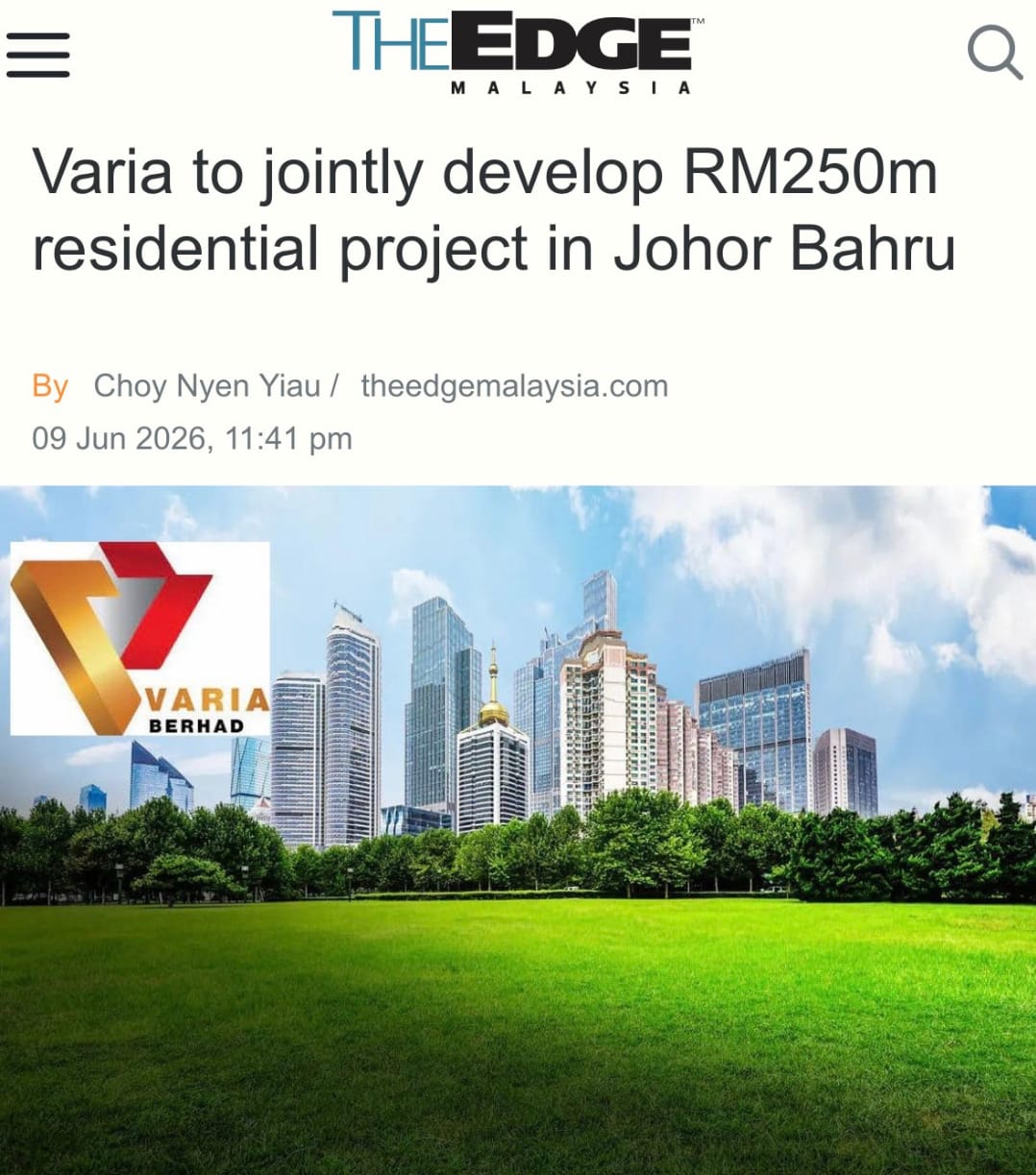
From a legal perspective, the transaction was structured through a collaboration agreement, a key document governing the parties’ respective rights, obligations, responsibilities, and risk allocation. This agreement allows a landowner and a developer to pool their resources without the latter having to buy the land outright. While this is a large-scale corporate deal, it highlights universal contractual rules that any business must understand before entering a commercial collaboration.
What is a Collaboration Agreement?
It's a contract between a landowner and a developer that allows both parties to jointly carry out a property development project, without the developer having to buy the land outright and without the landowner having to fund or manage the construction.
Simply put, the landowner contributes the land, and the developer contributes the money, expertise, and manpower to build on it. In return, both parties share in the proceeds or profits of the completed project, typically through a pre-agreed formula such as a profit-sharing ratio or a unit allocation between the parties.
This structure allows a landowner to unlock the value of land they may not have the capital or expertise to develop themselves, while allowing a developer to expand their portfolio without tying up large amounts of capital in land acquisition. It is a common structure in Malaysia, particularly for medium-cost and affordable housing projects like this Johor Bahru deal.
However, because a collaboration agreement brings together two parties who are taking on very different roles and risks, it must be carefully drafted. If the agreement is absent, it may expose both parties to significant legal and financial risks.

Why the Key Clauses Matter
Here's a breakdown of the key clauses that should be determined before signing a collaboration agreement, using the structure of this RM250 million Johor Bahru deal as a practical reference point.

Clear Roles & Responsibilities
In a joint property development such as this one, the developer provides the execution (the construction) whilst the landowner provides the asset (the land). As these roles are different, the agreement must serve as a strict operational manual rather than a loose statement of intent.
- Why It Matters: Relying on vague verbal understandings or assuming who will handle which task is a common cause of project delays and disputes between landowners and developers
- What the Agreement Must Address: The contract should explicitly state which party is responsible for appointing consultants, liaising with local councils/authorities, managing the construction site, and handling marketing and sales to the public. The clearer the division of labour, the fewer grey areas for disputes arise
Exclusivity Tied to Performance Milestones
In this deal, Varia Southrise was granted the exclusive right to undertake the development, subject to relevant approvals. Exclusivity is a standard and important clause, giving the developer the confidence to commit to a project, knowing that the landowner can't bring in a competing developer midway.
- Why It Matters: It protects the developer, and can also work against the landowner if the developer becomes slow, underfunded, or unable to proceed. Without a safeguard, the landowner's property could remain tied up for years
- What the Agreement Must Address: A balanced agreement should tie the developer's exclusive rights to clear performance milestones, such as deadlines to obtain approvals, begin physical construction, and project completion. If these milestones are missed without valid reason, the landowner should have a clearly stated right to terminate the agreement and reclaim the land's full control

Government Approvals & Licences (APDL)
Whilst the development order and building plans for this project are reportedly already approved, the company is still awaiting its advertising permit and developer's licence (known as the APDL). Its launch is targeted for later this year, subject to these final approvals.
- Why It Matters: Under the Housing Development (Control and Licensing) Act 1966, a developer can't legally advertise or sell residential units to the public without holding a valid APDL. If a collaboration is formed and the licence is delayed/rejected by authorities, the entire project timeline can collapse
- What the Agreement Must Address: The agreement should clearly state which party bears the cost and responsibility of applying for these approvals and licences. It should also contain a clear contingency clause for what happens to the collaboration, and to each party's rights, if an essential licence or approval is delayed beyond an agreed timeframe, or denied altogether
Protection of the Land Against Project Financing Risk
Funding for a project of this scale will mainly be sourced through project financing at the company level, supplemented by initial advances under the collaboration agreement. This is standard practice, but it raises an important legal question for landowners in particular.
- Why It Matters: Banks rarely extend substantial project financing without collateral, and this often takes the form of a legal charge over the development land itself. If the developer later defaults on its loan obligations, the bank may have the right to take action against that land, even though it's not the developer's
- What the Agreement Must Address: Landowners, in particular, should insist on strict legal protections and indemnities, ensuring that if the developer faces financial difficulty, the landowner's asset remains shielded from the developer's default and any related bank action
Legal Structure & Liability Position
A collaboration agreement should clearly define the legal relationship being formed. It may take the form of a joint venture company, a purely contractual collaboration, a development rights arrangement, or a licence permitting the developer to enter upon and develop the land.
- Why It Matters: It's not merely a matter of drafting style. The legal structure chosen affects tax treatment with the Inland Revenue Board (LHDN), accounting treatment, regulatory compliance, control over the project, and the allocation of liability between the parties if issues arise, such as construction delays, building defects, or purchaser claims
- What the Agreement Must Address: The collaboration agreement should expressly state the parties’ respective roles, responsibilities, authority, limitations, indemnities, and liability position. This helps prevent the arrangement from being interpreted in a manner that was not intended by the parties
How the Parties Share the Proceeds
At the heart of every collaboration agreement is the question of who gets what. In this deal, Varia Southrise contributes the funding and expertise while Seri Alam Properties contributes the land, and both look to the completed project for their return. The entitlement formula is often the single most negotiated part of the entire agreement.
- Why It Matters: A loose reference to “sharing profits” or “sharing units,” without a precise definition of how development value, costs, and net proceeds are calculated, is a dispute waiting to happen once money starts to flow
- What the Agreement Must Address: A clear entitlement mechanism, whether by unit allocation, an agreed cash sum, or a percentage of net proceeds, together with the right to audit the accounts, the timing of payments, and, ideally for the landowner, a guaranteed minimum entitlement regardless of how the project ultimately performs

Power of Attorney
Because Seri Alam Properties retains ownership of the land while Varia Southrise runs the development and sells the units to the public, there must be a legal bridge allowing the developer to act in respect of land it doesn't own.
- Why It Matters: That bridge is usually an irrevocable power of attorney granted by the landowner to the developer, deposited under the Powers of Attorney Act 1949. It's a powerful instrument, and a landowner who grants it without limits effectively hands over control of a valuable asset
- What the Agreement Must Address: A power of attorney scoped to this project alone, with the developer expressly prohibited from using it to charge or dispose of the land outside the agreed structure, and with clear triggers for its revocation on default or termination
Conditions Precedent & a Long-Stop Date
This project is expressly proceeding subject to final approvals, most notably the outstanding APDL. That is a live example of why a collaboration agreement should spell out its conditions precedent.
- Why It Matters: If the parties become fully bound the moment they sign, they may be locked into a deal that can't lawfully proceed because a critical approval, financing arrangement, or land conversion never materialises
- What the Agreement Must Address: A defined list of conditions precedent, the party responsible for satisfying each, and a long-stop date by which they must all be met, failing which either party may walk away cleanly with agreed consequences
Clean Title & Vacant Possession
A developer commits substantial money on the strength of the land being exactly what the landowner represents it to be.
- Why It Matters: If the title later proves to be encumbered, subject to a caveat, or occupied by tenants or third parties, construction can be delayed or halted long after funds have been committed
- What the Agreement Must Address: Express warranties from the landowner that it holds clean, unencumbered title, together with an obligation to deliver vacant possession free of caveats, tenancies, and adverse claims by an agreed date

Protecting End-Purchasers if the Project Stalls
645 units will be sold to the public long before the buildings are complete. Those buyers are strangers to the collaboration, yet they have the most to lose if it fails.
- Why It Matters: If the collaboration is terminated midway, purchasers who have paid deposits and progress payments can't simply be abandoned, and both landowner and developer may face claims and regulatory consequences
- What the Agreement Must Address: A clear mechanism setting out what happens to signed sale and purchase agreements on termination, including whether the landowner steps in to complete the project, so that buyers are not left stranded, and the parties’ exposure is contained
Dispute Resolution & Governing Law
A collaboration that may run for several years will almost inevitably encounter disagreement.
- Why It Matters: Without an agreed forum, a dispute can spill into open-ended and public litigation that stalls the entire project while the parties argue over resolutions
- What the Agreement Must Address: A defined governing law and a clear dispute resolution clause, whether the courts or arbitration before a body such as the Asian International Arbitration Centre (AIAC), together with a sensible escalation process requiring senior-level discussion before formal proceedings
From Blueprint to Groundwork
A collaboration agreement is a genuinely useful legal tool allowing landowners to monetise land they may not be able to develop on their own, and allowing developers to scale their project pipeline without high upfront cost of acquiring land. Used correctly, it can deliver long-term, sustainable value for both sides.
The underlying lesson for any business considering this route is that commercial ambition must always be matched by legal certainty. A collaboration agreement is only as strong as the clauses written into it. Before any project begins, companies should ensure that their agreement has been properly reviewed and negotiated by experienced legal counsel, so that the rights, risks, and responsibilities of each party are clearly protected from day one.

Disclaimer: This article is intended for general information only and does not constitute legal advice. It is based on publicly reported information concerning the transaction as at the date of writing. Any person considering a collaboration agreement should obtain advice specific to their circumstances from qualified legal counsel.
ADIL Legal (office@adillegal.com) is a content creator under the Newswav Creator programme, where you get to express yourself, be a citizen journalist, and at the same time monetize your content & reach millions of users on Newswav. Log in to creator.newswav.com and become a Newswav Creator now!
The User Content (as defined on Newswav Terms of Use) above including the views expressed and media (pictures, videos, citations etc) were submitted & posted by the author. Newswav is solely an aggregation platform that hosts the User Content. If you have any questions about the content, copyright or other issues of the work, please contact creator@newswav.com.