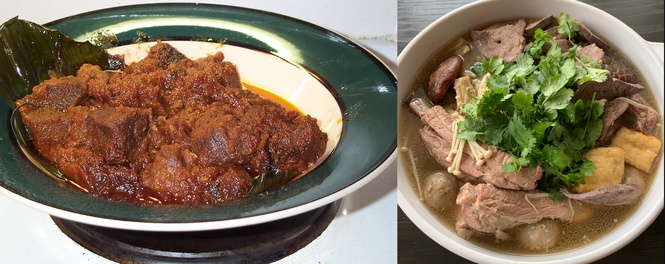
For the past few days, the nation has been divided into 2 over the Bak Kut Teh controversy. In case you missed it, Bak Kut Teh has been gazetted as a heritage dish in the Declaration of Heritage Object 2024 on the 23rd of February 2024. On one camp, you have people like Teresa Kok who celebrate the inclusion of Bak Kut Teh as a heritage dish as including it would allow Malaysia to lay claim to Bak Kut Teh before Singapore does and it might help boost tourism as well. On the other camp, you have people like UMNO Youth Chief Dr Muhamad Akmal who think that other foods should have been recognised as heritage dishes instead of Bak Kut Teh since Bak Kut Teh “can't be consumed by all Malaysians”. For the sake of argument, let us compare everyone's favourite Raya dish, Rendang to Bak Kut Teh. There are a lot of similarities between these 2 heritage dishes (Rendang has been recognized as a heritage dish a long time ago):
1. Both of the dishes can't be consumed by certain segments of society
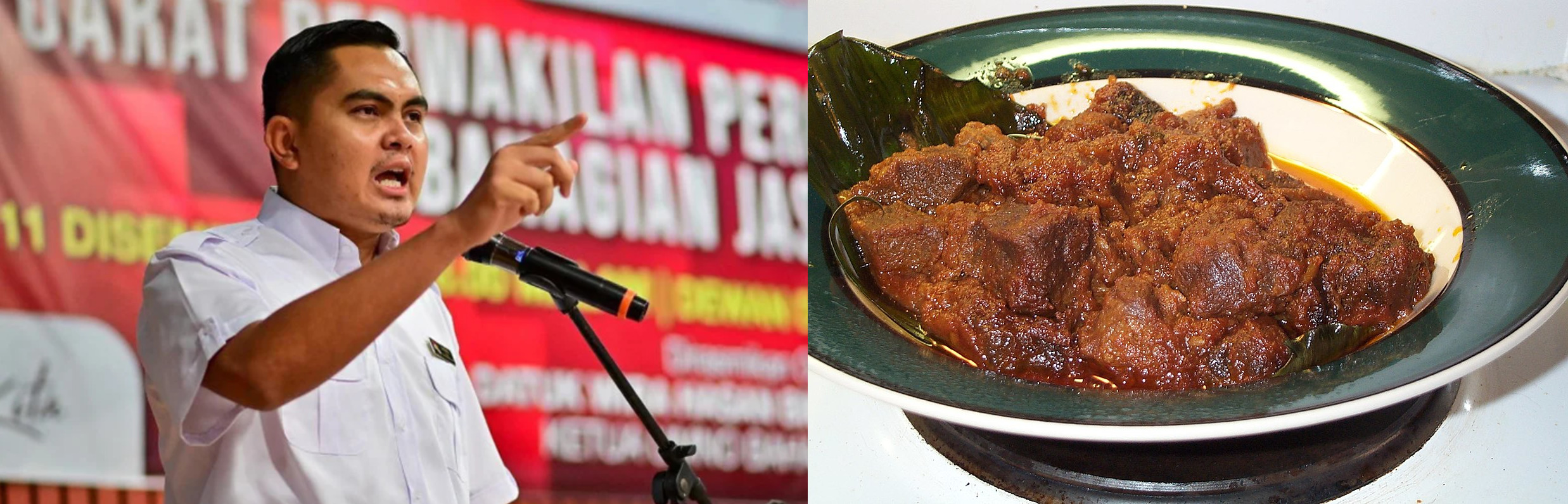
Rendang can't be consumed by Hindus and Buddhists since it is traditionally made with beef. Hindus can't eat beef since cows are traditionally viewed as sacred and Buddhists (especially devotees of Guan Yin) can't eat beef due to Hinduism influence. On the other hand, Bak Kut Teh can't be consumed by Muslims as it is traditionally made with pork. As you can see, both of these dishes can't be consumed by all Malaysians; Malaysian Hindus and Buddhists for example can't eat the traditional Rendang due to beef being used whereas Malaysian Muslims can't eat the traditional Bak Kut Teh due to pork being used. If we follow the logic of Dr Muhammad Akmal who says that a dish can ONLY be recognized as a heritage dish provided that it can be consumed by all (regardless of their religion), shouldn't we exclude Rendang as a heritage dish as Malaysian Hindus and Buddhists can't eat it at all?
With that being said, there is a way for all Malaysians to enjoy these dishes which brings me to my next point.
2. There are variations of it that can be consumed by all
There is a way for Malaysian Buddhists and Hindus to enjoy Rendang just as Malaysian Muslims can enjoy Bak Kut Teh; there are different variations of it. For Rendang, there is Chicken Rendang and Lamb Rendang that can be enjoyed by all including Malaysian Buddhists and Hindus. For Bak Kut Teh, there is halal Bak Kut Teh which can be made using chicken, lamb, or beef - this allows Bak Kut Teh to be enjoyed by Malaysian Muslims.
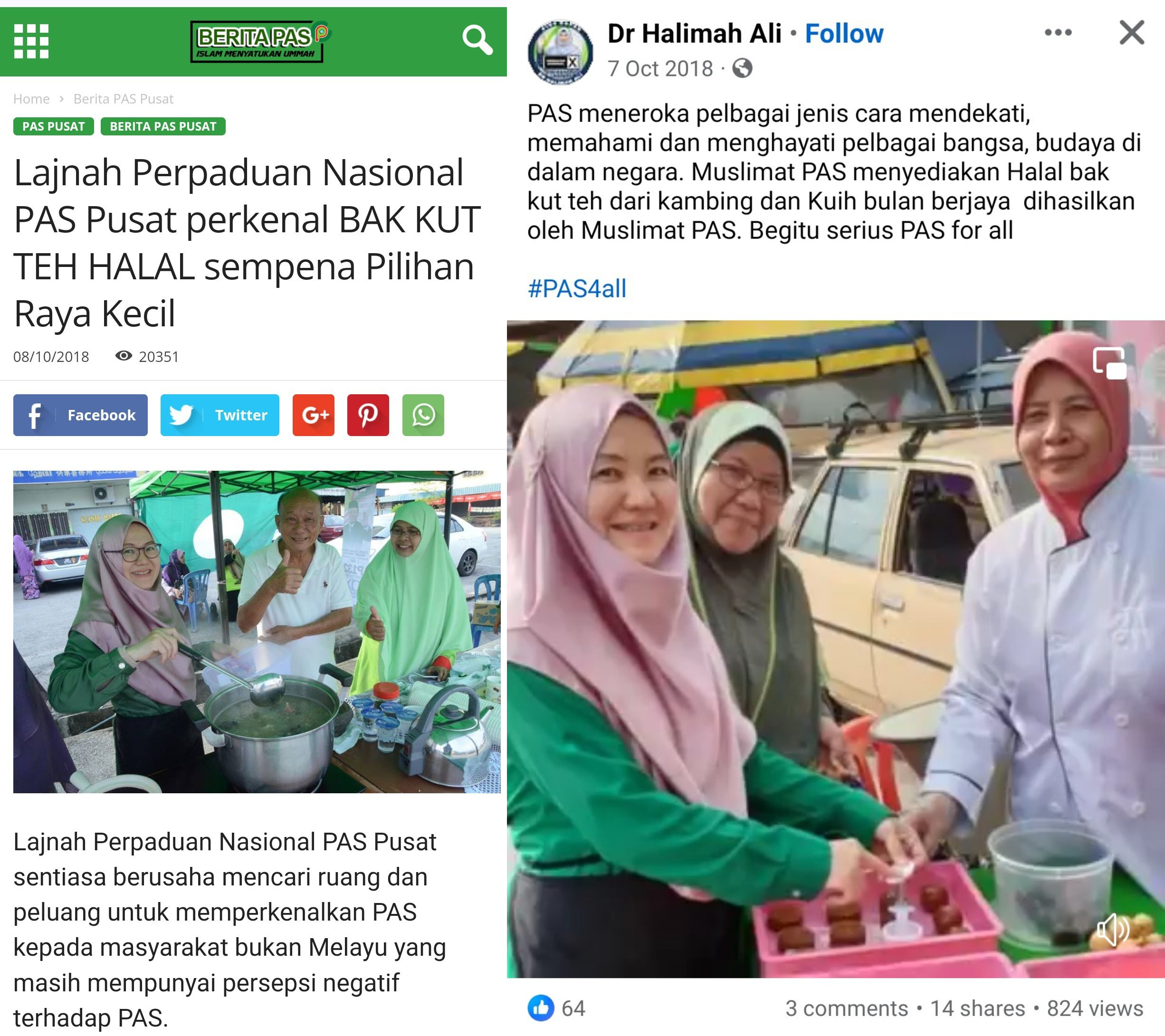
The argument postulated by both Razman Zakaria (PAS member and Perak Opposition Leader) and Dr Muhammad Akmal (UMNO Youth Chief) that Bak Kut Teh shouldn't be recognized as a heritage dish as it can't be eaten by all segments of society is therefore rendered invalid in the face of halal Bak Kut Teh. Razman Zakaria (PAS) should have known that there is halal Bak Kut Teh - after all, his party introduced halal Bak Kut Teh during the 2018 general election. You heard me right - PAS themselves introduced their version of halal Bak Kut Teh which was made using lamb or chicken. According to Berita PAS, PAS began introducing this food (halal Bak Kut Teh) since the Seri Setia State Legislative Assembly by-election.
3. The name by itself doesn't suggest what meat is used
If I tell you I would serve Rendang, does it mean I would use beef? Not necessarily. I have to add the type of meat used in front of ‘Rendang’ for clarification/specificity because there are many kinds of Rendang: Beef Rendang, Lamb Rendang, Chicken Rendang, and so on. The name ‘Rendang’ by itself doesn't mean anything - Rendang is just the name of the dish after all. Similarly, ‘Bak Kut Teh’ is just the name of the dish - ‘Bak’ doesn't mean pork. Just like what our Minister of Tourism, Arts and Culture said, ‘bak’ refers to meat. There are ‘Chicken Bak Kut Teh’, ‘Lamb Bak Kut Teh’, ‘Beef Bak Kut Teh’ and so on.
So what does ‘Bak Kut Teh’ really mean? Here is a detailed breakdown of what it really means for you, my dear readers. In Hokkien Dialect, Bak Kut Teh (肉骨茶) just means Meat Bone Tea. In Mandarin Chinese, it also means Meat Bone Tea (except in Mandarin Chinese, you pronounced 肉骨茶 as Rou Gu Cha). In case you didn't know 肉 (pronounced as rou in Mandarin, bak in Hokkien) is meat, 骨 (pronounced as gu in Mandarin, kut in Hokkien) is bone and 茶(pronounced as cha in Mandarin, teh in Hokkien) is tea. A lot of people including the former culture, arts, and heritage minister, Tan Sri Rais Yatim misunderstood the word Bak in Bak Kut Teh (肉骨茶); he along with many others have claimed that Bak (肉) in Bak Kut Teh (肉骨茶 ) means pork which is completely untrue.
Now that we have compared both of these delicious heritage dishes for argument's sake. I hope you can make a more accurate assessment of the whole Bak Kut Teh controversy.

Submit any #RAYA2024-related content for a chance to win worth up to RM8,100! T&C apply. Find out how you can participate here.
Aaron Colt is a content creator under the Newswav Creator programme, where you get to express yourself, be a citizen journalist, and at the same time monetize your content & reach millions of users on Newswav. Log in to creator.newswav.com and become a Newswav Creator now!
The User Content (as defined on Newswav Terms of Use) above including the views expressed and media (pictures, videos, citations etc) were submitted & posted by the author. Newswav is solely an aggregation platform that hosts the User Content. If you have any questions about the content, copyright or other issues of the work, please contact Newswav.