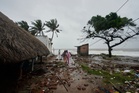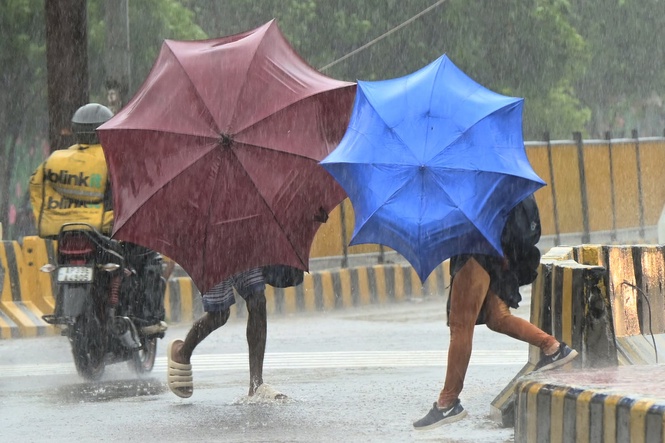
Cyclone Arnab crossed India 's Andhra Pradesh coast in the early hours of Wednesday, officials said, a day after tens of thousands of people were evacuated from vulnerable coastal areas in the eastern state.
Prakhar Jain, head of the state’s disaster management authority, said the cyclone had weakened slightly before landfall but still packed peak winds of up to 185 kph (115 mph) and brought heavy to very heavy rainfall to several coastal districts, triggering widespread disruption in affected areas.
Officials said the cyclone was expected to weaken further as it moved inland, with wind speeds likely to ease to around 110 kph (68 mph) later in the day.
There were no immediate reports of casualties.
The India Meteorological Department said heavy rainfall and strong winds would continue under the cyclone's influence in coastal areas of Andhra Pradesh and parts of southern Odisha state for the next four hours.
“The tip of the system has already entered the land mass and the entire process will take around four hours,” said Mrutyunjay Mohapatra, head of the IMD.
Cyclone Arnab strengthened into a “very severe” cyclonic storm late Tuesday with gusting winds and heavy rain reported in several coastal areas.
According to officials at the state's disaster management authority, Cyclone Arnab’s outer bands began lashing parts of the Andhra Pradesh coast late Tuesday as the storm intensified over the Bay of Bengal and moved toward an earlier-than-expected landfall.
Authorities placed all the state's coastal districts on high alert Tuesday and began evacuating people from low-lying and flood-prone areas ahead of its landfall. They also canceled some train services as heavy rain and gusty winds had already started lashing parts of the coast, officials said. At least 89,000 people have so far been evacuated in Andhra Pradesh, according to an official statement.
The state’s disaster management authority said more than 12 million people live along the cyclone’s expected path.
Authorities set up over 2,000 cyclone shelters across 20 districts, while emergency alerts were being sent to the mobile phones of millions of residents, Jain said, according to the Press Trust of India news agency. More than 30,000 fishing boats were secured along the coast, while nearly 1,100 medical teams were deployed across affected areas to provide emergency assistance, he added.
In neighboring Odisha, officials planned to evacuate about 48,000 people from areas likely to be affected by the storm.