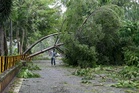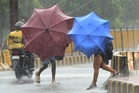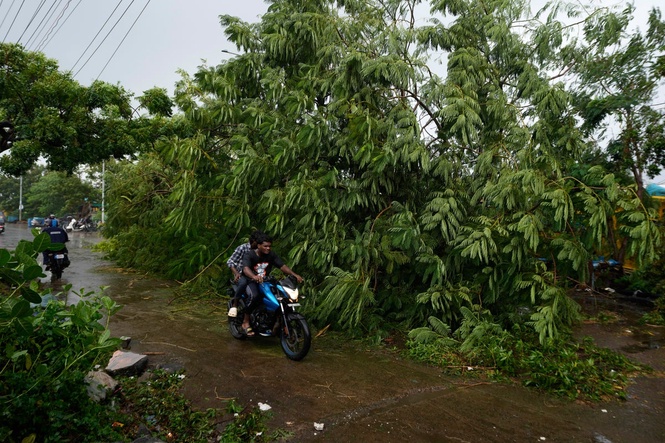
Cyclone Arnab has made landfall on India’s eastern coast, bringing destructive winds and heavy rains to Andhra Pradesh as authorities evacuated more than 180,000 people across two states.
The very severe cyclonic storm began crossing the coast earlier than expected on Wednesday, uprooting trees and disrupting electricity supplies. No deaths had been reported in Andhra Pradesh or neighbouring Odisha by Wednesday morning, according to Reuters.
The India Meteorological Department (IMD) said the storm had remained “practically stationary” near the coast, with its centre still over the Bay of Bengal even as its outer bands moved inland.
The landfall process was expected to continue for about two hours, according to a bulletin issued at 6.30am local time.
The IMD forecast sustained winds of 115-125kmph, with gusts reaching 140kmph. It warned that a storm surge could inundate low-lying areas of Andhra Pradesh.
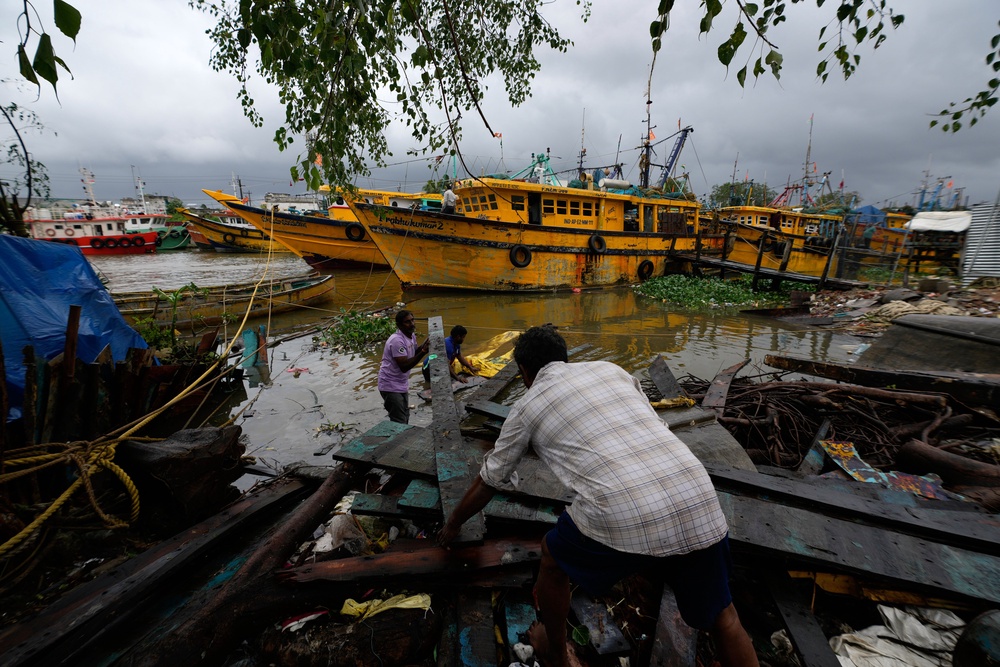
More than 12 million people live along the cyclone’s projected path, according to Andhra Pradesh’s disaster management authority.
Authorities established more than 2,000 cyclone shelters across 20 districts, secured over 30,000 fishing boats and deployed nearly 1,100 medical teams, the Press Trust of India reported, citing state disaster management official Prakhar Jain.
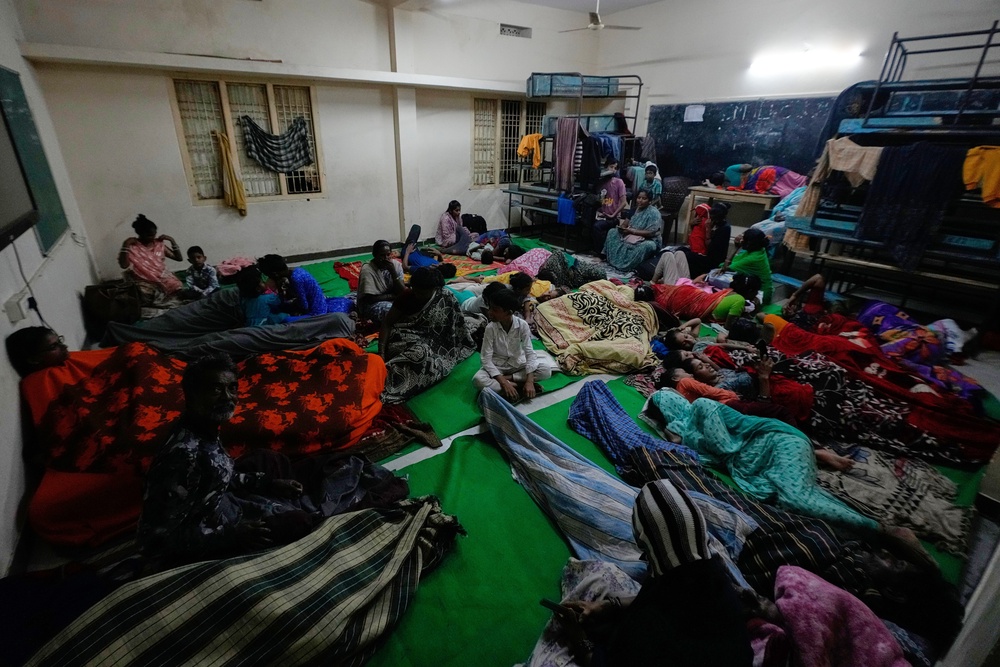
Chief minister N Chandrababu Naidu reviewed preparations with officials on Tuesday and ordered departments to prioritise relief operations and the restoration of essential services, news agency ANI reported.
The state government has deployed 12 National Disaster Response Force teams and 10 State Disaster Response Force teams across 14 districts. More than 8,000 emergency beds and over 1,200 ambulances were also placed on standby, according to ANI.
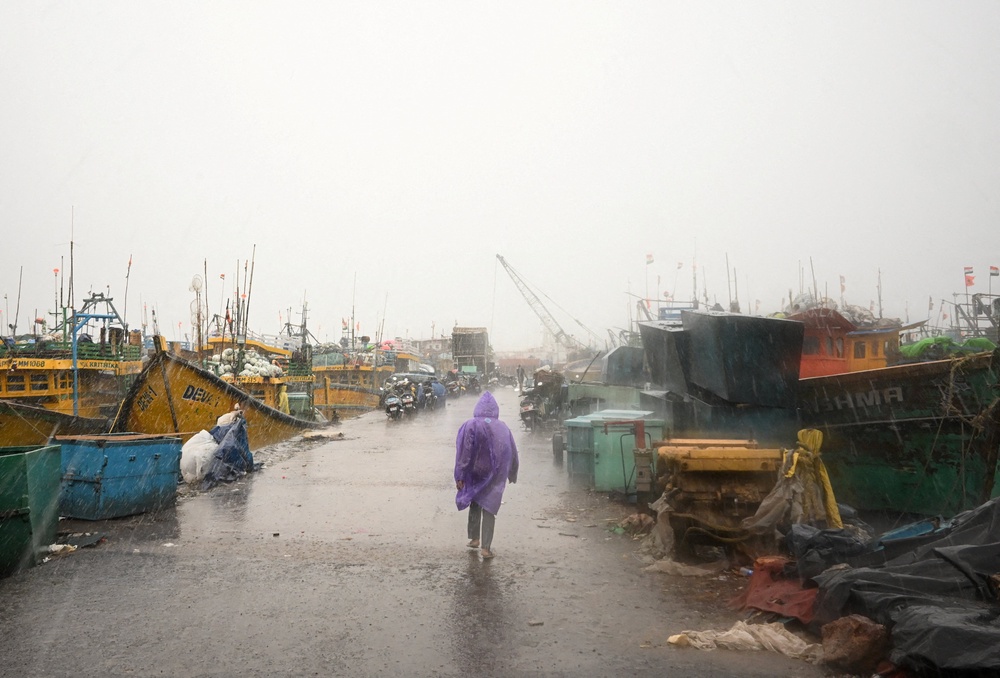
Authorities urged residents to remain indoors until conditions improved and warned people to stay away from electricity poles, old buildings and large trees. Fishermen were told not to venture out to sea.
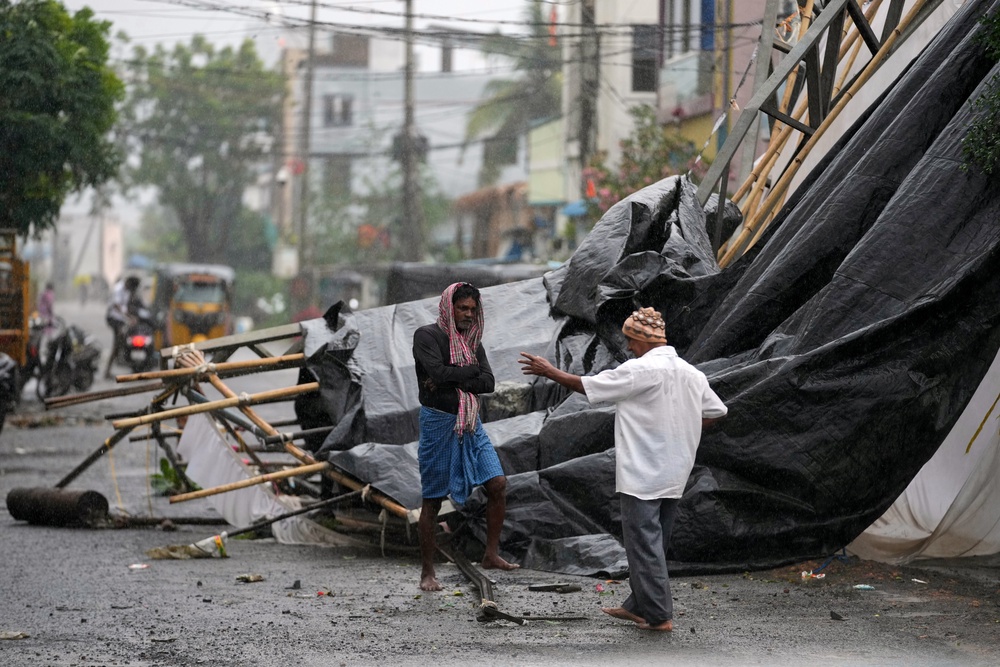
In Visakhapatnam, police restricted access to RK Beach amid strong winds and high tides.
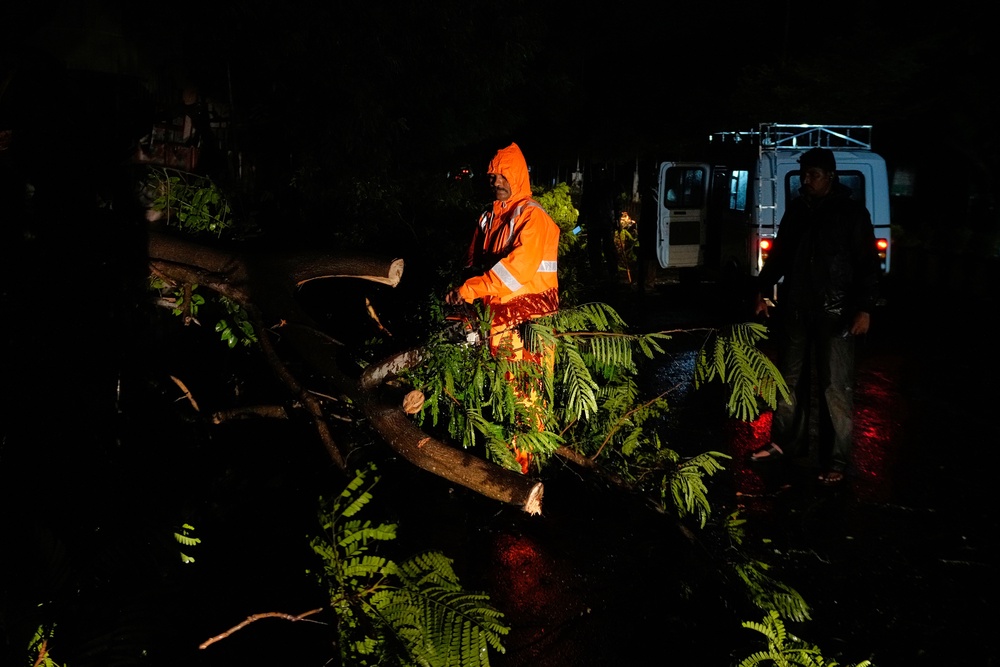
A tree was uprooted near Andhra University College of Engineering for Women, while heavy rain and gusty winds caused waterlogging in parts of Vijayawada and surrounding areas.
The IMD warned of extremely rough seas along the Kakinada and Yanam coasts, with a storm surge threatening low-lying areas. Flash flood alerts were issued for several districts, including Konaseema, Kakinada, Visakhapatnam and Srikakulam.
The cyclone disrupted air and rail services across the region. India’s civil aviation ministry suspended operations at three Andhra Pradesh airports, while Air India, Air India Express, IndiGo and Akasa Air announced flight cancellations, ANI reported.
Passengers were advised to check their flight status before travelling to airports. Railway authorities also cancelled trains and suspended services on dozens of routes along the southern coast.
The cyclone could bring dangerous weather beyond India.
Nepalese authorities warned tourists against travelling to high-altitude areas from Thursday night through Saturday, citing the risk of torrential rain, snowstorms and avalanches.
The warning comes as Nepal continues to recover from deadly flash floods in August that killed about 1,500 people.
The Bay of Bengal is a major source of tropical cyclones affecting India’s eastern coast. Odisha was devastated by a super cyclone in October 1999 that killed nearly 10,000 people, making it one of the country’s deadliest natural disasters.
What to know before largest-ever share sale of Mukesh Ambani’s Jio Platforms
Documentary accusing Modi and Adani of cronyism ordered to be taken down
News outlets owned by Ambani and Adani contesting Modi’s privacy law
Baby orangutans expose illegal wildlife trade as experts question billionaire’s zoo
Murder suspect in India accused of using AI to fake his own death
Indian opposition leader Rahul Gandhi’s convoy involved in highway pile-up