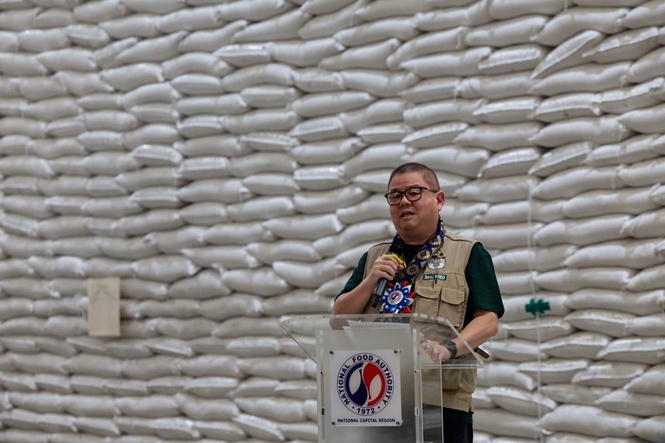
THE Department of Agriculture (DA) has set a year-end deadline for the registration of warehouses and other facilities storing agricultural and fishery commodities in the country as part of efforts to improve supply chain data and curb smuggling, hoarding and other market abuses.
Agriculture Secretary Francisco Tiu Laurel Jr. directed DA officials to issue and widely disseminate a public notice to ensure that storage facility operators can register by Dec. 31.
“We have to strictly follow the law,” Tiu Laurel said at a recent meeting with DA officials.
He also sought updated figures on registered facilities and compliance rates to help the agency track better the volume of imported agricultural and fishery commodities, particularly rice.
Data is recorded in the Registry System for Agri Storage (RSAS), a centralized platform designed to help the government monitor where agricultural commodities are stored and how much inventory is being held.
The registry is mandated under Republic Act (RA) 12022, or the Anti-Agricultural Economic Sabotage Act, which was signed into law on Sept. 26, 2024, and took effect Oct. 16 that year.
The law replaced the Anti-Agricultural Smuggling Act of 2016 and expanded the government’s framework for prosecuting agricultural smuggling, hoarding, profiteering and cartel activities.
It seeks to prevent practices that distort prices, create artificial shortages, and disrupt the supply of agricultural and fishery products while protecting farmers, fisherfolk, legitimate businesses and consumers.
Under Section 6 of RA 12022, operators must register warehouses, cold-storage facilities and other properties used to store agricultural and fishery commodities. They must also maintain complete and accurate records for at least five years.
DA Memorandum Circular 3, Series of 2026, signed on Feb. 2, provides the implementing guidelines. The RSAS is now operational, according to the agency.
The DA clarified that registration is separate from certification or inspection.
The agency is also preparing a nationwide inspection schedule for 2027, with regions to be assigned specific periods to distribute the workload amid limited personnel.