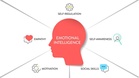
Q1. Who is credited with popularising the concept of Emotional Intelligence in 1995?
- A) Abraham Maslow
- B) Howard Gardner
- C) Daniel Goleman
- D) Carl Rogers
Q2. Which of the following is NOT one of Daniel Goleman’s five components of Emotional Intelligence?
- A) Empathy
- B) Self-awareness
- C) Lateral thinking
- D) Self-regulation
Q3. An IAS officer conducting a gram sabha listens carefully to villagers’ concerns and adjusts the implementation plan of a welfare scheme accordingly. This best demonstrates which component of EI?
- A) Self-regulation
- B) Motivation
- C) Empathy
- D) Social skills
Q4. Which of the following administrative outcomes is most directly linked to high Emotional Intelligence in governance?
- A) Faster processing of government tenders
- B) Reduced inter-departmental expenditure
- C) Improved citizen trust and participatory governance
- D) Greater centralisation of decision-making
Q5. In the context of disaster management, an emotionally intelligent administrator would PRIMARILY:
- A) Delegate all communication to subordinates to avoid public pressure
- B) Prioritise media briefings over ground-level operations
- C) Communicate calmly and empathetically to reduce panic among affected communities
- D) Follow standard operating procedures strictly without adapting to emotional cues

Answers with explanations
A1 — C) Daniel Goleman Daniel Goleman’s 1995 book Emotional Intelligence brought the concept to mainstream prominence. While earlier psychologists like Peter Salovey and John Mayer laid theoretical groundwork, Goleman’s model — especially its five-component framework — became the defining reference in leadership and governance literature.
A2 — C) Lateral thinking Lateral thinking is a problem-solving concept associated with Edward de Bono, unrelated to EI. Goleman’s five components are: self-awareness, self-regulation, motivation, empathy, and social skills. These cover the internal and interpersonal dimensions of emotional competence.
A3 — C) Empathy Empathy is the ability to understand and share the feelings and perspectives of others. By listening to villagers and adjusting implementation, the officer is reading and responding to the community’s lived experience — the defining act of administrative empathy. While social skills are also involved, empathy is the primary component at work.
A4 — C) Improved citizen trust and participatory governance EI in governance most directly improves the quality of human relationships between the state and citizens. Trust, participation, and inclusive policy design are relational outcomes rooted in empathy, effective communication, and conflict resolution — all EI domains. The other options are operational outcomes driven by systemic or financial management, not EI.
A5 — C) Communicate calmly and empathetically to reduce panic In a crisis, emotionally intelligent leaders anchor communities through composure and reassurance. Panic is an emotional contagion — EI allows administrators to interrupt it by projecting calm authority and genuine concern. Blind adherence to SOPs (Option D) without reading emotional cues can worsen outcomes in dynamic, people-centric emergencies.