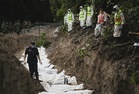
The death toll from catastrophic flooding in Nepal and China passed 1,000 on Tuesday, authorities said, as rescue teams work to reach communities cut off by the disaster.
Nepal’s disaster agency said on Tuesday that 987 deaths had been counted there, with 3,916 people missing, including 583 foreigners.
Chinese authorities, in their latest update on Sunday, reported 16 deaths and 546 people still missing.
At least 11,814 people have been rescued so far, according to Nepalese authorities. Emergency crews have been using helicopters and other aircraft to reach stranded communities in areas where roads and bridges have been destroyed by the flooding and landslides.
The 26 August disaster began with a chain of events high in the Himalayas. A glacial collapse sent large amounts of rock, ice and meltwater into valleys below, triggering powerful floods downstream.
Scientists studying satellite imagery said the collapse appears to have involved the failure of bedrock beneath a glacier in the Himalayan region. The rockfall was powerful enough to register as a magnitude 5.2 seismic event.

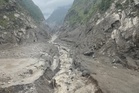
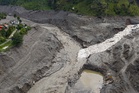
The resulting surge of water and debris entered rivers that flow through valleys in Tibet and Nepal, causing them to rise rapidly.
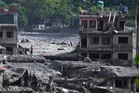
Floodwaters swept away homes, buildings, roads and bridges and carried mud and rocks downstream.
Authorities are still searching for thousands of people who remain unaccounted for on Tuesday. Rescue teams are also working to provide assistance to survivors in areas where roads and other transportation routes have been damaged or cut off.
For rescuers, the immediate priority remains finding at least 900 workers who are missing from 12 hydropower projects damaged by the flash floods, about 500 of whom are believed to be trapped inside tunnels.
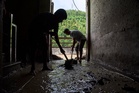
Visuals released by Nepal's army showed rescue teams entering dark, debris-filled tunnels, wading through mud and water and climbing over rocks as they searched for signs of life.

Bimal Sharma, a helicopter pilot who has been flying rescue missions since the disaster began, said he was shocked to see the devastation in Timure, a border town close to Tibet that he has known for years.
“It felt like I was flying over an entirely different landscape," he said.
Sharma said he has had little opportunity to speak with the people he rescued, but their expressions told him how deeply the disaster had affected them.
“I can see the pain in their eyes. It’s heartbreaking,” he said.