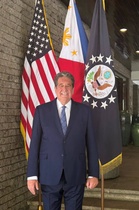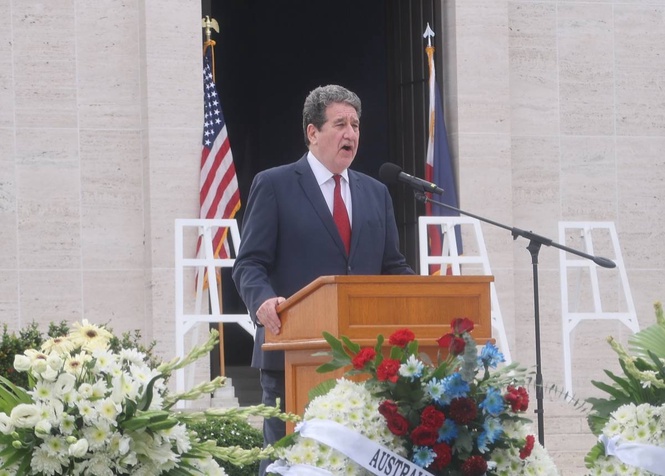
AMBASSADORS and senior diplomatic representatives from different countries led by the US Ambassador to the Philippines Lee Lipton have reaffirmed their support for the Luzon Economic Corridor (LEC).
The envoys represented the US, Japan, the European Union, Canada, Denmark, France, South Korea, Spain, Sweden and the United Kingdom.
The LEC initiative was originally launched by the Philippines, the US and Japan in 2024 to connect Subic Bay, Clark, Metro Manila and Batangas through strategic investments in transportation, logistics, energy and digital infrastructure.
Since then, 10 more partners have joined the initiative, showing growing international interest.
While the diplomats noted the LEC’s potential to boost supply chains and generate jobs, their main call was for the LEC to turn investment commitments into concrete projects by fixing systemic bottlenecks.
Lipton emphasized that the LEC’s success would ultimately depend on the government’s ability to address issues that discourage businesses from investing in the country.
“Now comes the hard part. We have to get these projects financed, approved, and built,” he said.
Envoys called on the Philippine government to cut red tape and streamline processes.
France Ambassador Donatienne Hissard warned that how bureaucracy and fiscal complications could discourage foreign investments despite the Philippines’ skilled workforce.
Spanish Ambassador Xavier Marti recommended having clear permit or tender timetables and a single point of contact in the government.
They also urged the government to ensure regulatory stability. European Union Ambassador Massimo Santoro called for clear, stable rules, while Hissard pushed for a clear business framework. South Korean Ambassador Lee Dong-gy called for a predictable investment environment.
Speakers also encouraged the government to mobilize the private sector. Stratbase President Dindo Manhit emphasized the value of building trusted partnership, with Japanese Ambassador Kitagawa Katsuro saying that it is the private sector who conducts the business. South Korean Ambassador Lee also talked about public-private partnerships, while Spain’s Marti called on the government to involve local businesses and communities early. UK Deputy Head of Mission Michael Edward Welch emphasized the importance of mobilizing private capital alongside public financing.
Some of the countries’ commitments include the $60-million Millennium Challenge Corporation program for energy governance and the investment climate, and funding to expand Subic Bay ship repair facilities.
The UK envoy talked about up to £5 billion in sovereign-backed loans and guarantees for priority infrastructure projects, plus technical assistance for project management.
Canada is partnering with the Asian Development Bank to build a pipeline of bankable projects, building on the newly concluded Canada-Philippines Free Trade Agreement.
Denmark urged investment in factorized, mass-production shipbuilding technology to help the Philippines capture 15 percent of the global shipbuilding market.
South Korea called for moving beyond talks to implement concrete projects, specifically highlighting artificial intelligence. Sweden emphasized environmentally responsible, bankable projects and greater private-sector involvement in research and development and innovation.