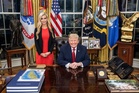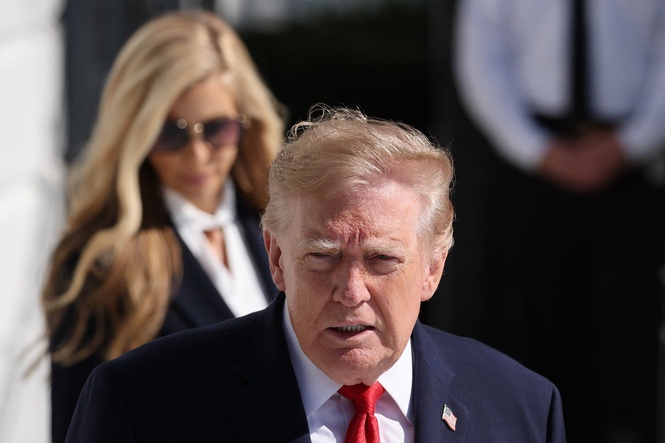
The departure of Katie Zacharia after five days as US President Donald Trump’s press secretary is more important for what it says about the disorder inside the White House than anything else.
All the jokes about how she lasted “less than half a Scaramucci” remind us that Mr Trump has lost press secretaries before – Anthony Scaramucci lasted 11 days in 2017, early in Mr Trump’s first term. But things are different now. Mr Trump is older, and faces the imminent prospect of becoming a doubly lame duck president.
After the midterm elections next month, the president’s party may well lose control of both houses of Congress, constraining his power; and Mr Trump is constitutionally barred from re-election in two years’ time, meaning that his authority will drain even further.
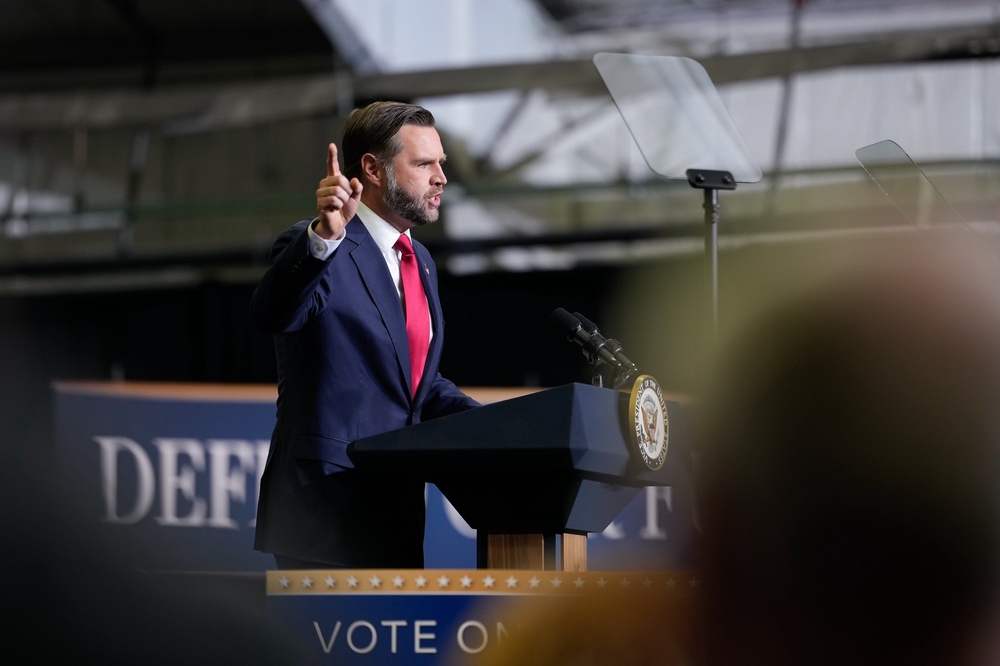
Ambitious young politicians are looking to Vice President JD Vance as the most likely successor, and despite Mr Trump’s occasional blustery threats to defy the term limit, fewer and fewer of his supporters believe he would try to overturn the constitution.
This is the context in which Ms Zacharia was appointed and then summarily dismissed with a casual comment from the president, “maybe it’s not for her”. What is significant about this is not that she proved unsuited to the job, but that Mr Trump chose Ms Zacharia without consulting Susie Wiles, his longstanding chief of staff.
Ms Wiles appears to be the only person in the White House who acts as any kind of check on the presidential whim. For the past two years she has brought unprecedented order to the notoriously disordered court, reducing leaks and feuding to almost normal levels.
Mr Trump seems to have finally lost patience with such discipline, frustrated by what our correspondent Andrew Feinberg calls “the lack of high-profile surrogates defending him on television”.
This is also the context in which Mr Trump seems to be lashing out even more erratically than before, trying to mend the damage done to Republicans’ electoral chances by his disastrous decision to go to war with Iran.
He has compounded that mistake by making another: first agreeing a deal to buy Russian diesel in a doomed attempt to cut prices at American pumps, and now reversing his approval of the law clamping down on the flow of money fuelling Vladimir Putin’s war against Ukraine.
Two days before the law, named after Lindsey Graham, the late South Carolina Republican senator, was due to come into effect, Mr Trump blocked it – siding more emphatically than ever with Mr Putin against the Ukrainian people.
As well as being morally wrong, this is a grievous political error. Doing deals with the Kremlin will do nothing to cut world prices of diesel and therefore will have no effect on American truckers and drivers. Yet American voters, including Republicans, side heavily with Ukraine against Russia and are liable to see Mr Trump’s behaviour as a sign of weakness.
Mr Trump’s desperation is becoming ever more evident. His critics have always been outraged by willingness to break the norms of decent liberal democracy, but until now there has always been method in his unpredictability: his supporters have seen his disdain for rules as a sign of strength. The outrage of his critics has always energised his base.
It may be that we are now, finally, seeing the beginning of the end of the Trump era. Ruining the White House ballroom and mismanaging the Lincoln Memorial Reflecting Pool have made America look bad rather than “Great Again”.
But it is the cracks in the White House’s organisation that may be signs that the rule of chaos is coming to an end.
Ukraine has been betrayed by Trump – but Europe must not abandon it
We are now watching Donald Trump’s presidency die on live TV
Trump is abandoning Ukraine to its bleakest winter yet
AI is the biggest threat to truth we’ve faced – but there is a solution
It is time to bring the BBC licence fee into the streaming era