.png)
A UNIVERSITI Malaya (UM) student’s questions about corruption, the Tabung Haji scandal, and public donations to help former prime minister Datuk Seri Najib Razak pay a RM50 million fine prompted a frank response from former minister Khairy Jamaluddin during a dialogue organised by the Higher Education Ministry.
Ummi Umairah Bakhit questioned how future leaders could be taught to speak out against corruption and feudalism, think critically and support their arguments with facts and statistics.
She also criticised members of the public for donating money to Najib, who was convicted in the 1MDB case, questioning the message such support sent to the next generation of leaders.
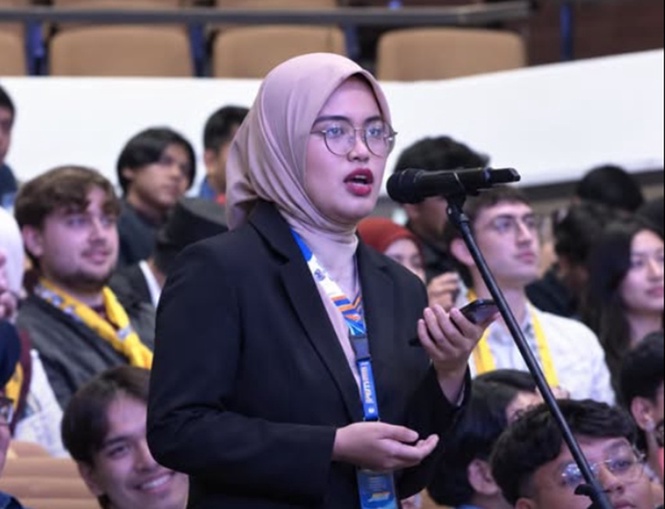
“One of the most foolish things I have seen in my life is people donating money to former prime minister Najib when he is clearly facing serious corruption cases involving 1MDB and has clear links to corruption,” she said.
Her remarks came during a dialogue featuring Khairy, Selangor Menteri Besar Datuk Seri Amirudin Shari and Johor Menteri Besar Datuk Onn Hafiz Ghazi.
Khairy praised the student for raising the issue before making clear that political loyalty should never be used to justify wrongdoing.
“What is wrong is wrong”
“We should not be afraid to speak about corruption, even when it involves our own leaders. What is wrong is wrong. If something cannot be defended, do not defend it. Mismanagement is still mismanagement,” he said.
“If there are cases that need to be answered, we must take responsibility for them and never compromise on integrity. I say this as someone who served in that government.”
Khairy had raised concerns about 1Malaysia Development Bhd’s (1MDB) ability to repay its debts when the scandal first emerged.
However, he was also among those who dismissed allegations of corruption following claims that US$681 million (RM2.6 billion) from 1MDB funds had been deposited into Najib’s personal bank accounts.
Like other Cabinet members at the time, Khairy repeated the explanation that the money was a political donation from the Saudi royal family.
His position changed after Barisan Nasional lost the 2018 general election. He subsequently became an outspoken critic of Najib and the 1MDB scandal.
Amirudin, meanwhile, gave a brief response to Umairah, saying he was glad that young people remained concerned about corruption, which he described as a longstanding problem.
Onn began his response by describing corruption as a cancer that held back progress.
However, he stressed that government policies and efforts to combat corruption must be implemented fairly and consistently, warning against the use of enforcement agencies for political purposes.
“The law must be enforced regardless of political party. In my view, what has happened over the past few months amounts to political persecution and selective prosecution,” he said.
Onn also reminded the audience that Muslim leaders who betrayed the trust placed in them, whether through corruption or abuse of power, would ultimately be held accountable before God, even if they escaped punishment in this world.
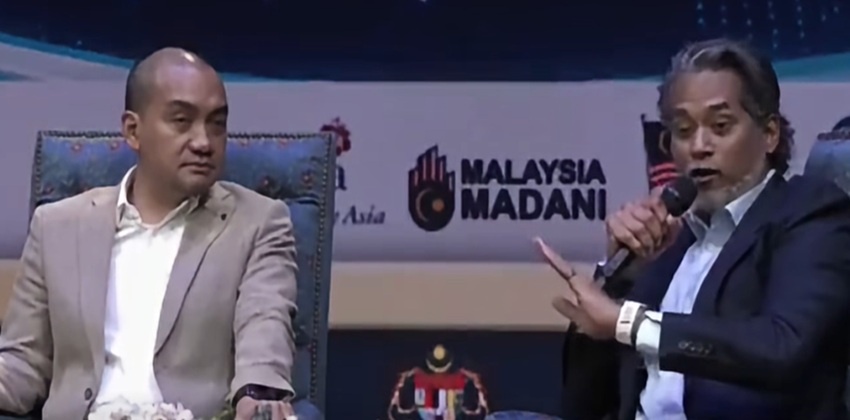
The discussion also touched on the pressures facing political leaders when making difficult decisions.
Khairy was asked by UM student union leader Aiman Izzat Shamsuddin whether leaders should prioritise making decisions quickly or ensuring they made the right decisions.
In response, the former health minister said many politicians were reluctant to make difficult choices because they feared losing support at the next general election.
“This is because we think about the next election instead of the next generation. That is the curse politicians face, and we need leaders who think about the next generation, not just the next election,” he said.
Khairy acknowledged that advocating principled leadership was easier than practising it once in power, when political realities could make difficult decisions harder to pursue.
He said every prime minister wanted to do the right thing, but argued that Tun Dr Mahathir Mohamad had been able to carry out his agenda during his first tenure because of his electoral success.
“Now, even a simple majority is difficult to secure. No party can win an outright majority on its own, so they are afraid.
“So what I am saying is, choose leaders who are not afraid to lose.
“I have lost before, and I am not afraid of losing. So choose leaders who are not afraid to lose,” he said. – October 16, 2026